Mandarin adventure: Chinese modernization in my eyes
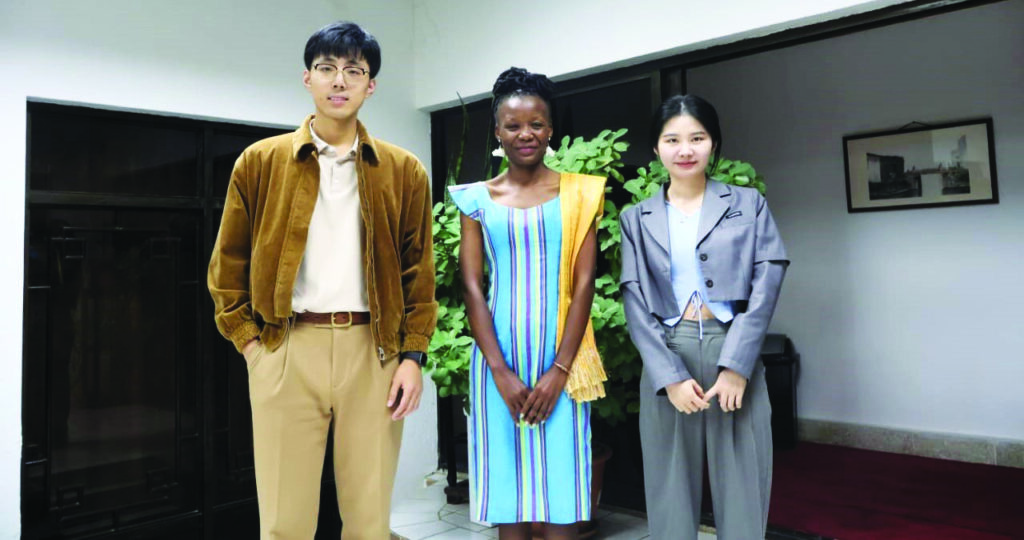
LIAPENG RALIENGOANE
MASERU- Towards the end of 2024 I registered for a Chinese language course. The journey since then as a Mandarin student has been one of hard work and challenges but immense satisfaction and beautiful discovery.
Growing up in an off-grid area, I was exposed to reading and writing in both Sesotho and English. We hardly watched television because it was solar powered, when we did, we would watch Sesotho dramas or KungFu movies: I admired and still admire Chinese inscription on books and television.
Now as an adult, China’s place in the modern world with its amazing technological, economic and social advancements has increased my interest in learning more about China and Chinese people together with their culture.
My encounter with the Chinese came about in 2024 when I attended a British event and I sat next to a Chinese gentleman. We had such an enlightening conversation; I got to learn about China’s drive to technological development from as early as 1960s.
I was intrigued, I wanted to learn more but our time was too short. I would learn later that he was the Chinese ambassador to Lesotho His Excellency Lei Kezhong.
Weeks after meeting the ambassador, he invited me to a Chinese event whereby Chinese medical doctors were bid farewell. Once again, I sat next to three Chinese ladies and we didn’t really converse. The second event I sat next to one of the three ladies and we recognized each other and exchanged hugs. We thought it was a sign and became friends. This friend of mine is called Liu Yongjia and she played a pivotal role in teaching me about everything Chinese, from attire to food and musical instruments, you name them.
From our conversation, I learned that there are evening online Mandarin classes at Machabeng College. I registered as soon as the new session for the year began.
The journey of learning mandarin is enlightening yet challenging. The Chinese writing system uses complex characters that require memorization to learn.
I get to learn to speak, read and write in Mandarin with my fellow classmates (tongxuemen in Mandarin) from our teachers both Basotho and Chinese.
Cherry on top is that we do not only learn the language, we attend events at Confucius Institute and get to learn more about Chinese culture, festivals, technological developments, sometimes free medical check-ups by Chinese doctors and exploring Chinese food. I am still a beginner and my speaking and writing skills are at inception.
During one of my classes, I learned that Chinese characters have a history dating back more than two thousand years. The early forms of Chinese characters were pictographs which are graphic representations of real objects, but these characters became more stylized and came to represent ideas as well as objects. In an attempt to improve literacy, the Chinese government began simplifying characters in the 1950s.
My take away from being a Mandarin student is that Chinese modernization not only realizes the great rejuvenation of the Chinese nation, but also modernization of the world, including people like me who are able to learn Mandarin in our respect countries. This modernization aims to build a community with a shared future and to develop a new form of human civilization through international cooperation along the way.
Confucius Classrooms are local institutions in different countries. Their purpose is to promote and teach Chinese culture and language around the world. On April 25, 2017, the first Confucius Classroom in Lesotho was officially inaugurated at Machabeng College.
- The author is a freelance journalist based in Maseru. She is a Chinese language student at Confucius Classroom, Machabeng College International School of Lesotho