OPEN LETTER TO JACINTA NGOBESE-ZUMA AND MARCH & MARCH LEADERSHIP
As well to
THE SOUTH AFRICAN, ZIMBABWE, LESOTHO, NIGERIA, SOMALI, ETHIOPIA HEADS OF STATE, OTHERS AND AFRICAN UNION COMMISSION CHAIRPERSON
Embarking on the only road to reversal of illegal immigration and “Xenophobia/Afro-phobia” in South Africa as in the rest of the continent
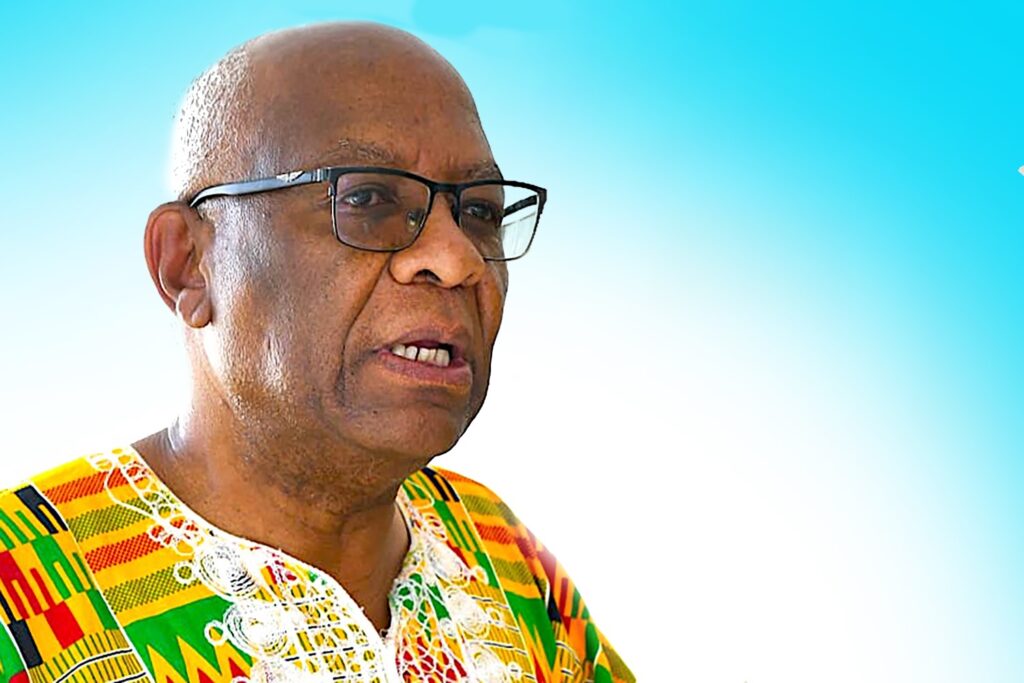
MK MALEFANE
Much has already been said on both sides of the undocumented and illegal foreigners debate – those supporting their expulsion and those advocating for their integration – ahead of the looming June 30, 2026 deadline.
The discourse has been polarizing, often descending into inflammatory rhetoric that threatens the fragile social cohesion of our nation and continent. Yet amidst this cacophony of voices, one must pause and reflect on the deeper historical, economic, and social realities that have brought us to this precipice.
At this critical juncture, special tribute must be paid to EFF leader Julius Malema and his organization. They have been misunderstood and deliberately misinterpreted for selflessly championing the unity and destiny of South Africans with the rest of the people of the continent, often at great political cost and risk of losing voter support.
Malema and the EFF are owed a profound apology and deep appreciation by governments and peoples of South Africa and the entire continent. Their courage in speaking uncomfortable truths, while advocating for Pan-African solidarity, represents the kind of leadership that transcends narrow nationalism and embraces our shared destiny as Africans.
My contribution to this discourse is to offer practical solutions, as others have already proposed, for South Africans and neighbours in the region to embark upon the only road that can finally address and reverse the scourge of mass illegal immigration, particularly to South Africa, and its devastating consequences we witness today.
The ticking time-bomb: Youth unemployment
Perhaps the greatest challenge and crisis facing South Africa is the “+8 million unemployed youth ticking time-bomb.” The fuse on this powder keg grows shorter by the day, and the trigger could very well be the March & March June 30 demonstrations or other civil unrest waiting to boil over.
This is not merely a statistical concern but a humanitarian catastrophe that threatens to destabilize the very foundations of our democracy.
The failure to meaningfully address youth unemployment has created a generation of disenfranchised young people who see no future within the formal economy. They are increasingly susceptible to populist appeals that offer simplistic solutions to complex problems.
The scapegoating of foreign nationals becomes an attractive outlet for their frustration and anger, diverting attention from systemic failures of governance and economic policy.
This demographic reality creates the perfect storm for xenophobic violence, as desperate young people compete for scarce resources and opportunities. The irony, of course, is that many of these young people’s own families migrated within South Africa or across its borders in search of better lives, yet historical memory is short when survival is at stake.
A golden opportunity under threat
I am spearheading a US$3 billion (R50 billion) Foreign Direct Investment (FDI) global brand project for Africa in Cape Town. This project serves as a platform and catalyst for raising a further target of US$30 billion (R500 billion) by end of 2026, and US$70 billion (R5 trillion) by 2027-2030 for South Africa, the region, and continental infrastructure, economic development, and tourism.
This represents the final turnaround solution to the “+8 million unemployed youth ticking time-bomb.”
Governments in the region have already expressed readiness to support this initiative. Through this project investment initiative, we have spent millions in preparation work for the release of initial tens of millions, which have now since been withheld due to a minister’s corrupt actions below.
As if this so-called xenophobia was not enough to scare away this investment, ironically, it is actually a minister in the Government of National Unity (GNU) who is actively working against ensuring the president and government support this vital investment. The project is due to be lost to South Africa without presidency and government support before the end of target July 2026.
This government corruption and failure – preventing the one vehicle and catalyst for massive investment and youth job creation in South Africa as in the rest of the region – represents a chief example on the agenda of the March & March Movement for expulsion of “foreigners.”
Already in Lesotho, youth unemployment has been declared by government a national disaster. The failure to address this crisis stems the mass “illegal foreigner” migration to South Africa, perpetuating a vicious cycle of poverty and desperation.
Historical context: Shared destinies, artificial boundaries
Not to overlook or pretend ignorance, South Africa’s economy as we know it today (as well as those of Europe) was built largely on mining, followed by agriculture and industrialization. All this labour was largely provided by Basotho (of Lesotho, for that matter). Billions belonging to and owed Basotho miners and their families are held up till today by mining groups, banks, and insurance companies.
This is followed by Pondos, Malawians, and others.
New Bank (formerly Teba Bank) was established with Basotho of Lesotho (and others) pension funds, making Basotho the largest shareholders of the Bank. Yet management and others have kept this from them and do as they wish, even trying to sell the bank to the Guptas a few years ago. This represents a fundamental injustice that continues to fester, undermining trust between communities and nations.
Whilst on the one hand, officials in the Lesotho government are already calling for compensation from the South African government for the economic loss of Basotho land and political oppression during colonial and Apartheid times. One would have argued more for complete Lesotho-South Africa union.
More immediately, the billions in the hands of banking, mining, and insurance houses owed Basotho ex-miners and their family descendants (as with the Pondos and others), presents a compelling case for the ex-miners and family descendants to come together and institute a class action legal suit to claim those billions owed them.
Water scarcity: A crisis of corruption
Gauteng residents today survive on water from Lesotho, even though the Gauteng water security has now been breached with failure by government to commission Phase 2 of the Lesotho water project on time because of South African government corruption.
Even the site of the new phase dam project underway is the wrong location, with very little water and no hydro power capacity compared to the proper location with ample water and hydro power capacity. The long-awaited and promised water will never materialize, and Gauteng residents shall permanently suffer, all because of government corruption.
Imagine what is already happening today with whole neighbourhoods – whether townships, suburbs, or squatter camps – sometimes going without water for weeks and months. This will escalate when in the coming few years the new Phase 2 Polihali Dam is completed and turns out to be a white elephant without the volumes of water Gauteng residents have been awaiting.
At that time, a huge part of the Gauteng population will be without water permanently. Some say people may survive for some time without electricity because of load shedding, but can they survive without water?
The March & March movement: Contradictions and complications
As has been attested, the March & March Movement is mobilizing for the expulsion of masses of undocumented and illegal foreigners. However, there lies a contradiction and complication as to whom they deem undocumented foreigners. This also includes Basotho (presumably from Lesotho), whom you can never really, in reality, differentiate from Basotho of South Africa – a single people divided by artificial colonial boundaries.
Without going into too deep detail, allow me to first state some truths and reality:
There are less than one million Lesotho resident Basotho against millions more South African-born and resident Basotho. In Soweto alone, with a population some say of 5 million, Basotho are a major percentage with several areas with Sotho names: Mofolo, Tladi, Moletsane, Mapetla, Naledi.
They also form a major part of the populations of Orlando, Diepkloof, Pimville/Klepspruit, Rockville, Zola, Jabulani, Dobsonville, etc.
Already these Sotho-speaking communities (not forgetting their allied Tswana, Pedi, Xhosa, etc. speaking), have contingents ready to take on (presumably Zulu-speaking) March & March demonstrators dare they attack them, telling them “Ma ba Hambe” (they must go). Go where? Where do Sothos come from? Lesotho? Free State? Soweto and greater Gauteng, especially the Vaal and East Rand, West Rand, and North West, is predominantly Sotho territory.
In the East Rand Katlehong-Vosloorus township (site of the 1990s Black on Black civil war between “Inkatha Zulus” and the ANC and communities), where I currently reside, March & March held a march early this month and the residents were bewildered: “Are these Zulus mad? This is Basotho territory, we are majority here, let them just try.”
Whatever the aftermath of the June 30 anticipated mass marches, any attack by March & March against Sotho-speaking communities shall surely spark Black on Black civil war. Who is truly behind it all and to what benefit?
The only road forward: Pan-African unity and economic development
The road and only road beyond the so-called illegal mass migration crisis and solution is for the government (South Africa and the region, as indeed rest of the continent) to come together with broader and representative business, labour, and civil society.
Under the legacy of the 1884-1885 Berlin Conference that carved up all of Africa creating artificial boundaries in order to continue to control and extract in perpetuity Africa’s resources, we must unite as one under a Pan-African ideal and agenda as first advanced by Kwame Nkrumah and our founding fathers and mothers.
This must be based on a sound, principled agenda of economic development cooperation and growth such that our people would not find themselves forced to leave their homes and countries into illegal migration and strife for the locals and “foreigners.” Africa has an abundance of resources to feed and afford all its people a better life where they reside.
In Southern Africa, with Lesotho as an example already demonstrated above, there would never ever be a need for Basotho of Lesotho to cross the (current artificial) border to seek employment and better life in so-called another country, South Africa, resulting in diminished services and jobs for South African locals.
A case study in what could have been
In 1994, I hosted in Lesotho a meeting of a global manufacturing conglomerate company delegation with the Lesotho prime minister who presented Lesotho with a US$5 billion investment in our planned highlands:
- (a) Phase 2 Dam-Hydro
- (b) Industrial Development Zone (IDZ) assembly plant establishment
- (c) Ski resort city development
From their country, other major global conglomerates had mandated them to represent and table their likewise investment commitment to setting up shop in the Lesotho IDZ. Total pledge of more than US$10 billion (+R170 billion) alone from one small country.
Having de-risked this mega Lesotho development project with the US$10 billion investment, they offered to attract other global conglomerates to set up with them their manufacturing plants. With this total multibillion dollar investment, they had already researched before coming to Lesotho and concluded that with the impact this large investment would have in the rest of Lesotho’s potential industrial, agro-processing, and tourism possibilities, within 10 years, the country would have moved from least developed and poor to developing and wealthy, with unemployment a thing of the past.
This would have reversed massive job creation and economic opportunities for South Africans and South Africa, as with the region.
This failed to progress when the anchor Phase 2 Dam-Hydro project would not be allowed by the South African government to proceed by being pursued on the proper correct location in Lesotho.
In the case of Zimbabwe, said to be with the greatest number of illegal migrants – as with the rest of the countries in the region with enough natural resources to sustain their people and not have to migrate to South Africa – during the second term of former President Thabo Mbeki’s inauguration, I hosted a meeting with late president Robert Mugabe and late King Goodwill Zwelithini in Pretoria.
I introduced in the agenda the issue of potential future illegal mass migration to South Africa of Zimbabweans. In the case of those from Matabeleland, I emphasized these were descendants of Amazulu through Mzilikazi and should be free to return home to KwaZulu, not necessarily permanently, but to reconnect with their ancestry by pilgrimage. Both were to again meet in follow-up which never materialized.
Proposed solutions: A framework for action
Moving forward towards solution finding, the following is tabled for consideration by March & March leadership, the South African government, the governments of the region, and the rest of the continent:
1. Downscaling of demonstrations
That March & March leadership downscale the June 30 countrywide demonstrations to a single impact march to the Union Buildings. We have already sent our proposal advice to the leadership several days ago and requested a meeting ahead of June 30, and to date have yet to receive a response.
2. Post-June 30 roundtable planning
That a post-June 30 roundtable planning meeting take place with March & March, government and business, labour, and civil society leaders to map a way forward for an orderly and time-framed national framework and deliverables around undocumented illegal migrants.
3. Eminent persons task team
Constitution of an Eminent Persons Task Team, comprising African Union Commission representatives, select African government representatives, business, labour, and civil society leaders to address and map a way forward solution at the country (as in South Africa), regional, and continental level of illegal migration and unintended outcomes.
4. Continental Summit and FESTAC 2027
Task Team also plan for an AU-sponsored continental summit at the earliest thereof in 2026, and staging in February 2027 of the Continental and Diaspora Pan African Festival of the Arts & Culture, FESTAC 2027 for nurturing of South African’s African identity.
5. Seed funding for operational base
Potential sponsor be sought for initial minimum R100,000 (US$6,000) seed contribution towards establishment of MK Malefane’s initial operational base in the Gauteng township of Vosloorus on July 1, 2026, who is ready to hit the ground running.
A call to action
The crisis we face is not merely about illegal immigration or xenophobia. It is about the failure of post-colonial African states to deliver on the promise of independence – the promise of economic freedom, dignity, and prosperity for all. The artificial boundaries drawn at Berlin have created divisions that continue to serve the interests of those who profit from African disunity.
We must recognize that we are one people, artificially divided by colonial borders. Our destinies are intertwined, and our solutions must be collective. The only sustainable answer to illegal migration is economic development that creates opportunities for all Africans within their own countries and communities.
The alternative is continued conflict, scapegoating, and the exploitation of divisions for political gain. We have seen the devastating consequences of xenophobic violence before – lives lost, families torn apart, and communities destroyed. We cannot afford to repeat these mistakes.
The time for action is now. The June 30 deadline is not merely a date on the calendar but a reckoning – a moment of truth for South Africa and the continent. Will we choose the path of division and destruction, or the path of unity and development? The choice is ours, and the consequences will be felt for generations.
I call upon all stakeholders – government, civil society, business, labour, and the March & March Movement – to seize this moment and embark on the only road that can lead us to lasting peace and prosperity. Let us honour the legacy of our founding fathers and mothers by building an Africa that truly belongs to all its peoples.
- MK Malefane has been and continues to be at the centre of and involved with historic South Africa, continental and global international impact events, from being the youngest survivor at 1 year 11 months old of the March 21, 1960 Sharpeville Massacre; the June 16, 1976 student uprising and youth massacre; pioneering underground formation of the 1983 mass democratic movement UDF; advising Saddam Hussein to accept the 1996 United Nations Oil for Food and Medicine deal and allowing UN inspection team to search for “weapons of mass destruction” in Iraq; and leading presently, South Africa-Africa-Diaspora impact multi-billion dollar investment and economic development initiatives and final hosting in South Africa in 2027, the Continental and Diaspora Peoples of African Descent re-union (and antidote to black South African African identity dysfunctional syndrome, causing xenophobia/Afro-phobia), 3rd Pan African Festival of the Arts & Culture, FESTAC 2027.
Email: mkmalefaneventures@gmail.com
Mobile WhatsApp: +27839820658