No charity, no entitlement
US Secretary of State Marco Rubio’s statecraft doctrine leaves Lesotho’s lifeline in the balance
TEBOHO KHATEBE MOLEFI and
‘MATHATO SEBOKA
MASERU — Fresh off the heels of a sweeping foreign-aid freeze that gutted healthcare and HIV programmes across the developing world, a new storm is gathering over Africa – the potential wholesale closure of multiple United States embassies and consulates on the continent.
International news outlets have flooded global airwaves this week with claims that the US State Department is quietly advancing plans to shutter several diplomatic missions across Africa.
According to the internal US documents cited by multiple media organizations, the proposal targets the complete closure of embassies in at least four nations — including the Kingdom of Lesotho — while slashing the continent’s visa-processing hubs from roughly 50 locations down to just 20 regional centres.
The reported plan, though denied by sources close to the US Embassy in Maseru, has sent shockwaves through diplomatic circles and raised urgent questions about Washington’s long-term commitment to one of the world’s poorest and most aid-dependent regions.
According to the ‘leaked’ documents, the proposed embassy closures include Lesotho, the Republic of the Congo, the Central African Republic, and South Sudan. Additionally, the US is reportedly planning to shut down consulates in Durban, South Africa, and Douala, Cameroon, while significantly downsizing the diplomatic mission in Mogadishu, Somalia.
Full consular operations — including VISA processing — would be consolidated into regional hubs in major cities such as Lagos, Nairobi, Accra, Addis Ababa, Dakar, Johannesburg and Kinshasa.
For landlocked Lesotho — a nation of 2.4 million people entirely surrounded by South Africa — the loss of a direct American diplomatic presence would be more than symbolic. It would sever a critical channel for humanitarian coordination, investment facilitation, and political advocacy at a time when the country is already reeling from unprecedented cuts to US foreign aid.
Public Eye sources with intimate knowledge of developments within the Maseru Embassy rejected the claims when questioned by the newspaper this week, stating that no embassy or consulate closures have been announced and that all operations continue as normal. Yet the timing of the leaks has proven deeply unsettling for a government still struggling to absorb the shock of the Trump administration’s foreign-aid revolution.
A doctrine of ‘flexible realism’
For nearly two decades, Lesotho — which has the world’s second-highest HIV prevalence rate — relied heavily on Washington’s generosity to keep its clinics open and its epidemic under control. The President’s Emergency Plan for Aids Relief (PEPFAR), a signature US initiative, poured billions into Southern Africa, saving countless lives.
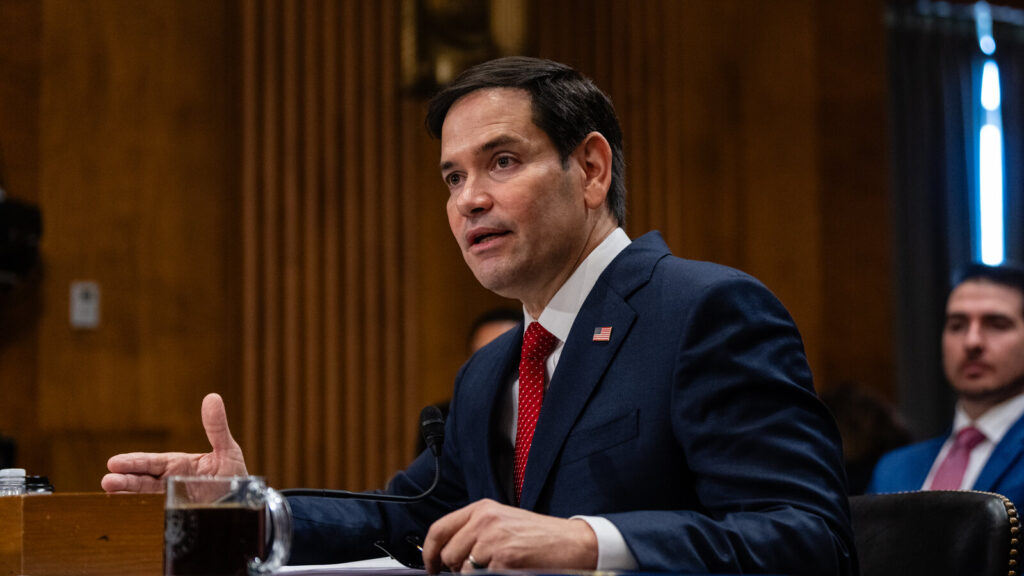
But under the uncompromising doctrine of Secretary of State Marco Rubio and a Trump administration that has fundamentally reset the terms of engagement, that era of no-strings-attached assistance is over.
“Foreign assistance is not charity,” Secretary Rubio declared at the Africa Day Forum in Washington on June 1. “It is a tool of American diplomacy and statecraft — and every American taxpayer dollar we spend must be directly justified on those terms.”
That philosophy was later articulated in sharper detail by outgoing Senior Bureau Official Nick Checker in his final address to the diplomatic corps. Checker described what he called a “disciplined, pragmatic and interest-driven strategy rooted in flexible realism.”
The age of “development only” lenses, he argued, has been replaced by a zero-based approach where only direct benefits to US security, commercial interests, or migration policy can justify a single dollar spent abroad.
For Lesotho, that transition has been less a pivot and more a violent lurch.
The aid freeze and its aftermath
Shortly after taking office, President Trump froze foreign assistance, triggering what the World Bank described as a widening current account deficit and plunging Lesotho — along with a myriad of other developing states — into what local officials called a national state of disaster.
The numbers remain staggering. According to reports in Maseru, Lesotho lost at least 23 percent of its PEPFAR money overnight — placing it among the top 10 nations globally for the share of such cuts. At the peak of the freeze, 93 percent of USAID support was slashed, leading to the dismissal of at least 652 frontline health workers.
Specifically, 60 percent of the country’s HIV testing counsellors lost their jobs. Testing numbers plummeted. Clinics shuttered. HIV-positive residents were left in despair.
To resume funding, the US demanded far more than gratitude. In closed-door negotiations, Lesotho was forced to accept a new memorandum of understanding.
Controversial health MOU
South African Bloomberg News detailed a controversial five-year health memorandum of understanding between the US and Lesotho that was finalized in late 2025. The agreement unlocked $232 million in US healthcare funding — contingent on Lesotho matching it with $132 million of its own scarce resources — but sparked immediate backlash due to conditions requiring the sharing of biological specimens and sensitive health data.
Leaked provisions revealed that Lesotho may be compelled to surrender citizens’ biological samples and genetic sequence data of detected pathogens to the United States. Civil society groups and local organizations have pushed back against the deal, expressing concerns that the aggressive conditions undermine the country’s long-term regulatory independence and sovereignty.
“The US just locked the ministers in a room somewhere and threatened them with the deadline,” Mokhothu Makhalanyane, a member and legislator of the ruling party Revolution for Prosperity, told Bloomberg. By signing, Lesotho committed an additional $132 million of its own money — a burden that threatened to double-tax an already fragile economy.
‘Trade not aid’
The Trump administration argues this is not bullying but burden-shifting. US embassy officials in Maseru reportedly insisted at the time that the new pact “reinforces Lesotho’s sovereignty” and puts it on an “accelerated path to a self-reliant health system.”
That message aligns perfectly with Checker’s vision at the Africa Day Forum.
“We are in the midst of a fundamental change in the relationship between the United States and African countries,” he said, “from one based on dependency towards one based on trade, investment, and mutually beneficial partnership.”
Yet for Lesotho — a country with few exports, limited bargaining power, and no strategic minerals or major port — the promise of “trade not aid” rings hollow. The proposed embassy closures, even if not yet finalized, send an unmistakable signal: Washington is retrenching from the world’s most vulnerable nations.
A continent left in the lurch
If the reported closures move forward, Lesotho would become one of a handful of countries worldwide without a sitting US embassy — a diplomatic backwater overnight. For Basotho seeking US visas, travel would still require costly trips to Johannesburg or Pretoria. For American investors, the signal of instability and disinterest would be deafening.
In this new world order, humanitarian suffering alone is no longer a justification for expenditure. It is a negotiating chip. As Lesotho struggles to keep its lights on and its clinics open — still recovering from the aid freeze that decimated its healthcare workforce — the message from Washington is unambiguous: if you need help, prove you are worth the investment.
Whether Lesotho — or any other small, aid-dependent nation — can meet that test remains to be seen. What is certain is that the era of American generosity, however flawed and paternalistic, has given way to something far more transactional. And for the poorest of the poor, that transaction may come at an unbearable price.