Lost in a legal maze
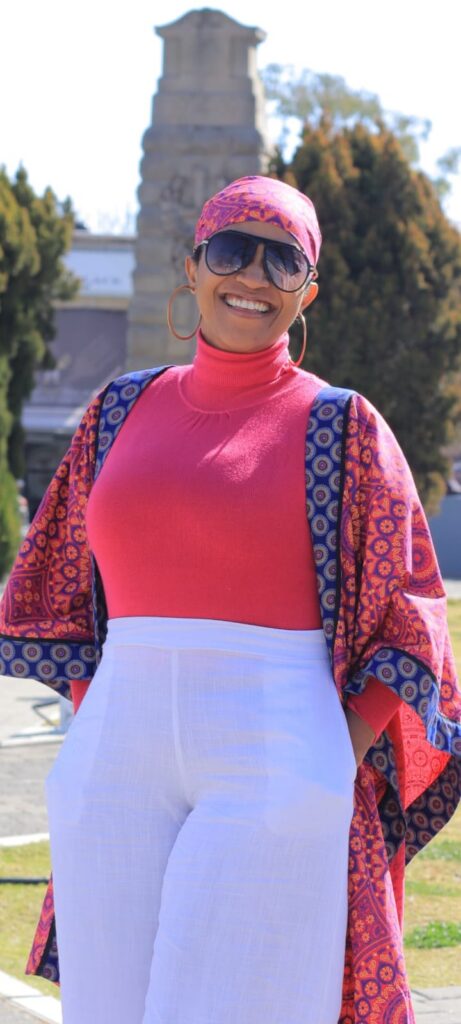
Mosotho creator’s copyright battle exposes gaps in Lesotho’s Intellectual Property framework
RELEBOHILE TSOAMOTSE
For years, Thato Lekatsa carried an idea she believed could become more than a business venture – it was a celebration of Lesotho, its identity and its people.
But what began as a labour of love for her nation has now become a cautionary tale about the complexities of intellectual property protection in the Mountain Kingdom.
Lekatsa conceptualised a Lesotho-themed cloth featuring the image of King Letsie III, the iconic Basotho hat and colours associated with the country. She developed sketches, prepared a professional portfolio, sought and obtained approval from the Royal Palace and eventually took the product to market.
The business, she says, was doing well.
But years later, the same creation would take her into the Commercial Division of the High Court, where she sought redress over what she considered the unauthorised reproduction and commercialisation of her work. The judgment, delivered on November 20, 2025, would leave her with more questions than answers.
At the heart of her frustration is what she sees as a glaring contradiction: while the court considered her creation within the framework of copyright protection and expressions of folklore, it also found that the required authorisation had not been obtained and that the respondent could not be held to have infringed copyright in the work.
Now, Lekatsa is consulting with lawyers and preparing to take her fight to the Court of Appeal, Lesotho’s highest judicial authority. She hopes the higher court will provide clarity on the legal questions raised by the case and what the decision means for the manuscripts, designs and other creative works she has produced but are yet to be published.
“I am currently consulting with a lawyer, I am appealing,” she says.
From successful creation to legal dispute
Initially, Lekatsa says, the business flourished. Her Lesotho-themed cloth resonated with Basotho who wanted to express their national pride through fashion. However, in 2022, she noticed a similar cloth being sold in the streets of Maseru.
The product was of noticeably lower quality and was not supplied by her.
Her investigation led her to several outlets and eventually to Chishtia Enterprise, trading as New Wool Fabric Shop. She also discovered that the design had allegedly been used at a symposium in Canada and that shops in Durban, South Africa, were supplying the cloth into Lesotho – developments she says demonstrated that her creation had acquired significant commercial value.
What troubled her most was that nobody had approached her to seek permission or negotiate a licensing arrangement.
“No one ever came to me to seek permission for us to even agree on a licensing arrangement,” she says.
Lekatsa took the matter up with New Wool Fabric Shop, but efforts to resolve the dispute were unsuccessful. Court-led mediation also failed to bring the parties to an agreement.
Frustrated but determined, Lekatsa approached the court seeking M150 000 in damages for copyright infringement, M350 000 for unjust enrichment and an order that the defendant pay her legal costs.
The judgment and the question of authorisation
High Court judge, Justice Moneuoa Kopo, dismissed Lekatsa’s claim, with the judgment considering Section 19 of the Copyright Order of 1989, which deals with certain uses of expressions of folklore and requires authorisation when the statutory conditions apply.
The judgment found that Lekatsa had sought authorisation from the office of the King for the use of his picture, but that this did not extend to the Basotho hat and colours.
“The applicant sought authorization to use His Majesty’s picture from the office of the King. This was only for the picture of His Majesty and not Basotho Hat and even the colours,” the judgment states.
The court further found that the required authorisation had to be sought from the minister responsible for arts. It concluded that because the work had not met that authorisation requirement, the respondent could not be held to have infringed copyright.
For Lekatsa, the legal reasoning remains difficult to reconcile.
“At one instance the court finds that my design meets protection requirements but later the court says the respondent has not infringed my work. I find that hard to understand,” she says.
She is also concerned that, in her view, the judgment does not fully reflect all the evidence presented during the proceedings, including oral testimony.
“Nowhere in the judgment do you see mention of the evidence led orally,” she says.
Lekatsa says she believed she had followed all necessary formalities, including engaging with the Intellectual Property office.
“It came as a shocker. At no stage was I ever told that I needed to seek permission from a ministry, even as I navigated these processes including when I visited the Intellectual Property office,” she says.
The cultural dilemma
The particular aspect that has unsettled Lekatsa is the treatment of the Basotho hat and colours. She says that, as she pursued the case, the cloth continued to circulate in the market, compounding her losses.
Her pain, she says, has therefore become about more than the design itself. It is also about the processes creators must navigate when they try to turn creativity into economic value. The Basotho hat – or mokorotlo – is not a fashion accessory.
It is a national symbol, deeply embedded in Lesotho’s cultural identity. Similarly, the colours associated with the country carry meaning that transcends mere aesthetics.
Lekatsa expected the central question to remain copyright in the creative work. The court’s treatment of authorisation for the colours, she says, was therefore difficult for her to understand.
“I thought the court would stick to the copyright, not the colours,” she says.
This issue illustrates why intellectual property literacy matters. Copyright is not a single, all-purpose form of ownership. Different intellectual property rights can protect different aspects of a creative or commercial product, while cultural expressions and national symbols can raise additional legal considerations.
Understanding the legal framework
Under Lesotho’s Copyright Order, 1989, original literary, artistic and scientific works receive copyright protection by the sole fact of creation. The law also sets out economic and moral rights and provides specific rules concerning expressions of folklore.
Expressions of folklore are elements of a community’s cultural heritage that have been passed down through generations, such as traditional designs, symbols, stories, music, crafts and other forms of cultural expression. The law treats these expressions differently from an original work created by an individual.
This means that a creator who incorporates elements of Basotho culture into a new commercial work may have to consider not only the copyright in the new work, but also whether the cultural elements used in it are subject to additional legal requirements or permissions.
According to Legal and Licensing Manager at the Lesotho Copyright Society of Authors and Artists (LESCOSAA), Advocate Moeti Marai, both copyright and industrial property law are important guides for creators seeking to understand ownership, exploitation and licensing of their work.
Marai says the legal framework helps creators understand and enforce their rights. For LESCOSAA, he says, this includes facilitating the exercise of economic rights through the licensing of certain uses and the collection and distribution of royalties where the society’s collective management mandate applies.
He says the absence of an operational collective management organisation for many years did not mean creators had no rights or could not license their works.
“The absence of the CMO did not prevent creators from licensing commercial use of their work. It just means that they now have a partner to travel this road with,” Marai says.
He explains that because copyright gives creators exclusive rights, they can, subject to the law and any applicable agreements or limitations, control and authorise certain commercial uses of their works.
That distinction is important for creators: having a right and knowing how to exercise that right are not necessarily the same thing.
Who owns a creative work?
For creators, another fundamental question is ownership. The Copyright Order establishes the author as the first owner of copyright in a protected work, subject to the provisions of the Order. This makes establishing authorship and retaining evidence of creation important practical issues for anyone building a creative business.
The protection of copyright, however, does not mean that every person who creates something will always retain every right indefinitely. Ownership can be affected by matters such as assignments, licences, employment arrangements and commissioned works.
Lawyer, Advocate Lehlohonolo Maseli, says the law provides the basic framework for protection, but creators must understand exactly what is protected and whether other legal rights or permissions apply to material incorporated into their work.
He says permission to use one component of a creative work does not necessarily amount to permission to use every other protected or regulated element incorporated into it.
“Creators should distinguish between copyright, industrial design, trademark protection and rules governing cultural or traditional expressions. A single commercial product can potentially raise several IP questions. That is why creators must also consult lawyers,” Maseli says.
He explains that a creator may think of a finished product as one creation, while the law may require different questions to be asked about the different elements contained within it, adding that evidence can become a creator’s strongest ally.
The importance of documentation
For Maseli, understanding intellectual property law should go hand in hand with documenting the creative process. He advises creators to retain evidence showing how and when their work was developed.
That can include dated sketches, drafts, original digital files, photographs, notebooks, emails, correspondence, approvals, invoices, contracts and records of publication or commercialisation.
“For a creator, these records may seem insignificant while a project is being developed, they can become highly significant when ownership or authorship is challenged,” he said.
Lekatsa’s experience raises a question that extends beyond one cloth design for creators: what happens when creativity is built around culture? As designers, artists, musicians, craftspeople and other creators increasingly turn Basotho heritage into commercial products, the boundary between individual creativity and cultural expression can become difficult to navigate.
The way forward
Understanding where copyright protection begins, what other forms of intellectual property may apply, and when additional permissions may be required is, therefore, becoming increasingly important for Lesotho’s creative community.
The case also highlights a wider challenge for creators seeking to turn cultural identity into economic opportunity. Having a creative idea is only the beginning.
Creators need to understand their rights, document their work, know what they are permitted to use, and understand how their creations can be licensed and commercially exploited.
For Lekatsa, the fight is not yet over. Her appeal to the Court of Appeal represents not only her personal quest for justice but also a broader attempt to secure clarity for Lesotho’s creative community.
The outcome of her appeal could have far-reaching implications for how Basotho creators navigate the intersection of individual creativity and cultural expression.
As she prepares for the next stage of her legal battle, Lekatsa’s story serves as both a warning and a call to action for creators across the country. The path from creative idea to commercial success is rarely straightforward, and understanding the legal landscape is essential for anyone seeking to protect their work and build a sustainable creative business.
The creative economy in Lesotho holds enormous potential. From fashion designers to musicians, visual artists to craftspeople, Basotho creators are producing work that could compete regionally and internationally.
But without a clear understanding of intellectual property rights and the legal frameworks that protect them, many creators will continue to find themselves in situations like Lekatsa’s – fighting for recognition and compensation long after their work has been taken from them.
As the Court of Appeal prepares to hear Lekatsa’s case, the eyes of Lesotho’s creative community will be watching closely. The outcome could determine not only the fate of one cloth design but the future of cultural entrepreneurship in the country.