China lifts temporary wool import ban, restoring hope for Basotho farmers
MOSA MAOENG
MASERU – The government of the People’s Republic of China has officially lifted the temporary import ban on wool originating from Lesotho, clearing the path for the resumption of a multi‑million Maloti trade that had ground to a halt following an outbreak of Foot‑and‑Mouth Disease (FMD).
The long‑awaited decision, announced jointly by China’s General Administration of Customs and the Ministry of Agriculture and Rural Affairs on May 26, 2026, brings immediate relief to over 45 000 farming households across Lesotho whose livelihoods depend almost entirely on wool and mohair earnings.
In an official statement dated May 26, the Chinese authorities confirmed that “based on the results of the risk analysis, the ban on wool from Lesotho imposed under Announcement No 28 of 2026 is hereby lifted.”
The announcement made clear that wool imports from Lesotho must now comply with China’s relevant laws and regulations as well as the technical requirements for FMD virus inactivation set out in the Terrestrial Animal Health Code of the World Organisation for Animal Health (WOAH).
The restriction was first imposed on March 17 after the discovery of an FMD outbreak on Lesotho’s soil. The ban triggered a crisis of unprecedented scale across the highland kingdom’s wool and mohair sector, with at least M100 million worth of fibre stranded in storage facilities at South African ports.
Consignments that had already been bid for by Chinese buyers were held in limbo, leaving farmers without payment for months on end.
Following sustained diplomatic engagement and technical consultations between Lesotho and the Chinese government, the ban was finally revoked.
An official statement from the Office of the government spokesperson on May 28 confirmed the breakthrough: “Following sustained diplomatic engagements and technical consultations between Lesotho and the relevant authorities of the People’s Republic of China, all outstanding issues that had hindered the export of wool have now been resolved.
Consequently, wool consignments that had been held at South African ports have since been released, and payments to Basotho farmers have already commenced.”
The government further extended its sincere appreciation to the Embassy of the People’s Republic of China in Maseru for its cooperation and constructive engagement throughout the process, and expressed special gratitude to wool and mohair producers’ associations for their dedication and collaborative efforts in securing the breakthrough.
The latest FMD wave arrived in Lesotho on February 18 when cattle displaying clinical signs consistent with the disease were identified at a cattle post in Mahlasela, located in the Botha‑Bothe District. A total of 17 cattle were sampled for testing, and laboratory results confirmed that six animals had tested positive for FMD antibodies.
The detection marked the first official confirmation of the highly contagious viral disease on Lesotho’s territory, setting off a chain of events that would soon paralyse the country’s most valuable agricultural export sector.
FMD affects cloven‑hoofed animals including cattle, goats, sheep and pigs. It spreads rapidly among susceptible animals and has severe consequences for both animal health and international trade. For Lesotho, which relies on livestock trade with neighbouring South Africa for much of its veterinary oversight and route‑to‑market access, the outbreak posed an existential threat to the entire wool value chain.
Within days of the confirmed outbreak, the government of Lesotho declared FMD a state of national disaster, mobilising financial resources to combat the disease. At a press briefing on March 2, then agriculture minister, Thabo Mofosi, urged farmers to monitor their animals regularly for signs of the virus and to vaccinate wherever possible.
“Production of wool and mohair will be affected as some small stock might be sick, though not visibly,” the minister warned at the time. “Wool and mohair production will still be regulated to avoid issues that may hinder it from being exported.”
The vulnerability of Lesotho’s livestock sector had been well‑documented long before the outbreak reached its borders.
In August 2025, following the detection of FMD in South Africa’s KwaZulu‑Natal province – which shares a porous border with Mokhotlong district – the Lesotho government announced heightened vigilance and potential trade restrictions.
Communications minister Nthati Moorosi warned that Lesotho was “continuously assessing and monitoring the situation,” but acknowledged that the country faced a particularly high risk due to its lack of a routine vaccination programme and limited veterinary infrastructure.
“Our animals are not vaccinated against the disease, and we lack sufficient veterinary personnel to carry out emergency containment measures,” Moorosi told a cabinet briefing.
In late 2025, the Ministry of Agriculture, Food Security and Nutrition took further steps to strengthen national defences, establishing a Multi‑Sectoral Task Team to co‑ordinate prevention and preparedness measures. At a meeting held on December 15, 2025, Ministry Director General, Dr Relebohile Lepheana, warned that an FMD outbreak could threaten access to lucrative wool and mohair markets and result in high costs from control measures, including vaccination, quarantine and restricted livestock movements.
She stressed that while Lesotho had maintained its FMD‑free status up until that point, the country remained at risk due to its heavy dependence on livestock trade with South Africa.
Those warnings proved prophetic. When the first cases were confirmed in February 2026, the impact rippled across the entire agricultural economy.
The cost of the ban: A sector in paralysis
The Chinese import ban was the single most devastating blow to Lesotho’s wool and mohair sector. China has long been the dominant buyer of Lesotho’s fibre, purchasing enormous volumes of wool and mohair without imposing the strict classification requirements demanded by European buyers.
Approximately 75 percent of Lesotho’s wool destined for the Chinese market, when combined with wool from other countries, typically enters China through this trade channel. The temporary suspension of this lifeline brought the sector to its knees.
According to Lesotho Wool and Mohair Growers Association (LNWMGA) chairperson, Mokoenehi Thinyane, Chinese buyers had already secured tonnes of Lesotho wool through bidding processes before the ban was imposed, but they were withholding payment until the goods could be shipped.
“The wool has already been bid for by buyers in China, but payment will only be made once it has been shipped,” Thinyane explained during the height of the crisis. Confiscated consignments worth over M100 million remained trapped in harbour warehouses, with farmers unable to access the funds they desperately needed.
Thinyane also pointed to what he described as inconsistencies in international trade restrictions.
“We are puzzled because South Africa has also been dealing with this disease, yet its products are still entering the Chinese market without impediments,” he said.
The explanation lay in the differing veterinary oversight systems between the two countries.
The Chinese Embassy in Maseru clarified that South Africa had promptly informed China of its FMD situation and control measures. After China assessed and confirmed that South Africa’s official wool safety supervision system met the required standards, the two sides consulted and agreed on quarantine treatment measures to eliminate FMD risk, allowing exports to resume safely.
For Lesotho, a full suspension was imposed while a similar bilateral framework was negotiated from scratch.
The impact of the ban was felt far beyond the harbour warehouses. Bobete Wool and Mohair Growers Association Chairperson, Chesang Maanela, from Thaba‑Tseka, described the suspension as a profound challenge for farmers who typically receive payment for their wool only once or twice a year.
“This is where our bread and butter come from,” Maanela said. “I am hoping this is surely resolved and that the government will not change its mind.”
Teboho Tese, Chairperson of the Sky Light Wool and Mohair Association in Qacha’s Nek, noted that producers had been forced to resort to heated storage facilities to ensure their wool remained safe from moisture and rodent damage during the extended period of uncertainty.
“We are truly thankful that China lifted the ban,” Tese said.
“This means our wool will be sold to all countries, and we are hoping that it will not bring any more complications.”
European markets remained open to Lesotho’s fibre throughout the ban, and buyers there continued to demand high‑quality, well‑classified wool while paying competitive prices. However, China’s willingness to purchase large volumes without strict classification requirements made it an irreplaceable market for Lesotho producers, particularly for lower‑grade fibre that would struggle to meet European specifications.
Beyond the immediate financial losses, the outbreak also threatened to disrupt the entire marketing and auctioning system upon which Lesotho’s wool sector depends. Lesotho’s wool is auctioned in Port Elizabeth through brokers, with international countries then purchasing the fibre through these auctions.
This system, while transparent, means that Lesotho producers lack direct access to buyers, adding layers of intermediaries and delays to the payment cycle. The ban exacerbated these vulnerabilities, trapping fibre mid‑chain between the farm gate and the final consumer.
The Lesotho‑China trade relationship: A strategic partnership
The wool and mohair trade between Lesotho and China forms a cornerstone of Lesotho’s agricultural export economy. Wool and mohair represent the backbone of Lesotho’s rural economy, accounting for roughly 60 percent of the country’s agricultural exports and supporting over 45 000 farming households.
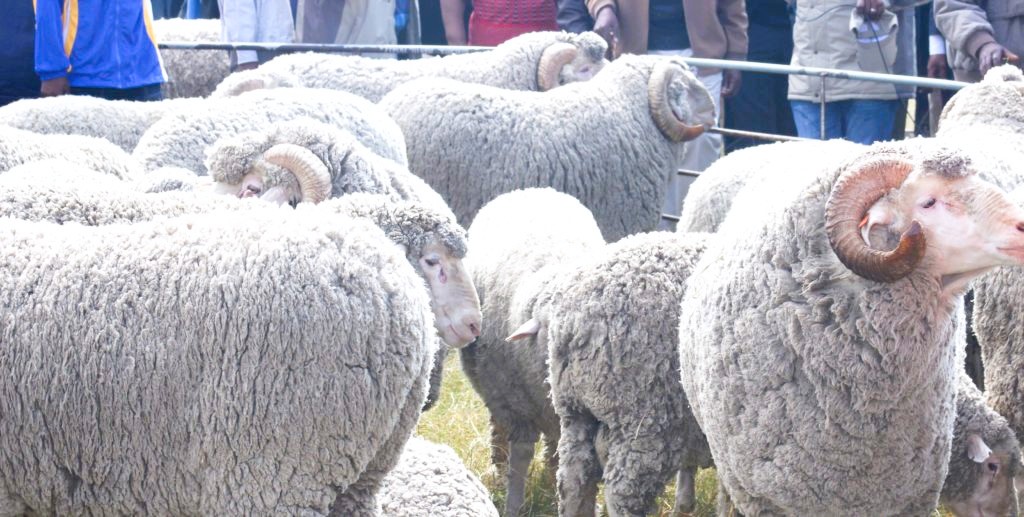
While Lesotho is a major regional producer of high‑quality Merino wool, it holds an even more significant global footprint in mohair, ranking as the world’s second‑largest producer of the luxury fibre, trailing only South Africa. Lesotho contributes approximately 14 percent of global mohair production, while its wool production represents about 0.2 percent of world output at roughly 5 800 tons annually.
The trade relationship has been strategically deepened in recent years through a series of preferential trade measures from the Chinese side. On December 1, 2024, China extended duty‑free access to 100 percent of tariff lines for thirty‑three least developed countries in Africa with which it maintains diplomatic relations.
Lesotho, as a Least Developed Country (LDC), fell squarely within this measure. This was further expanded on May 1, 2026, when China extended the same 100 percent tariff‑free treatment to all 53 African countries with which it maintains diplomatic relations, with the sole African exception being a country that recognises Taiwan.
For Lesotho, which already benefited from the earlier LDC measure, the practical effect has been continuity rather than expansion, but the broader strategic significance lies in the strengthened bilateral framework that accompanies the tariff preferences.
In March 2026, just weeks before the FMD outbreak was confirmed and the import ban imposed, Chinese Ambassador to Lesotho, Yang Xiaokun, announced that China and Lesotho were set to strengthen trade exchanges, fully implement the zero‑tariff policy and sign an agreement on wool and mohair exports to China.
Speaking at a media briefing in Maseru, Ambassador Yang highlighted that “the high‑quality wool and mohair products from Lesotho will be introduced into the Chinese market to support the development of related industries of Lesotho, helping increase employment in Lesotho and ensuring that the zero‑tariff policy delivers tangible benefits to the people of both countries.”
The ambassador further noted that China has granted zero‑tariff treatment to all least developed countries with which it has diplomatic relations and has maintained its position as the world’s largest trader in goods for nine consecutive years. The strengthened trade framework reflects a broader strategic partnership between the two nations, encompassing education, healthcare, cultural exchanges and media co‑operation alongside commercial ties.
The FMD ban temporarily interrupted the implementation of these progressive trade measures. However, the Chinese government has emphasised that its import restrictions are a necessary measure for FMD prevention and control, designed to safeguard livestock industry safety and biosecurity in full compliance with World Organisation for Animal Health (WOAH) standards.
The ban was never intended as a punitive measure against Lesotho, but as a temporary precaution while risk assessments were conducted and technical protocols were established.
Now that the ban has been lifted, the foundation has been laid for a more resilient and better‑regulated trade relationship. Chinese wool imports from Lesotho must now comply with strict WOAH‑aligned technical requirements for FMD virus inactivation, which may ultimately improve the safety and quality standards of Lesotho fibre entering the Chinese market.
Looking ahead: A revived industry
For Lesotho’s wool and mohair farmers, the lifting of the ban marks the end of a deeply anxious period. The next steps involve securing release permits for the fibre still held in storage and ensuring that payment flows reach farmers without further delay.
According to Thinyane, the Minister of Agriculture has reaffirmed that the government is awaiting a permit to release the wool and import it to China now that the ban has been lifted. Permits are expected to be issued within the coming week.
“We extend our heartfelt gratitude to the Minister of Agriculture as he mentioned that by next week they will get permits to release the wool that was stuck in Port Elizabeth,” Thinyane said.
The crisis has highlighted several areas in need of long‑term reform. Speaking at a recent reception in Maseru at the Chinese Embassy, ‘Malineo Seboholi, trade director at the Ministry of Trade, Industry and Business Development, called for technical support to help exporters meet Chinese market standards, investment in agro‑processing and manufacturing, particularly in wool and mohair value addition, logistics and trade facilitation to ease the constraints of Lesotho’s landlocked geography, and skills development and technology transfer.
Wool and mohair, which dominate Lesotho’s exports to China, are currently shipped largely in raw form. Domestic processing could create jobs and retain significant value within Lesotho rather than exporting it abroad.
New investors have also taken note of the sector’s potential. Baokunyaoda, a China‑hailing investor, has entered the Lesotho wool and mohair market with ambitions to transform the industry by linking local producers directly to international buyers while improving payment efficiency. The company has already begun purchasing wool and mohair locally at prices higher than those offered by South African brokers, stockpiling fibre in anticipation of the lifting of the FMD ban.
The company has also pledged to invest in local processing infrastructure, with plans to construct factories that would add value to raw wool and mohair directly within Lesotho.
The government, for its part, has reaffirmed its commitment to safeguarding the interests of Basotho farmers, strengthening agricultural trade relations and ensuring compliance with international animal health and export standards.
As the official government statement indicated: “The Government remains committed to safeguarding the interests of Basotho farmers, strengthening agricultural trade relations and ensuring compliance with international animal health and export standards.”
For now, the immediate priority is to clear the backlog of wool consignments and ensure that Basotho farmers receive the payments that have been long delayed. But in the medium and longer term, both governments will need to work together to establish a more robust framework for managing disease‑related trade disruptions – one that protects both China’s biosecurity interests and Lesotho’s economic survival.
The ban may have been temporary, but the lessons it has taught about the fragility of Lesotho’s export sector are likely to endure for years to come. The task that now lies ahead is to transform those lessons into lasting resilience.