PAC probe exposes more Ha Ramarothole rot
Retrospective ESIA for phase I of the solar project
TEBOHO KHATEBE MOLEFI and
MOTSAMAI MOKOTJO
MASERU – A critical Environmental and Social Impact Assessment (ESIA) for the Ha Ramarothole Solar Energy Project Phase I was carried out retrospectively in 2024, after the project was commissioned in 2023 – directly contravening laws requiring ESIAs prior to construction.
Public Eye has learnt from project sources, and verified by viewing the document, that this ESIA was completed only following the project’s completion.
The document has subsequently been provided to the Public Accounts Committee (PAC) after lawmakers grilled officials about its absence during their investigation into the Ministry of Energy.
The PAC’s ongoing probe is now examining this significant procedural violation, which bypassed the fundamental purpose of an ESIA – to assess and mitigate potential environmental and social harms before they occur.
The handover of the document comes amid the PAC demanding answers on the timing and legality of the Phase I, the ESIA faced intense scrutiny. This procedural failure raises significant concerns about compliance and due process in the project’s initial phase.
The Ha Ramarothole Solar PV Park, Phase I, is a 70 MW solar PV power project located at Ha Ramarothole in the Mafeteng district.
According to Global Data, which tracks and profiles over 170 000 power plants worldwide, the project is currently at a partially active stage. It is being developed in multiple phases.
The project was commissioned in June 2023 following the completion of Phase I.
Phase II of the project, which is similarly currently being scrutinised, paves way for a build-operate-transfer agreement for a 40-megawatt (MW) solar farm and a 20 MW energy storage system, which is aimed at the development, construction, and operation of a photovoltaic (PV) solar power plant with integrated energy storage capabilities – also in the Ha Ramarothole area.
The Environment Act of 2008, particularly Sections 20 (3 and 4), highlights the need for an ESIA ahead of any major project in the country.
“After considering the project brief, the director, in consultation with the Line Ministry, is of the view that the proposed project will not have any significant impact on the environment; he may approve the project or activity with such conditions as he deems appropriate.
The director may, where he is of the view that the project or activity is likely to have a significant impact on the environment, invite written or oral comments from the public thereon, and where necessary, may consult the community of the areas where the proposed project will be situated or of the proposed project and the contents of the project brief.”
This was not the case with the Ha Ramarothole Solar PV Park, Phase I, according to Public Eye findings.
“This is crazy, to say the least! How do you conduct an ESIA after the completion of a project? What was done was just to tick the boxes for the deal to go ahead and appear legal,” one source that the paper spoke to said.
“I know that you have been asking for the document, which is not classified, from the ministry – why was it being hidden?” the insider remarked. “Now we are faced with the huge burden of having to spend over M20 million to rehabilitate that area.”
Sources, independent of each other, have indicated that officials from the Ministry of Environment were hell-bent on concealing the EISA after publication by this paper of an article titled ‘Energy deal taints minister… Dr Retšelisitsoe Matlanyane signs a Frazer Solar-style agreement.’
“You need to ask Minister Letsema Adontši since we were instructed not to hand over the document.”
When contacted, a furious Adontši threatened to send these reporters to prison for possessing the document.
“It’s not true that I directed civil servants not to hand over a copy to Public Eye… ESIA should be given to anyone who wants it. Tell me who the official who refused to give a copy is. I told them to avail it. Where did you get it? If you have it…and illegally so, I don’t want to lie, we are going to arrest you,” Adontši said in a phone interview.
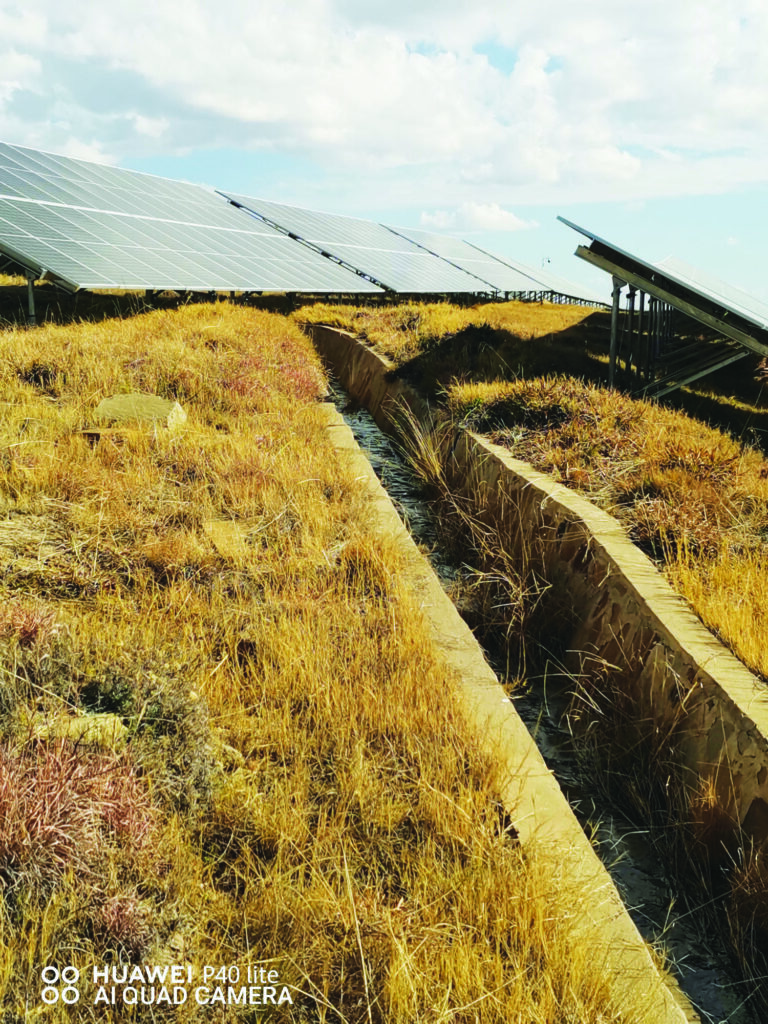
Ha Ramarothole chief, Konyana Ramarothole, has levelled serious accusations against developers of a Ha Ramarothole Solar Plant, alleging critical ESIAs were skipped before construction began, leading to visible damage including soil erosion.
Speaking exclusively to Public Eye, Chief Ramarothole, who led the community when the project commenced, stated unequivocally that no environmental or social impact studies concerning surrounding villages were conducted prior to construction. He revealed that inquiries only occurred long after the plant was operational.
“The proper process requires consulting us about the natural environment and local context before starting, just as OnePower did on a previous project here,” Chief Ramarothole stated. “Instead, officials did nothing – not even basic measures to protect the snakes in the area.”
OnePower (1PWR) is a utility-scale renewable power plant developer based in the country with operations expanding to Benin. Founded by MIT alumni, 1PWR specializes in developing both on-grid and off-grid structured finance renewable energy projects, with expertise in constructing solar mini-grids that connect underserved rural communities.
The Chief also highlighted impacts on local grazing land, traditionally used by farmers for livestock, saying community complaints were ignored.
“They saw gullies starting to form where they installed the solar panels,” he asserted, “yet they carried on as if nothing was wrong.”
He sharply questioned the project’s urgency: “They conducted an ESIA only after noticing the damage. Why was there such a rush to implement the project without due diligence?”
When Public Eye presented these concerns to Ha Ramarothole Solar Plant manager, Sebajoa Tau, he directed all inquiries to the Lesotho Electricity Generation Company’s (LEGCO) communications department.
However, testimony before the PAC during a site visit added weight to the chief’s allegations. Tšolo Lesia, the plant’s construction manager, admitted that he had never seen an ESIA report or any related documentation for the project since he was engaged in the project by LEGCO.
This admission came despite Lesia confirming ongoing efforts to rehabilitate significant soil erosion at the site.
“We are collaborating with soil conservation experts to comply with safety guidelines,” Lesia told the committee. Yet, he repeated, “I have not seen the ESIA.”
His statement astonished the visiting PAC members, underscoring the disconnect between the claimed rehabilitation efforts and the apparent absence of the foundational environmental impact assessment meant to guide such work and prevent damage initially.
The situation raises significant questions about the project’s planning, compliance with environmental regulations, and responsiveness to community concerns. Though LEGCO has since submitted and ESIA to the PAC the company has yet to comment substantively on the allegations.
Conducting an ESIA in Lesotho is mandatory for major projects under the Environment Act of 2008 and EIA Regulations of 2014. The National Environment Secretariat (NES) is the approving authority. International standards are also crucial, especially if projects involve international finance.
Projects listed in the Regulations – large dams, mines, major infrastructure – require a full ESIA approved by NES. The process mandates screening, scoping, baseline studies, impact prediction, mitigation planning, public consultation, disclosure and environmental clearance.
While projects funded by institutions like the World Bank, African Development Bank (AfDB), or Equator Principles signatory banks must comply with the IFC Performance Standards/World Bank ESF – the global benchmark covering environmental/social risk management, labour, pollution, community health/safety, land/resettlement, biodiversity, indigenous peoples, and cultural heritage.
Engaging the NES early and often is recommended to conduct robust environmental and socio-economic baseline studies, implement genuine, inclusive stakeholder consultation throughout, apply a clear mitigation hierarchy, develop practical Environmental and Social Management Plans, proactively assess transboundary and cumulative impacts as well as
ensuring transparent reporting and post-approval compliance monitoring.