Labour minister flags underpaid, underutilized women
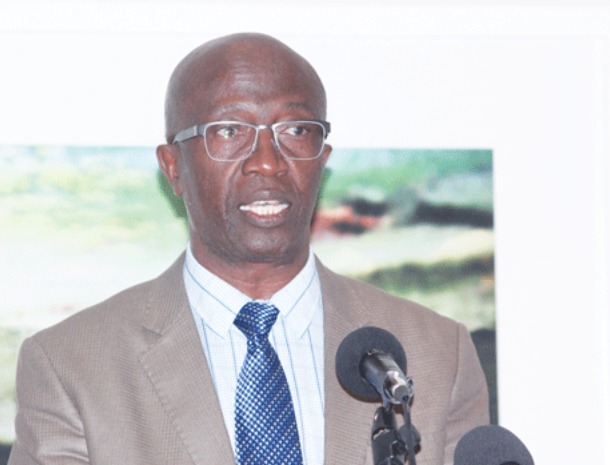
…and soaring youth unemployment
MOSA MAOENG
MASERU – Labour minister, Tšeliso Mokhosi, has expressed deep concern over the persistently low female labour force participation in the country, stating that Basotho women remain significantly underrepresented, underpaid and underutilized in the workforce.
Minister Mokhosi raised these critical issues during last week’s launch of the pivotal 2024 Labour Force Survey (LFS) Report.
The report, aimed at unpacking the country’s labour market challenges, was released by the Ministry of Finance through its Bureau of Statistics (BoS), in collaboration with the Ministry of Labour and Employment and the International Labour Organisation (ILO).
The launch was held under the theme ‘Advancing decent work through labour market evidence in Lesotho.’
The minister emphasized that the lagging participation of women reveals deep-seated “systemic and institutional barriers.” He asserted that addressing these requires “international redress” focused on improving access to education and skills training, expanding affordable childcare services, ensuring fair wages and creating genuinely inclusive workplaces.
Mokhosi further sounded the alarm on unemployment, particularly among the youth, labelling it “unacceptably high.” He warned that youth joblessness “continues to soar, casting a long shadow over the country’s demographic dividend and national stability.”
The minister painted a stark picture of the potential consequences, stating that Lesotho is now “confronted with a generation whose potential risks being lost to informal and insecure work arrangements.”
The newly launched LFS Report provides the crucial evidence base needed to tackle these intertwined challenges of gender inequality in the workforce and rampant youth unemployment.
Mokhosi said: “The LFS is not just a statistical report, it is a mirror. It reflects the daily struggles, aspirations, and contributions of Basotho men and women in the world of work. It tells us where our policies have made strides, where they have stumbled and where urgency is non-negotiable.”
In addition, he said it is important to bridge the gap between labour supply and labour demand. He said this means more than producing skills but “producing the right skills for the right sectors at the right time.”
He said it means ensuring that the labour market functions not as a one-way road, but as a dynamic ecosystem where employers, educators and workers co-create opportunities.
On behalf of the Director of the ILO in Pretoria, Senior Statistics Specialist, Maria Payet, delivered her remarks noting that this survey is the first to be conducted after the Covid-19 pandemic which has impacted the labour market. She mentioned that with a population of over two million, Lesotho is considered a small country, compared to its neighbours in Southern Africa.
She said the 2024 LFS report unpacks the labour market challenges faced by the country, and with the information now published, the policymakers are better equipped to deal with the challenges.
She said the level of the details produced from this LFS highlights the country’s commitment to understanding the labour market, so as to improve labour market experience. She said the survey provides a wide variety of labour experience of different groups such the youth, labour migrants and those that are functionally limited.
She said the Lesotho LFS was based on the following standards – the 19th ICLS Resolution on work, employment and labour underutilization and the 20th ICLS Resolution on work relationships.
“This also includes the 21st ICLS Resolution concerning statistics on the informal economy. The 19th ICLS’s implementation shows that the employment-to-population ratio stands at 36.4 percent, in other words about one third of the working age population are in employment.
The use of 20th ICLS has expanded the set of information about the characteristics of the employed population, and provided information about the type of authority people have in their jobs, and the levels of economic risks they face,” said Payet.
She noted that on the 21st ICLS, Lesotho joins six other countries in SADC to use the updated standard for measurement of informal economy, adopted in 2023. She said informality is a phenomenon that is widespread on the continent, and the data shows that the phenomenon is also prominent in Lesotho, with an informal employment rate of 84 percent.
She concluded by noting that the ILO stands ready to provide support to the concerned stakeholders, to digest, analyse and interpret the data from the report. She also mentioned that ILO will continue to support data production from the 2024 LFS, by supporting the country to produce the required additional thematic reports which can provide additional information on different phenomenon in the labour market.
Speaking at the same event, the Principal Secretary in the Ministry of Finance, Nthoateng Lebona, said the 2024 LFS is a critical tool for understanding the structure, dynamics, and challenges of Lesotho’s labour market. She said it provides with insights into key indicators such as the Labour Force Participation Rate (LFPR), Employment-to-Population ratio, unemployment, youth not in employment, education and training, informality and Labour Underutilization (LU1-LU4).
She said these findings are critical in identifying policy gaps and opportunities for improving access to decent and productive employment for all Basotho. She added that the report therefore unpacks the labour and employment situation in the country, highlighting headline indicators and points to the remaining policy issues that the country still needs to address.
“The LFPR stands at 52 percent, indicating that just over half of the working-age population is either employed or actively seeking work. The unemployment rate remains high at 30 percent and even more concerning is the extend of labour underutilization, with the composition measure (LU4) reaching 46 percent, informal employment continues to dominate, accounting for 84 percent of total employment, especially for women and youth whereas youth unemployment is 48. 75 percent for the 15-24 age groups,” said Lebona.
The 2019 Lesotho Labour Force Survey report provides statistics on the country’s labor market, including employment, unemployment and other key labor indicators. The survey was conducted to provide data for planning and policy formulation related to development.
Key findings from the 2019 LFS include labour force approximately 672 711 persons were in the labour force, with 521 445 employed and 155 266 unemployed, unemployment rate; the official unemployment rate, using a strict definition was estimated at 22.5 percent.
The total population of Lesotho in 2019 was 2 006 176 with 1 346 770 in the working age population (15+ years).