Cleaning Monaphathi, Moahloli’s mess
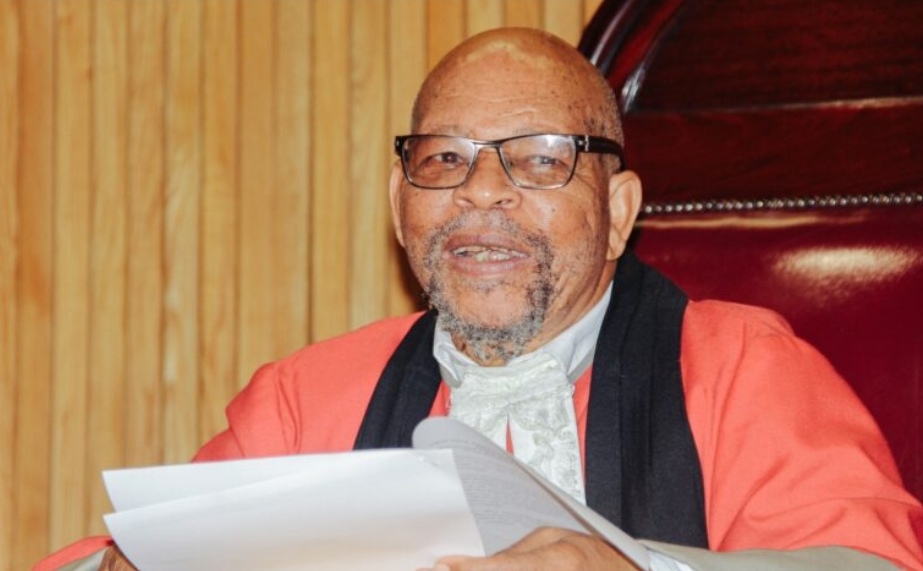
- Judiciary reportedly seeking acting judges in emergency move to tackle mountain of undelivered judgments
- As retired justices sue Chief Justice for withholding their retirement benefits
TEBOHO KHATEBE MOLEFI
MASERU – Facing a mounting crisis of undelivered judgments, including files left incomplete when judges departed, judicial authorities are set to name magistrates and some legal experts as Acting Judges, sources tell Public Eye – the move aims to slash the critical backlog choking the courts.
The earmarked appointees include Magistrates ‘Nthabiseng Moopisa Motilane, ‘Manapo Motebele, Monyake Hlabanyane, Palesa Rantara, and several officers from the office of the Attorney General.
Their primary mandate will be to tackle the substantial caseload abandoned by Justice Keketso Moahloli, who resigned, and Justice Tšeliso Monaphathi, who has retired.
The scale of the backlog is staggering.
Justice Monaphathi retired leaving a total of 107 undelivered judgments, some dating back to the very beginning of his judicial career in 1994. Justice Moahloli’ s resignation left 84 cases incomplete.
This combined backlog of cases has caused significant delays in justice and placed immense strain on the judicial system.
In an unprecedented step directly linked to the undelivered judgments, Chief Justice Sakoane Peter Sakoane has withheld the retirement benefits of both Justice Monaphathi and Justice Moahloli.
This action has prompted the two former judges to sue the Chief Justice.
The lawsuit adds a layer of complexity to the situation surrounding the case backlog.
The appointment of Acting Judges from outside the usual pool of High Court justices, including serving prosecutors, underscores the severity of the crisis and the urgent need to clear the dockets. The Acting Judges are expected to be assigned specifically to finalize the judgements in the cases left by Moahloli and Monaphathi.
“The Chief Justice is determined to restore functionality and public trust in the courts,” a source familiar with the appointments stated.
“The volume of undelivered judgements, some decades old, is simply untenable and undermines the entire justice system. These acting appointments are a necessary emergency measure.”
The Office of the Chief Justice and the Judicial Service Commission (JSC) have yet to make an official announcement regarding the appointments or comment on the lawsuit filed by Justices Monaphathi and Moahloli.
However, the move signals a clear intent by the judiciary’s leadership to confront the legacy of delayed judgments head-on.
Legal observers note that the success of this initiative will depend heavily on the resources and support provided to the Acting Judges as they work through the complex and often aged cases. The resolution of the lawsuit regarding the withheld benefits also remains a closely watched development within Lesotho’s legal community.
Approached to confirm these developments the PRO in the judiciary, ‘Mabohlokoa Mapikitla, said she had no information on the appointment of the Acting Judges.
However, she brought to the attention of this publication communication from the Registrar of the High Court of Lesotho, Advocate ‘Mathato Sekoai, announcing a roll-call on August 4 on all matters pending before Justice Monaphathi and Moahloli.
“All litigants are invited to appear with their legal representatives in person,” Advocate Sekoai said in the communiqué addressed to the Attorney General, the Principal Secretary-Justice and Law, the National Assembly, Commissioners of Police and the Correctional Service, the Chief Legal Aid Counsel, among others.
The persistent issue of judges in the country retiring or resigning without delivering reserved judgments or concluding part-heard cases is a profound failure demanding urgent systemic reform, as highlighted by verifiable judicial commentators.
Renowned judge and legal scholar, the late Justice Winston Churchill Matanzima Maqutu, consistently argued that leaving judgments incomplete violates a judge’s fundamental oath to “do right to all manner of people.”
He stressed that this practice constitutes a breach of judicial contract both with the state and, more critically, with the litigants who placed their faith in the court. He argued that the resulting delays, often stretching for years awaiting a new judge or rehearing, are a denial of justice and erode public confidence in the entire system.
Maqutu placed significant blame on poor succession planning and administrative lethargy within the judiciary and the JSC in ensuring timely replacements and managing workloads as retirements approach.
Senior Counsel and commentator, Advocate Haae Phoofolo KC, has also publicly criticized the lack of enforceable accountability mechanisms. He notes that while judges enjoy independence, this cannot be a shield for failing to deliver on core functions. The absence of meaningful consequences – beyond mere criticism – for departing with undelivered judgments creates a culture of impunity.
He argues for stricter internal judicial administration protocols mandating timelines for judgment writing as retirement nears, coupled with clear JSC oversight to monitor case completion progress for judges nearing departure.
Sello Shale, a legal analyst and former law lecturer, has also emphasised in local publications the devastating human impact, particularly on vulnerable litigants in criminal or urgent civil matters – like child custody, eviction.
He points to specific instances, such as the significant backlog exacerbated by multiple simultaneous judicial departures in recent years such as the post-2017 political instability period, where cases stalled for years. Shale argues this systemic failure undermines the Constitution’s guarantee of fair trial within a reasonable time.
He calls for mandatory statutory provisions requiring judges to clear their dockets before departure, barring exceptional circumstances, and robust case management systems to prevent excessive case accumulation on any single judge nearing retirement.
The public awaits tangible progress in clearing the backlog that has left hundreds of litigants in limbo, some for nearly thirty years.