Mofomobe challenges SA transit blockade

Lawmaker appeals to UN over obstruction citing human rights crisis
TEBOHO KHATEBE MOLEFI
MASERU – The already complex relationship between Lesotho and its sole neighbour, South Africa, faces a severe new strain centred on immigration and transit rights, triggering a formal appeal to the United Nations over alleged violations of international human rights law.
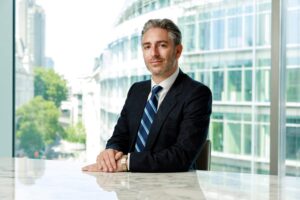
In a move underscoring deep frustration, Machesetsa Mofomobe, leader of the Basotho National Party (BNP) and a Member of Parliament of Lesotho, has urgently petitioned the UN High Commissioner for Human Rights, Volker Türk, accusing South African authorities of systematically denying Basotho their fundamental right to freedom of movement.
The core of the dispute, laid bare in Mofomobe’s July 22 letter to Türk – obtained by this publication – revolves around South Africa’s classification of numerous Lesotho nationals as ‘undesirables’ due to past instances of overstaying visas within South Africa itself. Crucially, Mofomobe alleges that this classification is now being weaponized to prevent these individuals from transiting through South Africa to reach third countries, effectively trapping them within Lesotho.
“The current actions by South African authorities amount to a violation of the right to freedom of movement, enshrined in Article 12 of the International Covenant on Civil and Political Rights (ICCPR), to which both Lesotho and South Africa are parties,” Mofomobe states unequivocally in the letter addressed to the UN Human Rights Council in Geneva.
He writes in his capacity as both BNP leader and an elected representative, elevating the complaint beyond partisan politics to a matter of national and international concern.
Lesotho’s unique geographical reality – entirely landlocked and surrounded by South Africa – makes this issue existential. South Africa is not just a neighbour, it is Lesotho’s only gateway to the wider world. All air travel requires transit through South African airports like OR Tambo International in Johannesburg. All road travel to any other nation necessitates passage through South Africa.
Mofomobe details a disturbing pattern emerging over recent months in which Basotho holding valid visas for destinations like Europe, Asia, or other parts of Africa, arriving at South African ports of entry solely to transit, are being denied entry.
Their crime?
Past immigration violations within South Africa.
The consequence, as described by Mofomobe, is devastating, he says “many are left stranded or effectively trapped in Lesotho, unable to travel abroad for work, education, medical treatment or family matters.”
This creates a cascade of human rights concerns, particularly contravening the Freedom of Movement (ICCPR Art 12) over the direct violation cited, preventing individuals from leaving their own country to reach another. It blocks transit prevents access to employment opportunities abroad and educational institutions overseas, denies transit which can obstruct access to specialized medical treatment unavailable in Lesotho and separates individuals from family members residing in other countries.
Mofomobe argues the opaque application of the undesirable classification, seemingly targeting Basotho disproportionately, may violate principles of fairness and non-discrimination enshrined in the ICCPR and further emphasized in the African Charter on Human and Peoples’ Rights (ACHPR), which both nations have ratified.
The appeal forcefully argues that South Africa’s actions extend beyond bilateral friction to contravene established international and regional norms: mainly the ICCPR Article 12 which explicitly guarantees the right to liberty of movement and freedom to leave any country, including one’s own.
The BNP leader argued, speaking to Public Eye, that restrictions must be provided by law, necessary for national security, public order, public health, morals, or the rights of others and consistent with other ICCPR rights.
He cited the ACHPR, which upholds similar rights to movement (Article 12) and emphasizes principles of non-discrimination and regional solidarity crucial for African nations, particularly those landlocked. As well as the Principles for Landlocked States.
While not a specific treaty, international law and UN resolutions recognize the unique vulnerabilities of landlocked developing countries (LLDCs) like Lesotho. Denying them reasonable transit access through neighbouring territories effectively strangles their economic and social development and isolates their citizens, contravening the spirit of international cooperation.
Mofomobe contends that blanket bans based on past overstays for transit passengers fail these tests.
He further argues that South Africa’s “unilateral and opaque border practices” disregard these obligations, transforming past immigration infractions within its territory into a perpetual punishment that severs Basotho from essential global connections.
Faced with what he describes as an escalating humanitarian and rights crisis for Basotho, Mofomobe’s appeal to the UN is a direct call for international scrutiny and action.
He formally requests the UN Human Rights Council to investigate the conduct of South African immigration authorities specifically regarding the treatment of Lesotho nationals seeking transit; and to assess the full human rights impact of these restrictions, particularly on freedom of movement and access to external opportunities.
He also calls for guidance and/or recommendations to ensure LLDCs like Lesotho are not denied access to the outside world through such practices, urging adherence to international law and human rights standards.
“The BNP, and I as a Member of Parliament, stand ready to cooperate with your office in providing documentation, testimonies or any other information you may require,” Mofomobe concludes, signalling his commitment to pursuing the matter.
This appeal lands amidst persistent, multifaceted challenges in Lesotho-South Africa relations. While bound by geography, history and deep economic interdependence – notably the tens of thousands of Basotho migrant workers in South Africa – friction over border control, undocumented migration and crime is common.
South Africa, grappling with its own complex immigration pressures, economic strains and social tensions, has periodically tightened border enforcement, impacting Basotho disproportionately due to their reliance on cross-border movement for work, trade and essential services.
The ‘undesirable’ classification system within South African immigration law is not new, but its reported application to transit passengers from Lesotho marks a significant and troubling escalation, perceived by Mofomobe as punitive and disregarding Lesotho’s unique vulnerability.
It risks further eroding trust and cooperation between the two nations.
The situation presents South Africa with a fresh challenge, balancing its legitimate sovereign right to manage borders with its international human rights obligations and its unique responsibility towards its sole enclave neighbour. For Lesotho, it’s a fight for the basic freedom of its citizens to connect with the world beyond the encircling borders.
As the UN considers this urgent appeal, thousands of Basotho seeking work, education, healthcare, or family reunification abroad remain in limbo, their futures held hostage at South Africa’s transit gates, testing the boundaries of international law and neighbourly solidarity.
The resolution of this crisis will be a critical test for both nations’ commitment to the human rights conventions they have pledged to uphold.