Japan, Lesotho bilateral ties to impact feeding in pre-primary school
BOKANG MOSHOESHOE
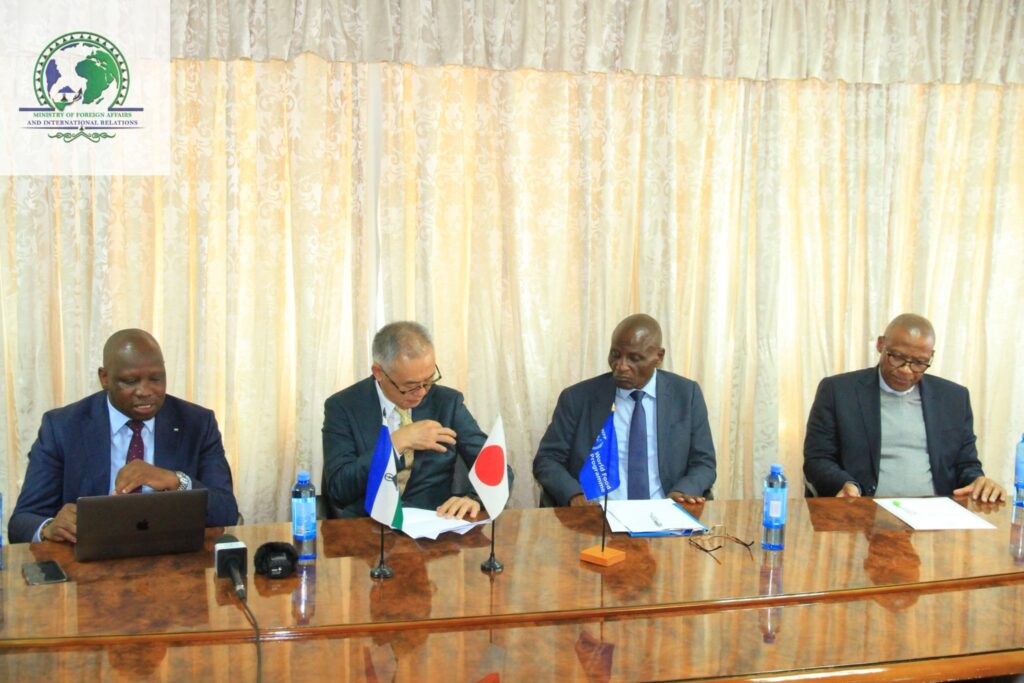
MASERU – A significant chapter was added to the growing partnership between the Kingdom of Lesotho and the Government of Japan during an official Exchange of Notes Signing Ceremony held at the Ministry of Foreign Affairs and International Relations. The event marked Japan’s renewed commitment to supporting food security and early childhood education in Lesotho through a major grant through the World Food Programme (WFP).
Japanese Ambassador HE Fumio Shimizu, together with the WFP Country Director and Representative Elliot Vhurumuku, signed the official documents to formalize Japan’s contribution of JPY 200 million (approximately USD 1.3 million or M24 million).
This grant fund is earmarked for the “Providing Food and Nutrition Assistance to Pre-Primary School Children” project – a vital intervention aimed at delivering nutritious meals to more than 50,000 pre-primary learners in over 2,400 early childhood centres across Lesotho’s 10 districts.
The high-ranking ceremony was attended by ministers Lejone Mpotjoana and Professor Ntoi Rapapa, the ministers of Foreign Affairs and Education respectively.
Ambassador Shimizu reiterated Japan’s long-standing partnership with Lesotho, recalling that food aid from Japan has been extended to the Kingdom annually since 1982, reflecting a relationship grounded in mutual respect and deep friendship.
“It is an honour for me to attend this signing ceremony on behalf of the Government of Japan. Today’s ceremony marks yet another chapter in Japan’s enduring commitment to the people of Lesotho,” Shimuzu said.
Ambassador Shimuzu highlighted the importance of school feeding programmes, describing them as critical investments in the future of a nation saying “it is imperative that they invest in the well-being of these children, as they are the foundation upon which the future of this nation will be built.”
He noted that the support is not merely about food provision, but about empowerment, access to education, and community development.
Shimuzu detailed the food assistance package which includes 360 metric tons of maize meal, 85 tons of canned fish from Japan, and 35 metric tons of locally sourced fresh vegetables, a move that also supports Lesotho’s smallholder farmers from the districts of Berea, Leribe, and Maseru.
World Food Programme (WFP) commended Japan’s lifesaving support as Elliot Vhurumuku, WFP Country Director, warmly welcomed the donation.
Vhurumuku stressed that the food fund comes at a critical time with Lesotho facing apparent food insecurity.
He explained an estimated 524,963 basotho face hunger in the 2025/2026 consumption year – a peril driven by persistent droughts, economic strain, and global instability.
“Japan’s support will allow WFP to continue the provision of lunch meals to pre-primary learners for one full school year. This will not only boost school attendance but help improve health and nutrition outcomes for children from the most vulnerable families,” Vhurumuku said.
He emphasized that the grant aligns with WFP’s 2024/2029 Country Strategic Plan, which prioritizes partnerships and sustainable models of school feeding.
Through technical and financial assistance, WFP will continue to support the Ministry of Education to manage and eventually take full ownership of the national school feeding programme.
Minister Rapapa expressed deep appreciation for the Japanese and WFP for their unwavering support.
He underlined the profound impact of school feeding on vulnerable families, stating “There are children who go to school just to have a meal. This programme not only uplifts education but also supports the well-being of our youngest citizens.”
He called the signing a moment of hope for the thousands of families struggling to meet their daily nutritional needs and thanked the Japanese government for their generous heart ensuring that no child is left behind in Lesotho.
“Without the support of the Japanese, our nutrition and attendance figures would be worse than they are today. For that, we are grateful,” the minister said.
Rapapa also reminded attendees of the King’s role as a global advocate for food and nutrition security, urging all stakeholders to treat the issue with the seriousness it deserves.
Minister Mpotjoana described the ceremony as a milestone in Lesotho/Japan relations, built on shared values and a common determination to eradicate hunger.
He traced the diplomatic ties back to 1971 and highlighted Japan’s consistent support to Lesotho’s development over the decades.
“Japan’s presence in Lesotho is not just felt; it is deeply impactful through various initiatives, including school feeding. This gesture is a powerful reminder that solidarity knows no bounds,” he said.
Mpotjoana expressed confidence in the future of bilateral relations, stating relations between Lesotho and Japan are at their most satisfying in history.
Ambassador Shimizu also took the opportunity to preview TICAD 9 (Tokyo International Conference on African Development), which Japan will host in Yokohama from August 20-22 this year.
The summit, he explained, will provide an opportunity for African and Japanese leaders to engage in collaborative dialogue under the guiding principles of “African ownership and international partnership.”
Following His Majesty King Letsie III’s recent visit to Japan for the Lesotho National Day at the Osaka Kansai Expo 2025, Ambassador Shimizu said the TICAD conference would be another step forward in reinforcing strategic cooperation between Japan and African nations, including Lesotho.
The Exchange of Notes signed today is more than just a financial agreement; it is a symbol of enduring friendship. As WFP, the Government of
Thousands of children are set to benefit from the meals that nourish their bodies and empower their minds.