A tribute to the late Professor LBBJ Machobane, a scholar, statesman and son of the soil
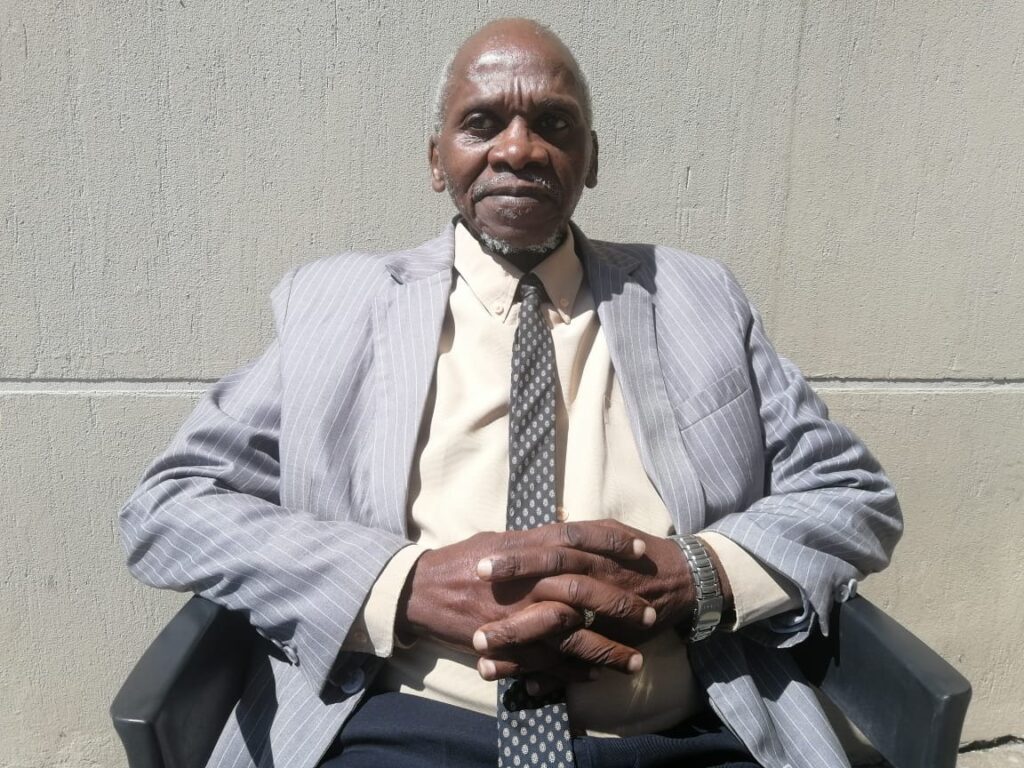
LEBOHANG CHEFA
There are moments in the life of a nation when time itself seems to pause, compelling us to look back and take measure of the path we have travelled. The passing of a titan, one whose life was so deeply interwoven with the very fabric of our national story, is one such moment.
It is with a profound sense of loss that Lesotho this week bids farewell to Professor Lehlohonolo Banda Burns Jiane Machobane, better known as LBBJ, a formidable intellect and a public servant of rare distinction, who passed away this past weekend.
His absence leaves a void not only in the hallowed halls of academia but in the collective consciousness of the nation he served with such untiring dedication.
To many, he was the esteemed Professor, the former minister, the author whose name graced the spines of seminal historical texts. Yet, to this writer, a memory from 21 years ago crystallises the essence of the man behind the accolades.
During an interview for the Public Eye newspaper at the National University of Lesotho, his eyes twinkled with a youthful mischief as he recalled his very first day at Nqechane P.E.M.S. Primary School in 1950.
“My first day at school was exciting,” he reminisced, a gentle smile playing on his lips.
“I felt I had begun the new culture of speaking English.”
The towering intellectual, the man who would lecture in universities across continents, then shared a vignette of charming vulnerability. An older classmate had coached him on the essential English phrase for a call of nature: “Please ‘M’e Miss, lette me gondo!”
The young Lehlohonolo, earnest and eager, dutifully recited the line and to his delight, it worked.
“It was years later that I realised that it should have been, ‘Please ‘M’e Miss, let me go out’,” he recalled with a hearty grin. In that single, self-effacing anecdote lay the portrait of the entire man: humble in his origins, ambitious in his aspirations and imbued with a warmth and humour that a lifetime of scholarly achievement never diminished.
Born on October 24 1941 in the historic cradle of Morija, Professor Machobane was destined for a life of letters. He was the firstborn of seven children to the late James Jacob Machobane, himself an accomplished author of works such as Mphatlalatsane ea Sekhutlo and the pioneering founder of the Machobane Farming System and the late ‘Malehlohonolo Rahaba ‘Mamotsoahae Machobane.
From this rich soil of intellectual and agricultural innovation, a great tree was to grow.
His educational journey was a map of the Kingdom’s finest institutions of the era: from Hlotse Intermediate in 1955, to St Monica’s in 1957 and finally to Christ the King High School in 1958. It was here that the young man began to forge his own identity. He reveled in the independence from his parents, confessing to sleepless nights spent exploring neighbouring villages.
This burgeoning freedom found expression in physical pursuits; discovering a knack for soccer and tennis and with a passion for weightlifting, beginning to model his physique, even competing in shot-put and discus finals in Maseru.
Yet, this was also where he tested the boundaries of authority. A streak of youthful rebellion saw him suspended for a month as a ringleader in a student strike. The punishment was severe: privileges revoked, weekly whippings and the arduous task of unearthing ten peach tree stumps per person.
But in his recollection, there was no bitterness, only a profound lesson. “It was jolly harsh, but profitable for young men,” LBBJ had recalled. “It turned our energies into our studies.”
The proof was immediate and undeniable: at the end of their Junior Certificate examinations, he and two fellow ‘ringleaders’ achieved first-class passes, earning bursaries for their efforts.
This academic excellence became his passport to the world. A Ford Foundation scholarship in 1960 propelled him across the Atlantic to Piney Woods Junior College in Mississippi, an exclusive institution for non-white students. From 1961 to 1964, in a world grappling with civil rights, LBBJ found a welcoming and instructive environment.
His prodigious work ethic and sharp intellect saw him named the 1962 Piney Woods Student of the Year. His intellectual odyssey continued at Tuskegee Institute University in Alabama, where he earned a Master of Education and at Lehigh University in Pennsylvania, where he secured an MA in History.
It was during this American sojourn that he honed his craft as an educator. Appointed as an instructor of African History at Jackson State University in 1969, he faced the crucible of the lecture hall. He recalled the painful first year, spending two hours preparing for a single lecture, reading deep into the night to ensure his delivery would captivate his students.
But persevere he did and by his third year, he was not only comfortable but was beginning to publish, laying the foundations for a magnificent scholarly career.
In 1975, Professor Machobane answered the call of home, returning to Lesotho to serve as a senior curriculum supervisor at the Ministry of Education. A year later, he joined the National University of Lesotho (NUL), the institution that would become synonymous with his name for decades to come.
His rise was meteoric, a proof of his capabilities: Lecturer, Head of Department, Deputy Dean, Senior Lecturer in 1982, Associate Professor in 1995 and finally, reaching the pinnacle as a Full Professor in 2001.
His contributions to NUL were not confined to the lecture halls. As an administrator, he was at the epicentre of the university’s transformation. Serving as Pro-Vice Chancellor from 1980-82 and Acting Vice Chancellor from 1986-88, he was a key architect of its post-declaration identity as a truly national institution.
“I was at the centre of it all,” he proudly stated, recalling his pivotal role in the fight for localisation. He viewed the subsequent crop of Basotho PhD holders as the direct fruit of the hard-fought battles he and his colleagues had waged.
Professor Machobane’s sense of duty, however, extended beyond the university campus. From 1988 to 1992, he took a leave from academia to serve the nation as the Minister of Education.
He stepped into a role where the expectations were immense; teachers saw him as one of their own and looked to him for salvation from their long-standing grievances. He and his team responded not with platitudes, but with policy.
He championed a new framework for education, with a cherished component of self-reliance that, for a time, thrived before, as he lamented, it was undone by corruption. Yet, his legacy from this period is indelible.
It was under his stewardship that the watershed Teaching Service Commission was created and critically, that the process for teachers to earn pensions – a right extended equally to women – was driven into reality, securing the futures of thousands of educators.
Even after returning to his beloved roles of teaching and research, he remained a sharp and concerned observer of the nation’s health. He opined with considerable gravitas on what he saw as the greatest challenge facing Lesotho: the collapse of institutions and procedures. He spoke of a malaise where public servants could behave like untouchables, offering poor service with impunity.
“Procedures are thrown out of the window,” he had warned, noting that even basic filing systems were not maintained, leading to a culture of information leakages and inefficiency. His was a patriot’s critique, born not of cynicism, but of a deep and abiding love for his country and a desire to see it function at its best.
His intellectual legacy is immortalised in a formidable body of work. His articles on Basotho religion, chieftainship and culture were referenced in publications across the globe.
His books, including Government and Change in Lesotho: 1800-1966 and King’s Knights: Military Governance in Lesotho, 1986-93, remain essential reading for anyone seeking to understand the complex tapestry of our history.
Beyond the public figure was a devoted family man. He met his wife, another accomplished academic, Professor ‘Matšepo Machobane, at the NUL refectory in 1976. Together, they built a life and a family, blessed with three children.
Upon retirement, he had planned to undertake the scholarly biography of his father, a poignant project that now remains a testimony to a mind that never ceased its work. A farmer to the end, he took a leaf from his father’s book, remaining connected to the very soil from which he sprang.
Today, we do not merely mourn a man; we mourn an era. We bid farewell to a great son of the soil, a character who was truly larger than life, an accomplished scholar whose insights illuminated our past, a public servant who shaped our present and an author whose words will echo into our future. Professor LBBJ Machobane has left an indelible mark upon this nation. His lectures may have ceased, but his lessons endure. Go well, LBBJ. Your legacy is cherished, your memory, a blessing.
• Lebohang Chefa first wrote the late Professor LBBJ Machobane’s profile in 2004 while working as this paper’s correspondent at the National University of Lesotho in Roma