Constitutional crisis erupts
- As govt admits ‘gross error’ in bypassing referendum for 10th Amendment, faces legal annihilation
- Minister Ramoeletsi’s stunning admission validates SECTION 2’s ultimatum
- Attorney-General must ask High Court to void the entire Act or be complicit in ‘unconstitutional’ power grab
MOSA MAOENG
MASERU – A profound constitutional crisis is gripping the country, threatening the legitimacy of its newest foundational law and testing the very pillars of its democracy.
The advocacy group Advocates for the Supremacy of the Constitution (SECTION 2) has thrust the nation into a high-stakes legal and political confrontation with the government, following what it terms an “unconstitutional and fatally flawed” passage of the Tenth Amendment to the Constitution Act of 2025.
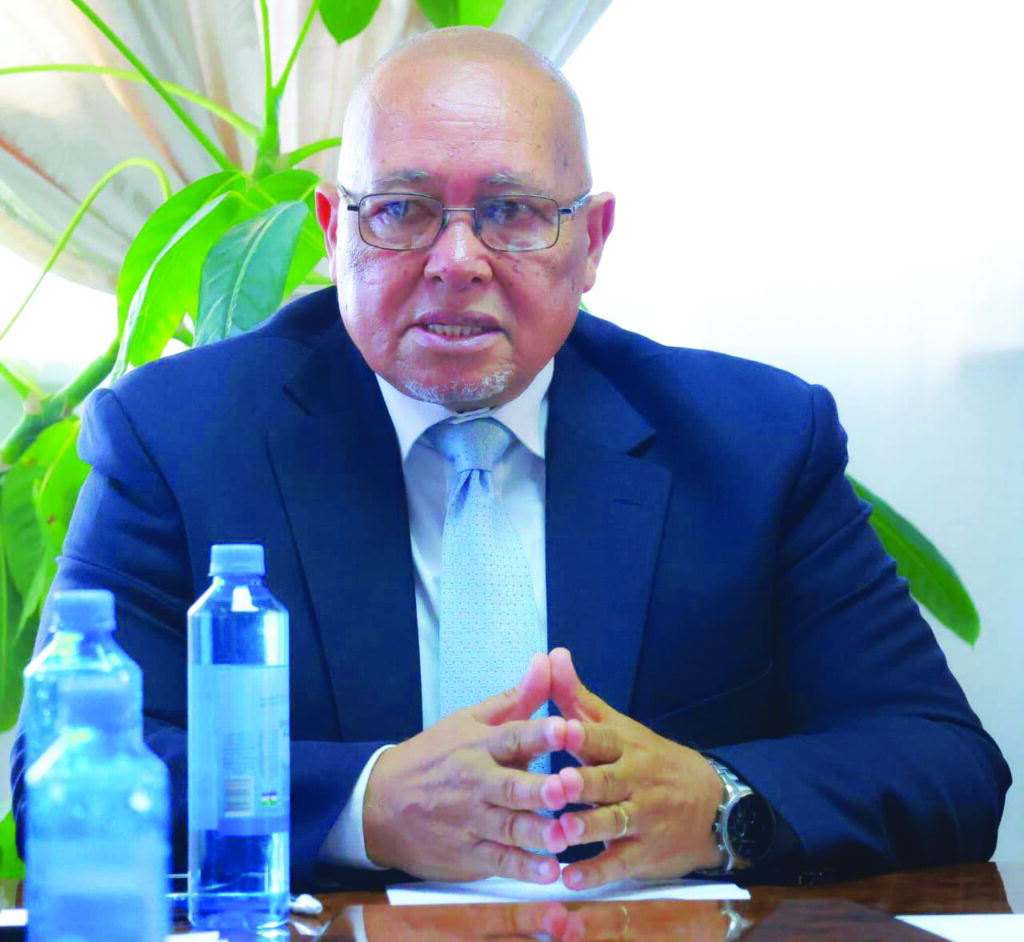
The core of the crisis is a damning claim, that the government, in a reckless rush, illegally bypassed the people to alter their supreme law. In a stunning development that lends immense credibility to these claims, the Minister of Law and Justice, Richard Ramoeletsi, has publicly conceded that the government committed a “gross error” by sending the contentious Bill to King Letsie III for royal assent without first holding a mandatory national referendum.
The dispute centres on Chapter II of the Constitution of Lesotho, which contains a suite of fundamental human rights and freedoms. Recognizing the sanctity of these rights, the Constitution itself, in Section 85, erects a formidable barrier to their alteration.
It explicitly mandates that any Bill seeking to amend provisions within this chapter – with two narrow exceptions – must first be approved by the people of Lesotho in a national referendum.
Only after such a popular mandate can it be presented to the King for assent.
The Tenth Amendment Bill of 2024, introduced two significant new sections into this protected chapter: Section 20A: mandating Affirmative Action in Favour of Marginalised Groups and Section 22A: which established provisions for Public Interest Litigation.
SECTION 2 argues, and the government now effectively admits, that these are substantive alterations that legally triggered the referendum requirement. Yet, no such vote was ever called, let alone held.
“Despite this clear constitutional command, the Bill was never subjected to a referendum,” SECTION 2 stated in a forceful communiqué issued this week. “Instead, it was transmitted to the King for assent, and the King assented to it without the prerequisite referendum.”
The situation escalated dramatically when Minister Ramoeletsi, in a radio interview, candidly acknowledged the error. He admitted the government acted with “undue haste,” sending the Bill to the King with sections that “were not supposed to be in it.”
This public admission has severely undermined the government’s position as it braces for a legal challenge.
According to SECTION 2, the minister proposed a solution during a prior meeting, the judiciary could “remedy the mistake” by severing the two offending sections (20A and 22A) that required the referendum, leaving the remainder of the Act intact.
It is this proposed “surgical fix” that SECTION 2 finds “deeply problematic” and a threat to constitutional order itself. The group’s rejection of the severance proposal is rooted in a staunch legal principle, unconstitutionality cannot be sanitized after the fact.
They argue that the transgression was not merely a technicality but a fundamental breach of process. The Speaker of the National Assembly, Tlohang Sekhamane, acted ultra vires (beyond his powers) by sending the Bill forward. Consequently, the King acted unconstitutionally by assenting to it.
These acts, SECTION 2 contends, poisoned the entire enactment process from the beginning (ab initio).
“To sever sections now would be to rewrite history and create the illusion that the King’s assent was valid when it was not,” the group argued. “Accepting this reasoning would effectively nullify our constitutional safeguards. It would set a dangerous precedent that any government could bypass explicit constitutional requirements, pass a law, and later ask the courts to ‘fix’ it.”
This logic leads SECTION 2 to one uncompromising conclusion that the entire Tenth Amendment Act must be declared null and void. They have issued a direct ultimatum to the Attorney General, Advocate Rapelang Motsieloa, citing his duty under Section 98(2)(c) of the Constitution to “take necessary legal measures for the protection and upholding of this Constitution.”
“The Attorney General must urgently approach the High Court to declare the Tenth Amendment… null and void ab initio,” their statement concluded. “By failing to act, the Attorney-General risks being complicit in an unconstitutional alteration of the Constitution. Inaction in this context amounts to dereliction of his constitutional duty.”
The implications of this crisis extend far beyond the fate of two legislative clauses. The nation now faces several potential paths, each with profound consequences – A high-stakes legal battle as SECTION 2 has announced its intention to petition the High Court.
If the government, through Advocate Motsieloa, does not pre-empt this move by asking the court to void the Act itself, a protracted and divisive legal battle is inevitable. The judiciary will be placed in the delicate position of arbitrating a dispute between two other branches of government, with the legitimacy of a constitutional amendment hanging in the balance.
Also, the admission of a “gross error” by a senior minister is a significant embarrassment for the government. It fuels opposition narratives of executive overreach and incompetence. If the Act is struck down, it could trigger a major political crisis, potentially leading to calls for accountability or even motions of no confidence, further destabilizing Lesotho’s often turbulent political landscape.
This is also a test for constitutional supremacy, at its core, this is a test of whether Lesotho’s Constitution is truly its supreme law, or merely a document that can be bent or ignored by the government of the day. The outcome will set a critical precedent for future governments. A failure to fully rectify this breach could permanently weaken the foundational principles of the nation’s democracy, telling future leaders that constitutional rules are optional.
The most poignant casualty of this crisis is the voice of the nation. The referendum requirement exists precisely to give the people a direct say in changes to their most fundamental rights. That voice was silenced, and the path forward must not only correct a legal error but also restore public faith that their constitution – and by extension, their will – is inviolable.
For now, the government appears cornered.
Minister Ramoeletsi’s statement that they will “answer all the queries in court because now it is too late to prepare anything” suggests a defensive, reactive posture.