LHWP communities demand seat at the table
As ministers urge beneficiation
MOSA MAOENG
MASERU – As the Ministers of Natural Resources and Water from Lesotho and South Africa concluded a high-level oversight mission of the Lesotho Highlands Water Project (LHWP) Phase II recently, a leading advocacy group has sounded a stark warning – the project’s stability is being shaken by institutional instability and unresolved social injustices that have plagued the initiative for decades.
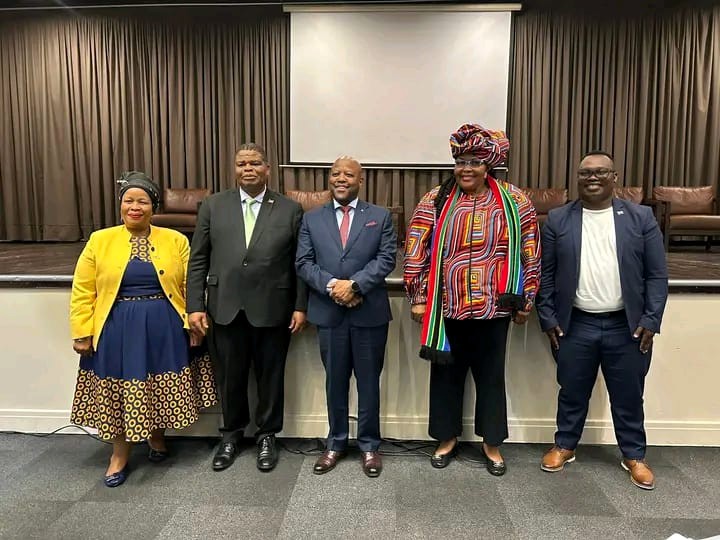
The joint mission by Lesotho’s Minister of Natural Resources, Mohlomi Moleko, and South Africa’s Minister of Water and Sanitation, Pemmy Majodina, on August 20 aimed to review progress on key infrastructure and assess challenges impeding the massive bi-national project.
Their resulting communiqué urged implementing authorities to “prioritise the beneficiation of directly affected communities.”
However, Lenka Thamae, a Policy Analyst and Advisor for the organization Policy Environmental Justice and Water Resources Advocacy (PEWA), which has monitored the LHWP since 1990, argues that such promises are familiar yet unfulfilled.
In an interview this week, Thamae pointed to a legacy of inadequate compensation, forced relocations, and broken promises from Phase I that now risk being repeated in Phase II.
“A lot is happening in the Lesotho Highlands Water Commission (LHWC) that is shaking the stability of the project because they keep changing members every now and then,” Thamae stated, contrasting this with the consistent representation from South Africa, which he says “has been stable, showing seriousness.”
Thamae’s central concern is the exclusion of the very people whose lives are most disrupted. He revealed that PEWA has secured a crucial agreement from Minister Moleko for their formal inclusion in the upcoming review of the foundational LHWP Treaty – a process historically dominated by government and technical bodies.
“The minister agreed that we should be a part of that. We told him that we do not only want to be present but we should also take part… what we are waiting for is a formal invitation,” Thamae said.
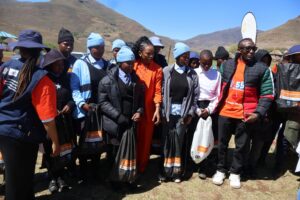
He stressed the urgency for this invitation to come on time to ensure community members from Ha Katse, Ha Mohale, ‘Muela and those relocated to areas like Machache, Ha Matala and Ha Tsolo can participate directly.
“Most of the time community forums are taken as representatives of all, but the voices of the said community members matter more than when represented,” he added, highlighting a deep-seated mistrust in top-down representation.
This demand for a direct voice is inextricably linked to the enduring issue of compensation. Thamae reported that despite years of advocacy, numerous individuals and families affected by both Phase I and the ongoing Phase II have yet to receive adequate and timely compensation for their lost land and livelihoods.
This ongoing grievance underscores the gap between ministerial directives and on-the-ground implementation.
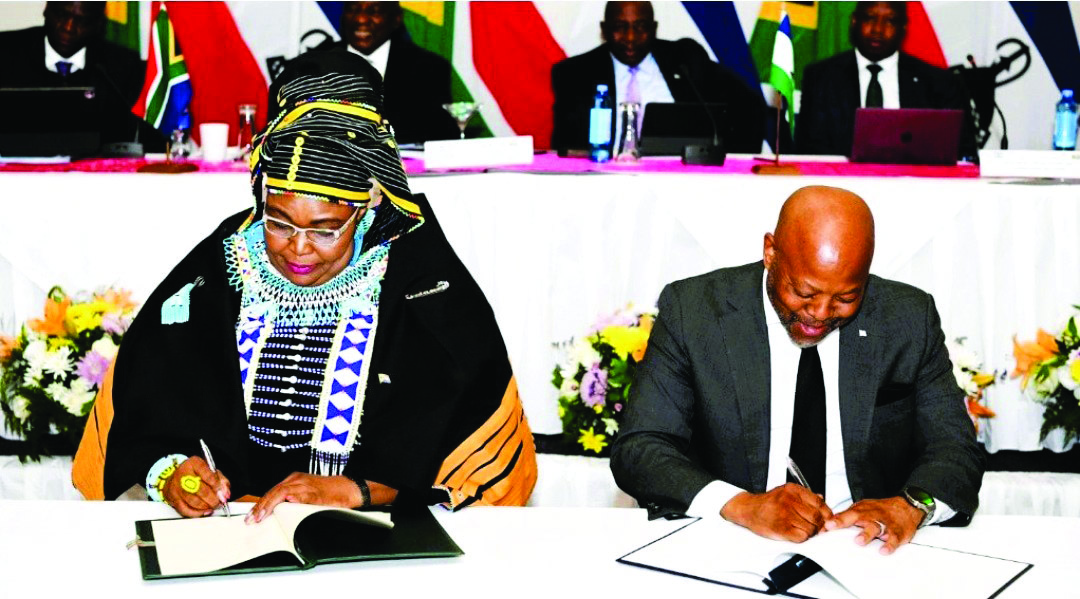
The ministers’ joint mission was undertaken in pursuit of their oversight mandate under the LHWP Treaty, in a stated spirit of cooperation and mutual benefit. Following a site visit, they held a high-level debriefing in Maseru with the leadership of the LHWC and the Lesotho Highlands Development Authority (LHDA).
Their joint communiqué explicitly recognised that “communities are at the centre of the LHWP” and called on authorities to prioritise their beneficiation through “adequate and timely compensation, resettlement, skills development, various livelihoods improvement programs and access to water by communities surrounded by the project.”
They further noted the Treaty’s principle that the project should be a vehicle for development and that “affected communities should not be made worse by the project.” The ministers also underscored the importance of leveraging water resources for local economic activities like fisheries, irrigation, and tourism.
The water and natural resources ministers reaffirmed their commitment to the LHWP Phase II, promising rigorous oversight, accountability and community beneficiation. But for many Basotho communities displaced and disrupted by the massive bi-national project, the grand declarations stand in stark contrast to decades of unmet promises and unresolved grievances.
The pledged to “prioritise the beneficiation of directly affected communities through adequate and timely compensation, resettlement, (and) skills development.” They emphasised that “communities are at the centre of the LHWP” and recognised that affected people “should not be made worse by the project.”
These commitments, though welcome, ring hollow to many who have endured the project’s long and painful history. Since the inception of the LHWP, communities in the highlands of Lesotho have faced profound disruption: ancestral lands flooded, livelihoods lost and social fabrics torn apart.
Promises of fair compensation and improved living conditions have often resulted in delayed payments, inadequate replacement housing, and insufficient support for new livelihoods.
Many families forcibly resettled to make way for dams and infrastructure report being left in a worse economic position than before. Traditional grazing lands submerged, crop fields lost, and cultural sites erased have led to a decline in food security and economic resilience.
While the project has brought hydropower and water transfer benefits to Lesotho and South Africa, local communities have frequently been side-lined in the process.
The communiqué’s new promises – quarterly ministerial site visits, strengthened governance, and “transparent and inclusive communication” – are direct responses to these historical failures. Yet, the document itself hints at ongoing problems, citing “project delays and cost escalation” and urging contractors to meet “the highest standards of performance.”
For affected communities, the real test will be whether these high-level pledges translate into tangible change on the ground. Will compensation finally be paid promptly and fairly? Will resettlement programs offer truly sustainable alternatives? Will skills development lead to real jobs, not just temporary opportunities?
For PEWA and the communities it represents, these declarations must be met with concrete action. Thamae made it clear that his organization is prepared to move beyond criticism and serve as a guiding partner in the treaty review process.
“We are ready to take part when the treaty is being reviewed and also serve as guidance on what issues to be addressed as those affected,” he said, positioning PEWA as an essential repository of three decades of community experience and oversight.
The ministers concluded their communiqué by noting their concern about Phase II project delays and cost escalation, calling on oversight bodies and contractors to be held to the highest standards of performance.
Ultimately, the meeting between the two ministers and the subsequent warnings from PEWA paint a picture of a monumental project at a crossroads. One path leads to a repeat of the past, where engineering marvels are shadowed by social neglect.
The other, advocated fiercely by Thamae and echoed in the ministers’ own words, requires placing the legitimate grievances and voices of Basotho communities at the very heart of the decision-making process, transforming the LHWP from a simple water transfer scheme into a true model of equitable and just development.
The LHWP remains a critical undertaking for water and energy security in both nations. But its legacy will ultimately be judged not by the volume of water transferred or megawatts generated, but by how it treats the people most directly in its path.
The ministers’ renewed commitment is a step forward, but for thousands of Basotho, it is action – not another communiqué – that will bring justice and restoration.