Learning from China’s historical foundation
How Basotho can forge a future of resilience, prosperity by embracing their past
MPHO RAMOLULA
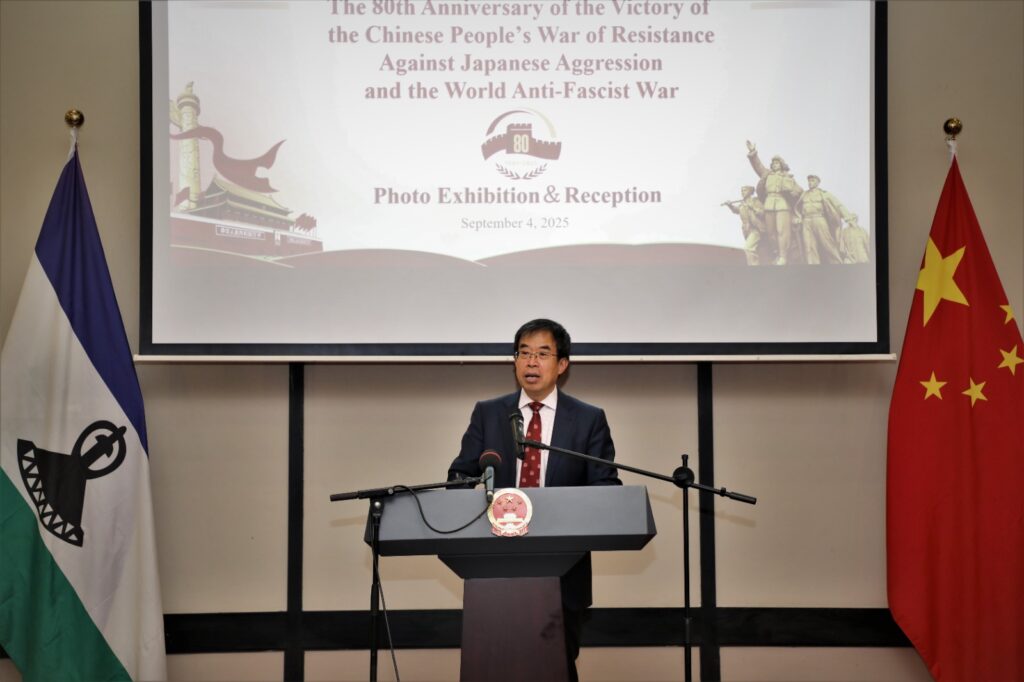
MASERU – In a powerful convergence of history and hope, the commemoration of the 80th anniversary of the victory in the Chinese People’s War of Resistance against Japanese Aggression and the World Anti-Fascist War became more than a diplomatic event – it transformed into a poignant mirror for Basotho to reflect on their own national narrative.
The ceremony, hosted by the Chinese Embassy in Maseru at the Avani Lesotho Hotel on September 4, sparked a crucial conversation about national identity, resilience and the path to sustainable development.
The event, which honoured the immense sacrifice and ultimate triumph of the Chinese people against fascism, served as a springboard for a deeper discussion.
Speaking to Public Eye in an interview at the event, Retired Major General Matela Matobakele, a revered historian and military leader, delivered a compelling narrative that drew direct parallels and instructive contrasts between China’s historical journey and that of Lesotho, challenging the nation to look inward for the blueprint to its future.
The Chinese narrative, as recounted by Chinese Ambassador Yang Xiaokun, is one of profound sacrifice and unwavering resolve.
“Our purpose is to remember history, honour fallen heroes, cherish peace, and create a better future,” Ambassador Yang stated, underscoring that China’s current global standing is built upon a foundational respect for its history.
The nation’s four-decade transformation from an agrarian society to an economic powerhouse is universally attributed to a unified vision, disciplined execution, and, most importantly, a deep-seated pride in its civilisation and historical struggles.
Major General Matobakele identified this as the critical first lesson for Lesotho.
“The Chinese realized, like any other powerful nation, that you can’t move forward without knowing where you came from,” he asserted. He argued that China’s success is not merely a product of economic policy but is rooted in a collective consciousness that draws strength from its history of resistance and resilience.
Turning his gaze homeward, Matobakele presented a powerful, yet often overlooked, truth: “Basotho, among the black people in Africa, are the ones who have the richest history. A very rich history that could make us perhaps ahead of many countries if we followed it.”
He recounted the heroic resistance against colonial forces.
“We fought against the whites, the Boers and the British, and we won. That history made us who we are today.”
However, his tone shifted to one of lamentation as he diagnosed a national ailment – historical amnesia.
“We don’t observe our history as Basotho. We think the history of other countries is better than our own, when we possess the best.”
This neglect, he suggested, is the primary impediment to national progress. While China uses its history as a cornerstone for development, Basotho risk leaving theirs as a forgotten relic.
The General’s commentary provides a clear framework for how Lesotho can infuse its rich history into its national development strategy. The most vital tool for reclaiming national narrative is the classroom, he emphasised, pointing directly to the Ministry of Education.
“Teaching this history to young people, modelling it through historical figures like The Great Moshoeshoe I and inspiring them to emulate the resilience shown during times of adversity is crucial.”
He called for a through integration of a curriculum that celebrates Basotho’s military victories, diplomatic shrewdness, and agricultural ingenuity can foster a generation that is proud, self-aware, and driven by the legacy of its ancestors.
Matobakele painted a picture of a once-thriving and united nation, saying “as Basotho, besides fighting our enemies, we were once cultivating our lands and exporting crops to South Africa and Mozambique. That unity should be the cornerstone of our future development.”
He drew a direct parallel to China’s unity of purpose. This historical self-sufficiency presents a powerful model for economic development, moving away from dependency and towards harnessing local potential in agriculture, water management, and other sectors.
Perhaps the most pointed part of Matobakele’s analysis was his critique of leadership. He praised China’s “foresight of their leaders” and contrasted it with the situation at home.
“Our leadership is not united. So it’s hindering our collective effort to progress.”
The lesson from China is that visionary and, most importantly, unified leadership is non-negotiable for progress. Basotho leaders, he implied, must look to the unifying legacy of Moshoeshoe I – a leader who prioritised the nation’s survival through strategic alliances and internal cohesion – to guide modern governance.
The sentiments were echoed by Minister Pitso Lesaoana, who commended the Chinese people’s resilience, noting, “nations may fall, but they can rise again through unwavering determination.” The minister was speaking in his capacity as acting foreign minister.
Commemorating this historic victory in the Chinese People’s War of Resistance Against Japanese Aggression and the World Anti-Fascist War, remains a date of profound historical significance. This commemoration serves as a crucial reminder of the immense sacrifices made and the hard-won peace achieved through global solidarity.
The conflict, which formed an integral eastern front in the fight against fascism, saw the Chinese people endure tremendous hardship and contribute greatly to the eventual Allied victory. Remembering this struggle is essential to honour the memory of those who lost their lives and to uphold the historical truth of this pivotal period.
Chinese officials stress that the anniversary is not merely about reflecting on the past but also about drawing lessons for the present and future.
It reinforces the importance of safeguarding peace, promoting multilateral cooperation, and firmly opposing any attempts to glorify aggression or distort history. In a world still facing conflict, this solemn day underscores the universal value of peace and the shared responsibility to preserve it.
The commemoration thus served a dual purpose, it was a rightful tribute to a global ally and a vital wake-up call for Basotho. The story of China’s rise is not just an external model to be imported; it is proof of a universal principle that nations who honour their past are empowered to build their future.
The challenge now lies with Basotho, the history of resistance against colonisation, the wisdom of King Moshoeshoe I, and the legacy of agricultural prosperity are not just stories for textbooks.
They are the very DNA of the nation’s potential. By embracing this rich heritage, fostering a united leadership, and educating its youth on the power of their own identity, Lesotho can stop looking outward for solutions and start building upon the formidable foundation it already possesses.
The blueprint for progress, as Major General Matobakele so eloquently argued, has been there all along, waiting in the annals of its own heroic history.