‘Lies derail us from bigger issues’
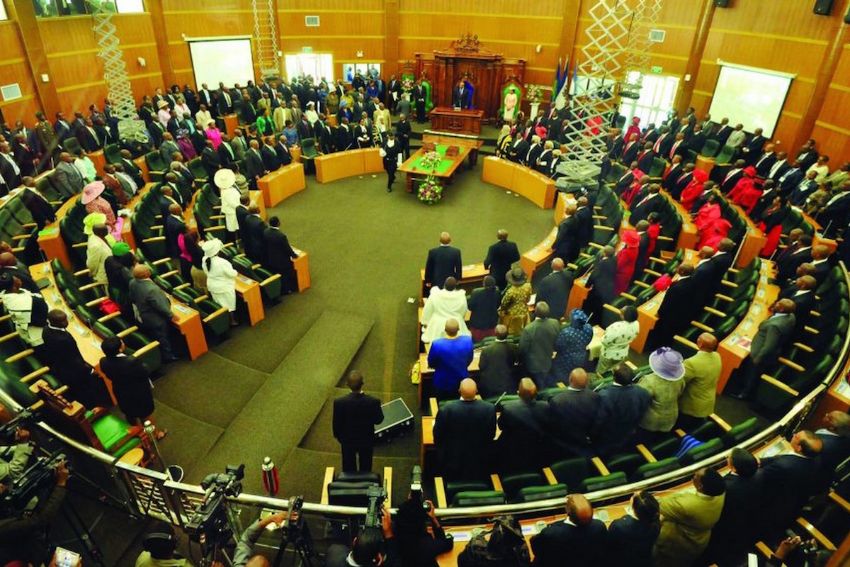
Parliament races to enforce Ethics Code amid ministerial misconduct
MOTSAMAI MOKOTJO
MASERU – Cabinet ministers and Members of Parliament face imminent fines and even imprisonment for deliberately misleading the National Assembly, as a long-awaited parliamentary Ethics Code enters its final stages.
The move towards stricter enforcement comes amid a firestorm of allegations against several high-ranking officials accused of twisting the truth, withholding vital information and presenting “sanitized” reports to lawmakers.
Mokhothu Makhalanyane, the Chair of Chairs, confirmed to Public Eye that the Ethics Code is nearing completion and is designed to rein in such conduct.
He explained that misinformation not only derails parliamentary business but also manipulates public perception.
“What happens is that it derails us from bigger issues… when we raise such matters, it seems as if we are attacking those ministers personally,” Makhalanyane stated.
This, he pointed out, can generate undeserved public sympathy for the officials under scrutiny.
The push for a robust Ethics Code in the country mirrors a global trend where parliaments are increasingly adopting stringent standards to uphold integrity and public trust. Across Africa, similar codes have proven instrumental in curbing misconduct.
In Ghana, the code of conduct for public officers and the code of ethics for ministers, backed by constitutional provisions, has been used to investigate conflicts of interest and illicit enrichment. South Africa’s Ethics Code for Members of Parliament, enforced by a dedicated committee, mandates financial disclosures and has been a key tool for accountability, though its effectiveness is often tested by political challenges.
Beyond the continent, the United Kingdom’s strict Ministerial Code and Canada’s Conflict of Interest Act demonstrate how clear rules, coupled with independent oversight, can enforce transparency and sanction violators, thereby strengthening democratic institutions. The effectiveness of these codes universally hinges on their enforceability and political will.
For Lesotho, the imminent code represents not just a set of rules, but a critical step towards aligning with international best practices to ensure that public office is synonymous with accountability and truth.
The urgency for the code is underscored by a series of recent incidents.
Last week, Finance Minister, Dr Retšelisitsoe Matlanyane, misled the House by asserting that a multi-million-Dollar energy loan she was questioned on had no clause requiring legal proceedings outside Lesotho.
Section 15.1 of the initial loan agreement which was signed by signed by Matlanyane last year notes: ““This agreement shall be governed by and construed and interpreted in accordance with the laws of the People’s Republic of China.”
A reworked version of the same Build Operate Transfer Implementation Agreement states, in Clause 12.1.5, that “The parties agree that the arbitration agreement and any arbitral award issued pursuant to this clause shall be governed by the Arbitration Act 1996 of the United Kingdom, and that any arbitral award shall be enforceable solely in the Kingdom of Lesotho or the People’s Republic of China in accordance with the New York Convention on the Recognition and Enforcement of Foreign Arbitral Awards 1958 to which both countries are signatories, subject to the provisions of the Convention and applicable laws in the enforcing jurisdiction.”
The tension boiled over again when natural resources minister, Mohlomi Moleko, represented by forestry minister, Letsema Adontši, provided incorrect information about workforce numbers at Mothae Mine.
This prompted a furious rebuke from opposition legislator, Machesetsa Mofomobe, who revealed that all employees had been retrenched, catching the minister in a “web of misinformation.”
In an earlier Senate session on April 9, Minister Limpho Tau, Minister in the Prime Minister’s Office was accused of a “shocking breach of protocol” for omitting crucial details about the Government Assets Search Recovery Task Team.
He presented a positive report to the Senate but ignored critical questions and failed to mention dire budget constraints crippling the team’s operations.
Under the Members of Parliament and Privileges Act No 8 of 1994, the ministers involved now face potential penalties ranging from M500 to M1 000 and possible imprisonment from six months to one year.
In a parallel move to bolster accountability, Parliament has established a new Committee on Government Assurances. Empowered to scrutinize promises and undertakings made by ministers on the House floor, the committee reflects growing lawmaker frustration over a perceived lack of ministerial accountability.
As the political fallout unfolds, Chairperson of the Ethics Committee, ‘Mamello Phooko, was, this week, unavailable for comment, leaving the nation awaiting the final code and its potential ramifications for the accused officials.