Pads or food: The impossible choice facing girls in Lesotho

LIAPENG RALIENGOANE
MASERU – In the rural heartlands of Lesotho, the stark realities of poverty force young girls into impossible choices, where basic dignity is often pitted against sheer survival.
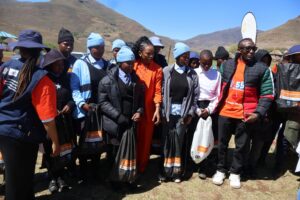
This profound conflict was laid bare for ‘Makhamathoane Malie-Leballo of the Hlokomela Banana Foundation when distributing sanitary pads to school learners. One orphaned girl, raising her siblings alone after her mother left to find work in neighbouring South Africa, hesitated to accept the essential items.
“Her first worry was food,” ‘Makhamathoane recalled. “She told me she wished she could sell the pads to buy something to eat for her brothers and sisters.”
In another instance, a teacher quietly explained a girl’s lack of enthusiasm: she didn’t have the underwear needed to use the pad. These stories underscore a crisis where menstrual health is inextricably linked to deeper issues of poverty, stripping young women of their education, dignity, and childhood.
The challenges are systemic. A 2022 Menstrual Health and Hygiene Situational Analysis, conducted by the Ministry of Health with United Nations Population Fund (UNFPA) support, confirmed widespread barriers – limited access to sanitary products, fear of staining, debilitating pain and persistent misconceptions.
In response, the UNFPA and the Ministry of Gender, Youth and Social Development convened a five-day co-creation workshop. Bringing together government representatives, civil society, and grassroots advocates like ‘Makhamathoane, the workshop aimed to validate sustainable, community-driven models for universal pad distribution.
The initiative extends far beyond physical products. It seeks to empower adolescent girls and young women aged 10-24 with comprehensive education on sexual and reproductive health and rights, gender-based violence, and the prevention of child marriage.
“Menstrual health is not just about pads,” ‘Makhamathoane emphasized. “It’s about dignity, education and giving girls a chance to dream. But sustainability worries me. This program is very pertinent and my hope is that it lasts.”
Through collaborative sessions, stakeholders reviewed proposed supply chain models – including school-based and community-level distribution – and developed educational messages and a robust monitoring framework to ensure long-term impact.
A pilot programme will soon be launched in the districts of Maseru and Mokhotlong to test last-mile delivery of pads while integrating critical education.
UNFPA frames period poverty not merely as a health issue, but as a multifaceted human rights challenge that violates dignity and hinders access to education and work. Eliminating it requires improving education, ensuring product availability, and dismantling the stigma surrounding menstruation.
For ‘Makhamathoane, who has witnessed these struggles first-hand, the programme is a beacon of hope.
“If we can give girls dignity during their periods, keep them in school and protect them from exploitation, then we are building a stronger Lesotho,” she said.
Achieving this vision demands cross-sector partnerships between government, civil society, and the private sector. Local manufacturers, retailers, and innovators play a vital role in making products accessible and affordable.
Investing in girls today is an investment in Lesotho’s future workforce and economic prosperity. When girls thrive, nations thrive.