A promise of water, a torrent of harm
default
Polihali communities plead with African Development Bank to halt dam project
TEBOHO KHATEBE MOLEFI and
MOTSAMAI MOKOTJO
MASERU – Affected residents of the Lesotho Highlands Water Project (LHWP) Phase II have filed a formal complaint with the African Development Bank (AfDB) alleging systemic failures, broken promises and life-threatening conditions – and call for an immediate suspension of blasting and construction.
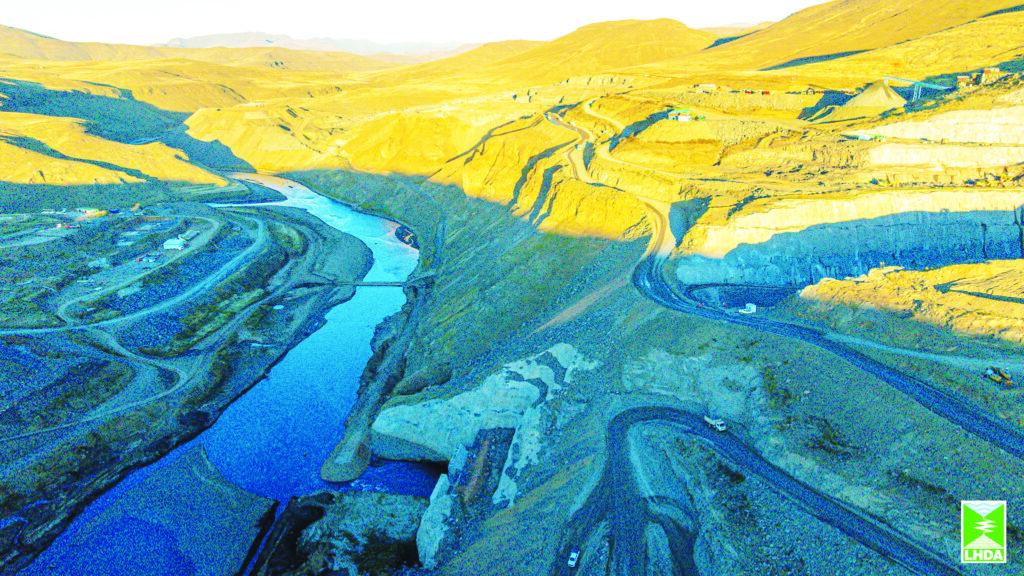
Nestled in Lesotho’s rugged highlands of the Mokhotlong district, the villages surrounding the nascent Polihali Dam are not scenes of prosperous development but of profound distress.
For over a decade, the country’s highlands communities have lived under the shadow of the massive LHWP, a bi-national initiative between Lesotho and South Africa designed to transfer water to South Africa’s Gauteng province and generate hydroelectric power for Lesotho.
Now, after years of what they describe as forced displacement, delayed compensation, environmental degradation and gender-based harms, residents from 18 villages have reached a breaking point.
In an unprecedented move, they have submitted a formal complaint to the AfDB, one of the project’s key financiers, demanding urgent intervention and an immediate halt to dangerous blasting activities.
The complaint, obtained by this publication and filed through the Bank’s Independent Recourse Mechanism (IRM), presents a devastating catalogue of alleged failures by the Lesotho Highlands Development Authority (LHDA), the project’s implementing body.
It tells a story of a community fractured, livelihoods destroyed and promises broken.
The most immediate and dangerous grievance is the continued construction and blasting in close proximity to homes. Communities like Tsekong, Ha Konki, and Litsotsong, which were promised relocation before any construction began, remain in place, their lives punctuated by the deafening roar of explosions.
“The vibrations from the blasting shake our walls and roofs. Sometimes, it happens late into the night, without any notice,” the complaint states.
“Our children are frightened, and the elderly no longer feel safe in their own homes.”
The structural damage is visible.
Houses show extensive cracks, with roofs and foundations damaged by rocks thrown from quarry sites. In one harrowing incident in July 2024, large rocks from a blast landed directly in a family’s yard with such force that residents feared for their lives.
“LHDA was notified immediately, but no action was taken,” the document reads.
It was only after the United Nations Office of the High Commissioner for Human Rights visited that relocation for some families was hastily arranged.
Beyond the immediate danger, the environmental impact is severe.
Dust from blasting and heavy trucks pollutes the air and chokes water sources.
“Our springs and wells are now filled with dust and debris,” a community member from Ha Maotoana is quoted as saying. “We are not just talking about inconvenience, we are talking about poisoning our only source of life.”
‘We were told to stop living’
The heart of the conflict lies in a resettlement process described as “haphazard and delayed.” Some residents claim they were told as far back as 2010 to stop farming, building, or improving their homes because relocation was imminent.
That promise remains unfulfilled for many, trapping them in a state of suspended animation where they cannot invest in their land nor move on with their lives.
“LHDA first informed us of our resettlement as early as 2011, and we were explicitly told not to make any improvements to our homes,” stated residents of Litsotsong, who were finally relocated in 2024 into what they describe as unfinished and unsafe structures.
The compensation process is equally fraught. The communities allege a systemic lack of transparency. They report being presented with compensation amounts without any clear explanation of how they were calculated.
“We mostly get a document that says how much LHDA is going to pay, but we don’t know what they are paying for,” the complaint notes.
“We don’t know how much land has been taken by the project and what remains.”
There are also allegations of significant delays, with some payments for acquired assets coming six months or more later, and communal assets like grazing land, medicinal plants, and natural springs affected years ago still awaiting any compensation or mitigation.
In a particularly outrageous case, a woman who had separated from her husband co-signed compensation forms with him after LHDA assured her she would be kept informed.
She later discovered the full payment was deposited into her husband’s sole bank account without her knowledge or consent, forcing her to initiate legal proceedings to claim her share.
Shattered social fabric and gendered harms
The project’s approach is also accused of deliberately splitting communities. In Ha Phohla, the reservoir’s demarcation line bisects the village. The LHDA plans to relocate only households below this line, leaving others behind.
The community argues this will tear apart a tightly-knit social fabric where families are interrelated and depend on each other for support, particularly the elderly.
The complaint further alleges a complete absence of a gender-responsive framework, leading to women bearing the brunt of the project’s negative impacts. Compensation is typically paid to male heads of household, often excluding women from funds meant for jointly-held assets and deepening economic disempowerment.
The influx of outside labour has also led to a reported rise in gender-based violence, sexual exploitation and teenage pregnancies. In one documented case, a 14-year-old girl was impregnated by a contractor who was simply transferred to another camp, avoiding all accountability.
When communities try to complain, they face a system they say is designed to fail. The official procedure requires a written letter, signed by a committee member and stamped by a chief, to be delivered in person to an LHDA office – a costly and difficult journey for many.
Complainants receive no proof of submission, leading to frequent claims that letters were “never received.”
Even when received, complaints often go unanswered for years.
‘You have a duty’
Frustrated by the lack of action from the LHDA, the communities, advised by non-profit organisation, Seinoli Legal Centre and Accountability Counsel, are now turning to the AfDB. They argue that as a major financier, the AfDB has a duty to ensure its projects adhere to strict environmental and social safeguards, which they believe has not happened.
“The Bank failed to sufficiently supervise implementation,” the complaint asserts, arguing that this lack of oversight has allowed the alleged harms to continue unchecked.
Their demands are clear, they call for an immediate stop to all blasting and quarrying until affected communities are fully relocated, a full, transparent, and prompt compensation for all lost assets, a safe and dignified resettlement conducted through meaningful consultation, remedy for gender-based impacts and the implementation of a protective framework as well as an independent investigation into the compensation process and the environmental damage.
They have also requested that the IRM recommend a temporary suspension of the AfDB’s financing until these critical issues are addressed, arguing that continued construction poses “a significant threat to our health and safety” and risks causing “irreparable harm.”
The LHDA, in a separate document titled “Responses to Polihali community issues,” presents a starkly different narrative. It states that “no households that need to relocate have not been relocated” and that its compensation and complaints procedures are robust and functioning.
The Authority denies allegations of gender-based violence and claims consultations have been extensive.
Advocate Lepeli Moeketsi, Programme’s Manager at Seinoli Legal Centre, has declared it “profoundly unfair” for the AfDB and the LHDA to dismiss community concerns, prompting his organisation to file a formal complaint with the Bank’s independent watchdog.
“As the primary funder, we expected the AfDB to hold LHDA accountable, but that didn’t happen,” Moeketsi said speaking to Public Eye.
“Our only recourse was to escalate the matter to the AfDB’s IRM.”
The Mechanism has confirmed receipt of the complaint. Moeketsi expressed confidence in the process, stating that its purpose is to ensure development banks adhere to their own policies.
“We believe that when the IRM makes its recommendations, the pressure from the top will ultimately force a resolution,” he stated. He added that a finding in the community’s favour would obligate the AfDB to take “serious action” against the LHDA.
The LHDA on Tuesday issued a firm response to these claims by the Polihali communities concerning the implementation of Phase II of the LHWP.
The claims, which include forced displacement, inadequate compensation, environmental damage and intimidation of communities, were made by advocacy groups circulated in local international media.
In a detailed media statement, the LHDA asserts that these allegations “do not reflect the realities” of the project’s execution.
The Authority emphasises that the bi-national project is managed under “the highest international standards” and subject to rigorous oversight by the governments of Lesotho and South Africa, financiers, and independent auditors.
Addressing the sensitive issue of resettlement, the LHDA stated that “no household is relocated without comprehensive consultation.”
The process ensures families are “fully aware of the form and value of compensation” they are entitled to.
To date, the LHDA says, over 93 percent of private asset compensation has been completed, with more than M54 million disbursed to affected households. The Authority attributed remaining delays to “missing documents, absentee beneficiaries, or family disputes,” adding that support is ongoing to finalise all payments.
On environmental concerns, the LHDA highlighted that all works are guided by approved Environmental and Social Impact Assessments (ESIAs), peer-reviewed by international experts.
“Monitoring confirms that while construction may cause short-term inconvenience, air and water quality levels remain within acceptable standards,” the statement read.
The Authority also detailed specific mitigation measures, including silt traps, dust suppression, and a biodiversity conservation programme that has successfully maintained stable populations of species like the Southern Bald Ibis.
The response strongly refutes claims of intimidation, clarifying that “LHDA has no mandate over policing or security operations.”
Its approach, it says, is “rooted in dialogue and lawful grievance mechanisms.”
The Authority also acknowledged the role of civil society and revealed it is “currently formalising a broader engagement platform for NGOs.”
While acknowledging that large-scale infrastructure “inevitably brings disruption,” the LHDA outlined its “comprehensive policies and programmes to minimise impacts and safeguard community rights.” It cautioned against “wide-sweeping allegations presented without substantiated evidence,” which it believes risk undermining the project’s credibility.
Concluding on a forward-looking note, the LHDA reaffirmed its commitment to “transparency, accountability, and inclusive development,” describing the LHWP as a “transformative investment” delivering lasting benefits in water security, livelihoods, and skills development for the region.
This sets the stage for a high-stakes confrontation between some of the country’s most vulnerable citizens and a powerful international development project.
The AfDB’s next steps will be closely watched, as its response will not only determine the fate of the Polihali communities but also set a precedent for how international financial institutions are held accountable for the human cost of the development they fund.