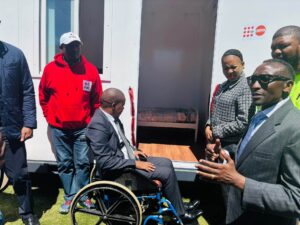
Ministry moves to alleviate NCDIs impact

As Lesotho launches national offensive against rising tide of chronic diseases
LINEO MALATALIANA
MASERU – In a decisive move to combat a mounting health crisis, the Ministry of Health, in concert with key stakeholders, has launched a landmark national coordinating mechanism to arrest the devastating impact of Non-Communicable Diseases and Injuries (NCDIs).
This ground-breaking initiative, termed the NCDIs Coordinating Mechanism, marks a significant escalation in Lesotho’s public health strategy. It aims to unify and fortify the country’s fragmented response to chronic illnesses like heart disease, cancer, diabetes, and respiratory conditions, which now represent the single greatest threat to the nation’s health and longevity.
The launch comes against a grim global and local backdrop. According to the World Health Organisation (WHO), NCDIs are responsible for a staggering 75 percent of deaths worldwide, with 80 percent of these being premature deaths -striking down individuals before the age of 70.
For Lesotho, the situation is particularly dire. Dr ‘Malitaba Litaba from the Ministry of Health revealed a shocking statistic: the country shoulders an NCD burden of 43-45 percent. This alarming figure places Lesotho at the top of the African region for standard age mortality, a sombre distinction underscoring the urgent need for action.
“We are here today to act and make sure that we are not the leading country in Africa in terms of morbidity and mortality,” Dr Litaba stated, highlighting the critical mission of the new initiative.
The new mechanism is designed as a multi-sectoral tool to assist the ministry in better coordinating prevention, detection, control, treatment, and public awareness campaigns. It recognises that these “silent killers” are not just a medical issue but a societal one, driven by social, economic, political, and environmental factors.
The data paints a clear picture of a nation in crisis. WHO Public Health Officer, Dr Sirak Hailu, addressing the launch, confirmed that the leading NCDs in Lesotho are cardiovascular diseases, chronic respiratory diseases, and cancers. He provided a global context, noting that in 2021 alone, 43 million people died from NCDIs, with a disproportionate 37 million of those deaths occurring in low – to middle-income countries like Lesotho.
This places Lesotho at the epicentre of a regional SADC and continental health challenge. While many neighbouring countries are also grappling with a rising tide of NCDs, Lesotho’s mortality rates are among the highest, driven by factors including high rates of hypertension, limited access to early screening, and a healthcare system historically geared towards combating infectious diseases like HIV/Aids and TB.
Dr Litaba provided a stark example, identifying hypertension as the leading NCD, with patients often succumbing to strokes resulting from cardiac failure. This underscores the critical need for early detection and management, a core function of the new coordinating body.
In his keynote address, the Minister of Health, Selibe Mochoboroane, emphasised the necessity of a robust tool to minimise the effects of NCDIs, especially in vulnerable communities. He revealed that half of the population is dying from these conditions, a figure that demands an all-of-society response.
“This is not just about treating diseases, it is about preventing them by tackling their root causes,” Minister Mochoboroane declared. “It is also about early detection, compassionate care, and community empowerment.”
The minister outlined bold steps already underway, signalling the government’s commitment. These include the ongoing construction of the country’s first-ever national cancer centre and the establishment of the Starlight Oasis of Hope Hospice, Lesotho’s inaugural palliative care centre.
Furthermore, the ministry is rolling out packages of essential NCDIs interventions to strengthen prevention and management at the primary healthcare level, bringing critical services closer to the people.
A significant part of the new strategy is the formal recognition of mental health as a core component of the NCDIs spectrum, a move advocates have long called for.
Despite these ambitious efforts, the path forward is fraught with challenges. Dr Litaba openly cited a lack of sustainable funding and the relentless rise in NCD cases, particularly among vulnerable groups, as major hurdles.
Minister Mochoboroane echoed this, stressing that the ministry cannot act alone.
“NCDIs are not just health problems; they are societal problems. They are shaped by social, economic, political, and environmental forces,” he said, calling for a collaborative effort across all sectors of society.
The launch of the NCDIs Coordinating Mechanism is a pivotal moment in Lesotho’s public health journey. It represents a strategic shift from solely treating illness to actively promoting wellness and preventing disease.
While the nation currently holds an unenviable position at the top of Africa’s NCD mortality rankings, this coordinated, nationwide offensive is the first crucial step in turning the tide and securing a healthier future for all Basotho.