How Africa’s young agripreneurs are optimizing food production
Large parts of the crops harvested on the continent are spoiled before they reach markets. Young innovators are finding solutions to make food systems more efficient and reduce hunger and malnutrition.
By Tsitsi Matope
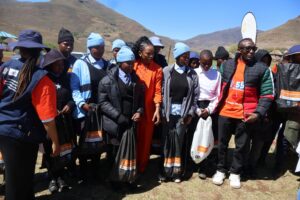
Under the blazing sun in a cornfield in Nyagatare district, a group of young farmers take a break from harvesting to gather around Sarah Mushimiyimana, 29. In her hands is a small black device: a moisture meter. Pointing to its display, Sarah shows the farmers how the meter measures the humidity levels of soil and plants. It helps detect conditions that promote mildew, rot and other diseases, so they can treat them before the crops get spoiled.

Sarah Mushimiyimana demonstrates how a moisture meter helps smallholder farmers improve food safety, reduce aflatoxins, and boost market value. Photo: WFP/Pascal Habumugisha
Mushimiyimana is based at Nyagatare Farmer Service Center (FSC), and is part of the World Food Programme’s (WFP) Youth in Work, supported by the Mastercard Foundation. In 2025 alone, 613,000 youth across eight African countries gained skills to innovate, add value, and build enterprises that reduce losses and boost incomes.
From Ghana to Mozambique, youth-led businesses supported through this initiative are reinforcing government efforts to strengthen post-production systems and improve food delivery. In Rwanda, these FSCs are at the heart of the Shora Neza programme (Kinyarwanda for “Invest Well”), which is part of the Youth in Work programme. Since 2023, Shora Neza has equipped over 94,000 young Rwandans with technical agricultural skills, financial literacy and market linkages. From honey to horticulture, these enterprises have created 45,000 jobs and injected new energy into rural economies.
In eastern Rwanda, Dany Hakizimana, 31, leads another FSC in Gatsibo district, where, in 2025 alone, his team has trained 2,600 young farmers in post-harvest handling and modern technologies – skills that reduce losses, boost productivity, and open access to markets. These trainings are helping young farmers turn small plots into thriving enterprises, creating jobs and opportunities for other youth in their communities. The Youth in Work programme’s dual purpose is to create work opportunities for youth and reduce the amount of food lost post-harvest due to pests, poor storage and weak supply chains.
“By creating jobs for young people, we are proving that agriculture can be a powerful engine for resilience and sustainable growth,” says Hakizimana.
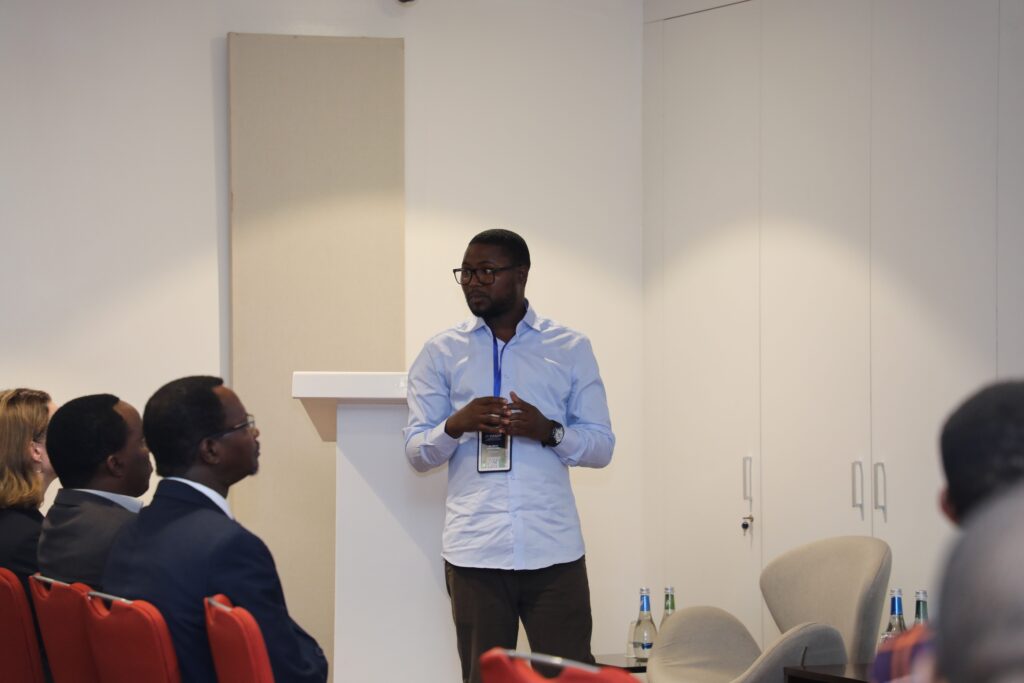
Dany Hakizimana shares how he is transforming agriculture and creating opportunities for youth at “The Role of Young Agri-preneurs in Reducing Post-Harvest Losses” side event held during the 2025 CAADP Partnership Platform and Africa Day for Food and Nutrition Security in Kigali on 30 October. Photo: WFP/Raissa Iradukunda
The programme also links farmers to tech solutions developed by local innovators, such as Aflakiosk Limited. Co-founded by Sara Igitego, 28, the start-up provides accessible and affordable quality testing services to help smallholder farmers grow better crops and access premium markets. “Our mobile system is 24 times faster and six times more affordable than traditional labs, helping producers meet standards and access formal markets,” says Igitego.
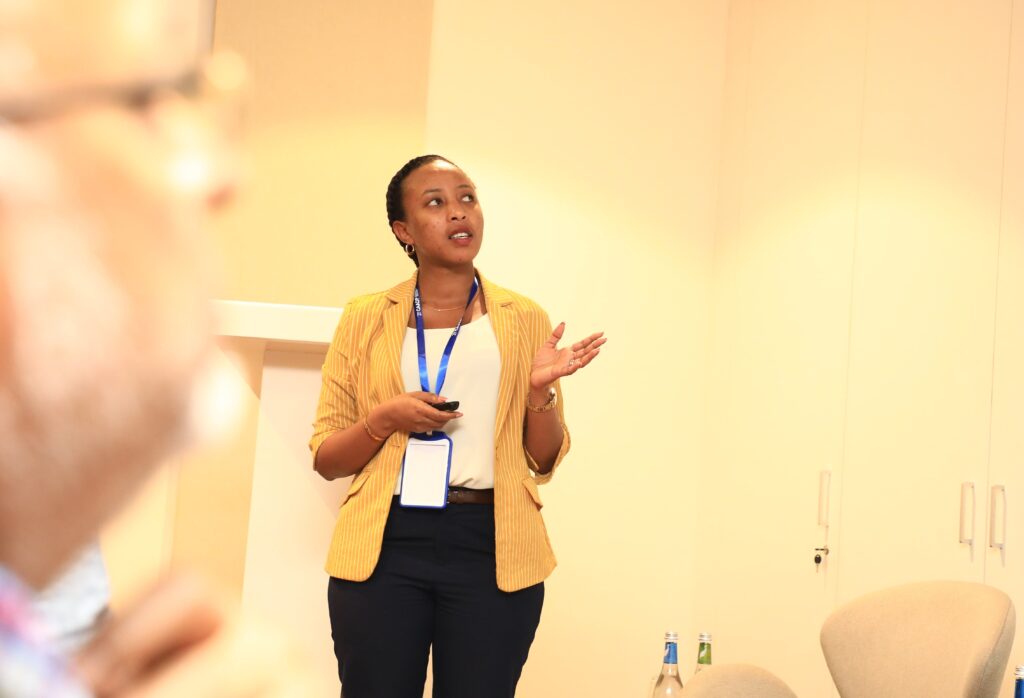
Sara Igitego, co-founder of Aflakiosk in Rwanda, leverages tech solutions to test the quality of farmers’ produce quickly and accurately, ensuring it meets market standards. Photo: WFP/Raissa Iradukunda
The young Rwandans’ commitment to optimising food systems addresses a wider problem: every year, sub-Saharan Africa loses up to 100 million metric tonnes of food, a staggering waste valued at US$4 billion. It’s a silent crisis that unfolds with each harvest, driven by a lack of information, infrastructure, and efficient supply chains. Lost grains alone are enough to feed 48 million people annually. This is not just about waste; it’s about preventable hunger affecting the very farmers who grow the food, but struggle to preserve their harvests.
The African Union’s Comprehensive Africa Agriculture Development Programme (CAADP) Kampala Declaration on Building Resilient and Sustainable Agrifood Systems in Africa and Strategy and Action Plan 2026–2035 reframe post-harvest loss as a strategic opportunity to empower youth, drive innovation, transform food systems and reduce hunger. One bold target is to halve post-harvest losses by 2035 while enabling 30 percent of Africa’s youth to actively participate in agri-food value chains.
While in some African countries, farming fails to attract young people, initiatives like Kenya’s Vijana in Kilimobiz (Kiswahili for “Youth in Agribusiness”) programme are changing this narrative.
Among them is UrbanusMwangangi, 32, founder of Empire Innovations in Kenya – where 40 percent of the food produced, valued at KES 72 billion (US$578 million) is lost annually. Through the training, he developed a multi-crop mechanized thresher that reduces grain contamination and labour costs. “We are not just building machines,” says Mwangangi. “We are also building dignity, particularly for smallholder farmers who often struggle to preserve their produce.” His innovation has reached over 500 farmers and created 19 youth jobs.
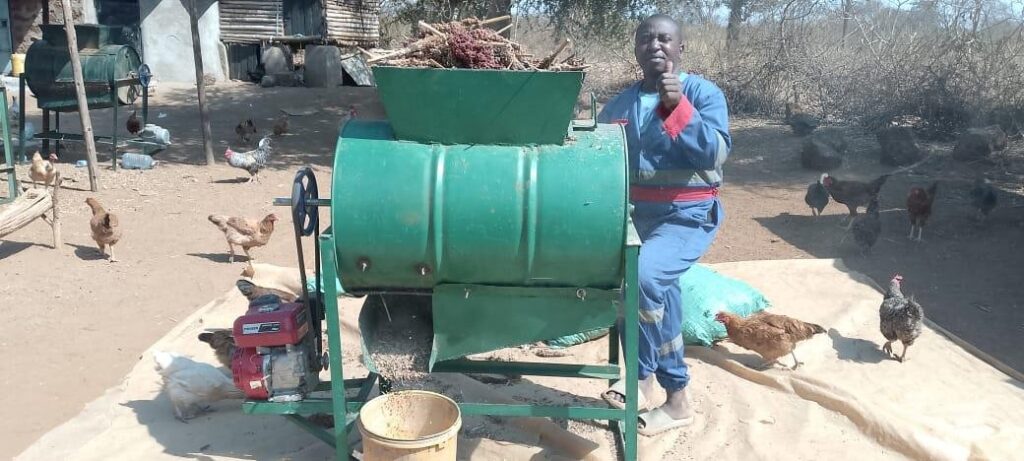
Mwangangi showing the multi-crop mechanized thresher he developed and has helped over 500 farmers reduce grain contamination and cut labor costs. Photo: WFP/ Angela Wafula
In Baringo county in western Kenya, 30-year-old Linda Kemboi, Chief Executive Officer of Royal Farmers Service Centre, is tackling dairy feed shortages using recycled plastic silage tubes. This method enables farmers to pack chopped grass inside the sealed tubes, keeping the feed fresh for months, reducing waste, and cutting storage costs by 50 percent.
“Innovation is not about complexity. It’s about seeing what others overlook and turning waste into opportunity,” says Kemboi, whose company employs 50 young people. As of 2023, Kenya’s Vijana in Kilimobiz programme has supported over 106,000 young people like Kemboi and Mwangangi build agribusinesses by providing training, mentorship, and access to markets, finance, and technology. This has created jobs for nearly 40 percent of the youth across value chains like horticulture, livestock, and aquaculture. Youth-led innovations also receive grants and incubation support to scale their ideas.
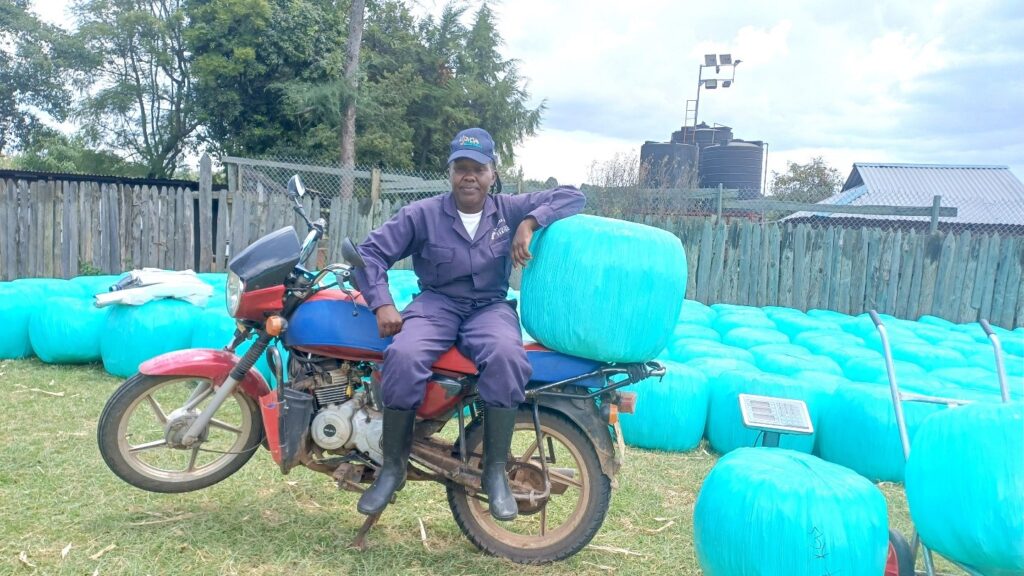
Linda Kemboi at the Royal Farmers Service Centre before delivering a recycled plastic silage tube to a local farmer in Baringo county, Kenya. Photo: WFP/Angeline Wafula
At the recent 2025 CAADP Partnership Platform and Africa Day for Food and Nutrition Security in Kigali, Hakizimana, Igitego, Mwangangi and Kemboi showcased their innovations at a side event hosted by WFP and the African Union.
In an interview, Lydie Kouame, Deputy Director of WFP’s African Union Global Office, stressed the urgency of harnessing the energy and creativity of Africa’s youth to drive solutions for food and nutrition security. “Young people are beginning to see agriculture not only as a livelihood, but as a platform for innovation, impact, and transformation,” she said. She emphasized the role of home-grown school feeding programmes in strengthening supply chains and reducing losses by sourcing ingredients locally.
“Africa can deliver better nutrition for children while creating markets for young smallholder farmers and agriprenuers. We invite all partners to join us in advancing the next decade of CAADP, during which WFP and partners will strengthen technical support to the African Union and Member States to improve the quality and scale of their home-grown school feeding programmes. At the same time, we will ensure these programmes help reduce post-harvest losses by creating structured demand for locally produced food,” she said
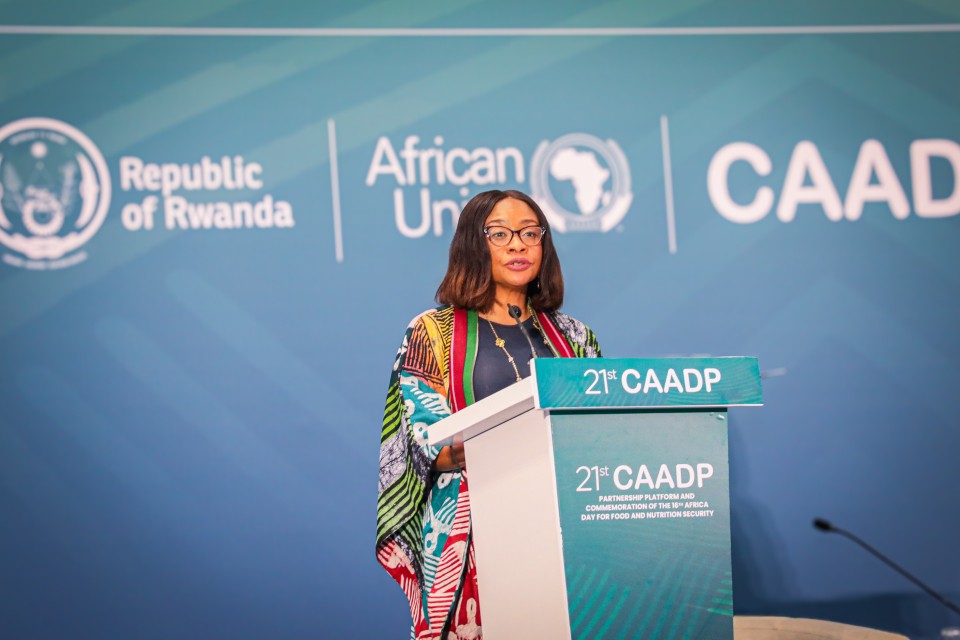
Ms. Lydie Kuoame, Deputy Director of WFP’s African Union Global Office in Addis Ababa.