Likuena left lamenting
Stalemate against minnows Seychelles dents AFCON hopes
SEABONGA CHABALALA
MASERU – In what was supposed to be a statement of intent, Likuena instead delivered a display of frustration, playing to a goalless stalemate against the Seychelles in the first leg of the 2027 Africa Cup of Nations (AFCON) preliminary round at Toyota Stadium in Bloemfontein yesterday afternoon.
The result will be viewed as two points dropped for the home side in all but name, leaving their campaign for a place in the group stages hanging in the balance ahead of Sunday’s second leg at the same venue.
For a nation that arrived with aspirations of asserting their growth on the continental stage, the final whistle was met with a sense of deflation. The Pirates of Seychelles, a side that had lost their previous five matches by margins of four or more goals without scoring, left Bloemfontein celebrating a result that felt like a victory.
They successfully extended their infamous streak without a win against African opposition to 62 matches, yet the context of the draw made it feel like a moral triumph for the islanders.
From the opening exchanges, the tactical approach was clear. Likuena, buoyed by pre-match confidence from head coach Bob Mafoso, seized control of possession and pinned the Seychellois deep within their own half.
The Lesotho frontline consistently raided the final third, earning a succession of corners and set-piece opportunities that, on paper, should have yielded a breakthrough.
However, a recurring theme of wayward finishing and resolute defending defined the afternoon. The Crocodiles, as they are affectionately known, moved the ball with purpose in the midfield but found the attacking third to be an impenetrable fortress.
The Seychelles defence, organized and desperate, threw bodies in front of every shot and cleared their lines with the urgency of a side fighting for their tournament lives.
Sensing the growing anxiety among his players and the silent frustration in the stands, Coach Mafoso attempted to inject life into the offense by turning to his bench. The introduction of Tšepang Sefali and Motebang Sera brought fresh legs and renewed energy to the wings, but the cutting edge remained elusive.
Despite sustained pressure and a glaring advantage in both possession and territorial dominance, the ball refused to cross the goal line.
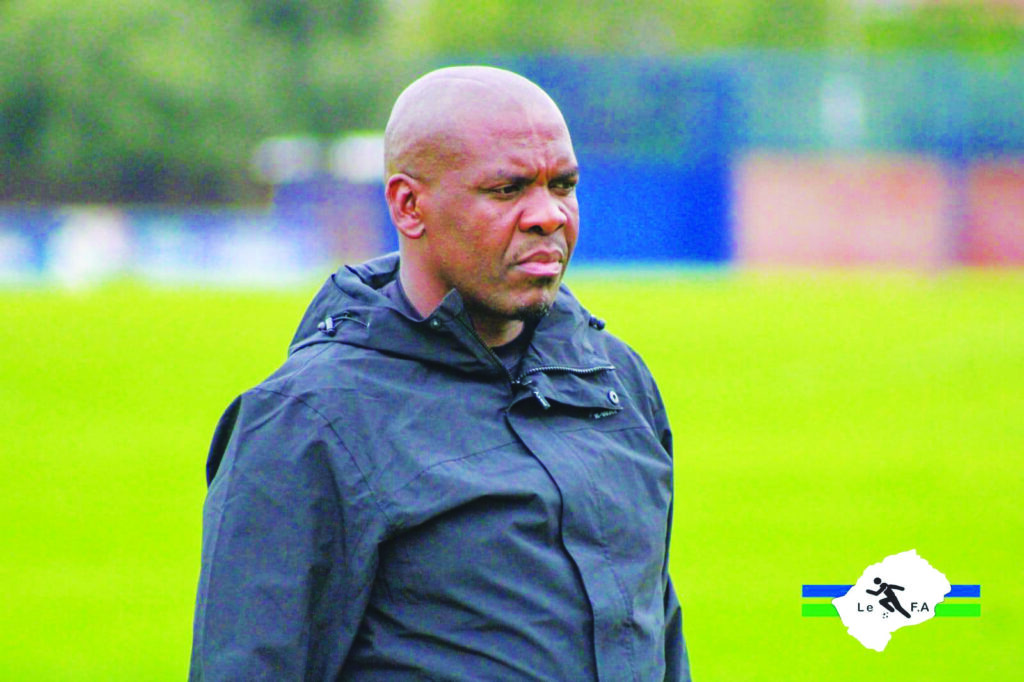
The stalemate was particularly disappointing given the tone set by the technical bench in the lead-up to the match. Speaking during a pre-match briefing on Wednesday, head coach Bob Mafoso had spoken of a team that had matured beyond the anxieties of past campaigns.
“We have grown, we can hold the ball; we are not scared,” Mafoso had told reporters with confidence. His words were meant to signal a new era of fearlessness, a squad ready to control the tempo and dictate terms.
Yet, after the 90 minutes were up, his earlier rhetorical question – “But did we treat the opponent in the attacking third?” – served as an unintentional epitaph for a disjointed offensive display.
“That is the stage we are now,” he had continued ahead of the tie.
“If we can get into the attacking third, we can get more goals.”
On Thursday, Likuena proved they could reach the attacking third. They simply could not find the goals to match their territorial advantage.
The inability to convert dominance into a tangible lead means that a team expected to advance comfortably must now face the second leg with the pressure of knowing that a single mistake could be fatal.
The stakes in this preliminary round are absolute. Twelve of the continent’s lowest-ranked teams, according to the FIFA Rankings at the time of the January draw, are competing in two-legged ties for the right to join the forty-two sides already awaiting in the group stage. Lesotho, seeded among these twelve, were expected to use this tie as a springboard. Instead, they have handed the underdogs a lifeline.
While Likuena struggled to find their rhythm in Bloemfontein, other results in the preliminary round underscored the ruthlessness required to progress. On Wednesday, Eritrea marked their return to continental qualifying after a two-decade absence with a commanding 2-0 victory over eSwatini.
Thursday’s other fixture saw South Sudan deliver a masterclass in finishing, thrashing Djibouti 4-0. Those teams, like Lesotho, are competing for one of the six remaining spots in the group stage, but unlike Likuena, they have already placed one foot firmly in the next round with commanding first-leg performances.
For Lesotho, the equation is now brutally simple. Sunday’s second leg, set to be played once again at Toyota Stadium – which will serve as a “home” fixture for Likuena – must yield a victory. Having failed to secure an away goal in the traditional sense (with both legs technically in neutral territory), the pressure to perform in front of their supporters is immense.
Seychelles, having weathered the storm once, will enter the rematch with a tangible belief that they can cause an upset. They have already shown they can withstand Lesotho’s pressure for 90 minutes; they will now back themselves to perhaps snatch a goal on the counter-attack and progress to face the continent’s elite.
The 36th edition of the biennial African football tournament, organized by the Confederation of African Football (CAF), is set to be hosted by Kenya, Uganda, and Tanzania between June19 and July18, 2027. For Lesotho, the dream of participating in that historic East African showcase now hinges on a single match.
Coach Mafoso called for his team to play without fear. Now, faced with the prospect of an early exit, they must find the ruthless efficiency in front of goal that eluded them yesterday, or risk being eliminated by the very minnows they were expected to sweep aside.