Seeking justice in the shadow of a mega-dam

Seinoli amplifies voices of LHWP Phase II displaced communities
MOSA MAOENG
MASERU — A quiet but urgent battle for accountability is unfolding within communities displaced by the Lesotho Highlands Water Project (LHWP) Phase II which are grappling with what they describe as broken promises, opaque compensation and a profound sense of being unheard.
For nearly four decades, the LHWP has stood as a symbol of cooperation between Lesotho and South Africa, a vast water transfer scheme that supplies South Africa’s industrial heartland with water while generating royalties for the impoverished mountain kingdom. Yet, as Phase II of this mega-project advances, civil society organisations like Seinoli Legal Center (SLC) are stepping in to ensure that the voices of those most affected – the communities whose land and livelihoods are being reshaped – are not silenced by the machinery of development.
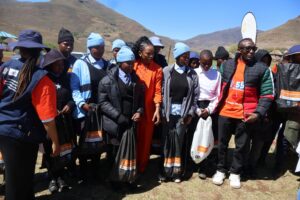
On February 26, Seinoli held a press briefing in Maseru to reflect on a recent site visit to Mokhotlong.
The visit, conducted in late January, was more than a fact-finding mission. It was an attempt to document the lived experiences of displaced families, amplify their stories to a broader African and Global South audience, and hold powerful duty-bearers – including the Lesotho Highlands Development Authority (LHDA), the New Development Bank (NDB), and the African Development Bank (AfDB) – accountable.
“There is a pressing need to amplify community voices, document rights violations, and generate evidence-based reporting,” Seinoli stated in a briefing note. The organisation’s goal is to sustain pressure on financiers and government ministries to engage, respond, and take corrective action, particularly in adopting gender-responsive and rights-based reforms.
The LHWP is one of Africa’s largest bi-national infrastructure projects. Conceived in a 1986 treaty between Lesotho and South Africa, it involves a network of dams and tunnels that harness the water from Lesotho’s mountainous Senqu (Orange) River system. Phase I, completed in the early 2000s, gave rise to the iconic Katse and Mohale Dams. Phase II, currently under construction, will see the building of the Polihali Dam and a 38-kilometre transfer tunnel connecting to the existing infrastructure.
While lauded for its engineering brilliance – exemplified by the newly built Senqu Bridge – the project has a long history of social disruption. Phase II, initiated after years of delay and escalating costs, has brought fresh scrutiny. The estimated cost has ballooned from M8 billion in 2008 to a staggering M53 billion, with project management fees alone accounting for billions.
These figures have sharpened questions about transparency, governance and the equitable distribution of benefits.
For the communities in Mokhotlong, however, the issue is not just about national accounts. It is about homes, grazing lands, and a way of life.
At the heart of Seinoli’s advocacy is the issue of compensation. According to Mosa Letsie, Programme Lawyer at Seinoli, the communities have raised serious concerns about how they have been treated in the resettlement process.
She explained that when the LHDA’s compensation document was released, residents were alarmed to find that it provided for compensation not exceeding 50 years – a significant deviation from what had been discussed during earlier consultations. “This was adopted without further engagement or consent from the communities,” Letsie said.
She added that many community members reported that their voices were not meaningfully incorporated, despite prior assurances. Some alleged they were forced to sign compensation agreements under the threat of expropriation without compensation.
“Such circumstances, from a legal standpoint, raise serious concerns regarding the voluntariness and validity of the consent communities gave before the project’s implementation,” she noted.
The formula used to calculate compensation has also become a flashpoint. Initially, the rate for expropriated land was set at M23.00 per square metre. Communities now report that the rate has drastically changed – to as little as M0.98 per square metre in some areas, and M0.68 in others. No clear explanation has been provided by the implementing authority.
“With some communities that signed compensation agreements, they have reported that the amounts disbursed are disproportionately lower than the scale of the land and livelihoods lost,” Letsie said.
“There is a lack of transparency in the formula, and that has deepened mistrust and formed perceptions of arbitrariness.”
Riska Koopman, Policy Research and Advocacy Officer at the African Forum and Network on Debt and Development (AFRODAD), placed the community grievances within a wider context of governance failures. She noted that while the LHWP is celebrated as an engineering marvel, it has also created a complex web of responsibility involving two governments and multiple management entities.
“On the one hand, you see iconic infrastructure,” Koopman said. “On the other, you see so many displaced communities and disrupted livelihoods. There is a lot of confusion about the role of South Africa and Lesotho’s responsibilities toward their citizens.”
She pointed out that the project operates through management companies – the Trans-Caledon Tunnel Authority in South Africa and the LHDA in Lesotho – which each charge approximately M10 billion in management fees.
“There is no accountability for this mismanagement of funds, so there is already a glaring gap in transparency, governance, and accountability,” she said.
Koopman also highlighted that Lesotho’s royalties from water exports play a major role in the national economy. Yet, she warned, “development cannot be dispossession.” With Lesotho’s debt profile tightening, the cost of the project – both financial and social – is becoming increasingly unsustainable.
Seinoli Legal Center has long positioned itself as a defender of marginalised communities in Lesotho. In the context of the LHWP Phase II, the organisation has been working to bridge the gap between legal frameworks and the lived realities of affected families. Its recent press briefing was part of a broader strategy to mobilise media, both locally and internationally, to shine a light on rights violations.
The organisation’s approach combines legal advocacy with grassroots engagement. By documenting testimonies, analysing compensation formulas, and engaging with regional and international financial institutions, Seinoli aims to transform individual grievances into a collective demand for systemic reform.
Their work underscores the need for gender-responsive safeguards – recognising that women in displaced communities often bear the heaviest burden, losing not only land but also access to traditional livelihoods and social networks.
Marianne Buenaventura-Goldman, FORUS Project Coordinator for Financing for Sustainable Development, offered a stark analysis of the hidden costs associated with projects like the LHWP Phase II. She noted that when environmental and social safeguards are poorly enforced, the costs extend far beyond the financial.
“These direct costs are first and foremost economic,” she said. “Relocation, lack of consultation, and unfair compensation impose a huge economic cost on those impacted.” She added that the loss of livelihoods – particularly grazing lands – increases poverty among displaced populations, while the rising cost of living makes survival more precarious.
Goldman also warned of the social costs, including a high prevalence of gender-based violence (GBV), which she said is “quite typical of large infrastructure projects.” GBV in this context can be both physical and economic, exacerbated by the stress of displacement and livelihood disruption.
“There can also be a lot of protest and civil unrest when communities are forced to move and are not willing to,” she said, pointing to the risk of legal disputes and social fragmentation. Perhaps most troubling, she noted, are the intergenerational costs: the depletion of natural resources, the loss of traditional knowledge systems, and the long-term debt burdens that future generations will inherit.
As construction on Phase II continues, Seinoli and its partners are calling for more than just financial transparency. They are demanding that duty-bearers – including the LHDA, the government of Lesotho, and international financiers – engage meaningfully with affected communities, provide fair and clearly explained compensation, and ensure that grievance mechanisms are accessible and effective.
For the people of Mokhotlong, the water flowing under the mountains to South Africa represents both a resource and a reminder. In their eyes, true development cannot come at the cost of justice. Through persistent advocacy and amplified voices, Seinoli Legal Center is working to ensure that, in the shadow of the great dam, no story is left untold, and no voice is left unheard.