Bridging the gap
Berea High hosts landmark Menstrual Health Awareness Day
‘MATHATO SEBOKA
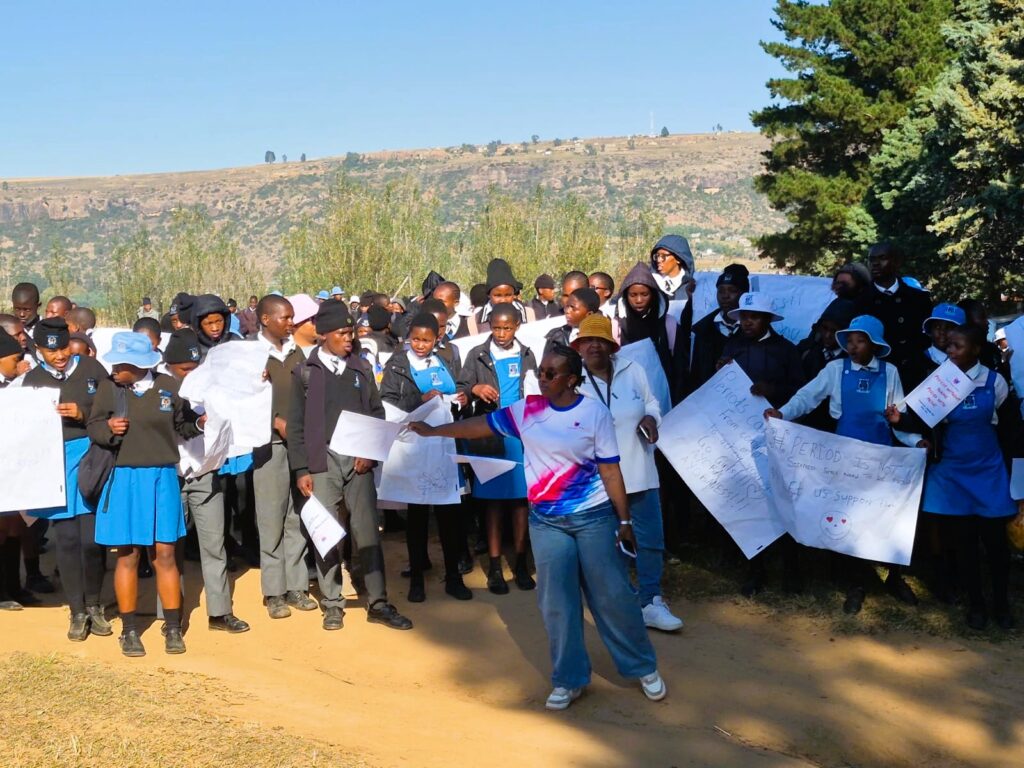
BEREA – A vibrant display of community solidarity has seen learners, educators, health professionals, and community leaders gather at Berea High School last Friday to commemorate World Menstrual Hygiene Day.
The event, orchestrated by non-profit organization Touch Roots Africa (TRA) in partnership with the Ministry of Education and Training (MoET) and supported by the Ministry of Health and the Aids Healthcare Foundation (AHF), sought to dismantle the deep-rooted stigma surrounding menstruation while strengthening access to critical health services for students.
For millions of girls worldwide, a monthly biological process spells an interruption to their education. In Lesotho, this reality is stark. According to a national survey conducted by the Ministry of Education and UNICEF, approximately 22 percent of girls miss school during menstruation due to a lack of sanitary products, private facilities, or adequate support.
This absenteeism not only hinders academic performance but also exacerbates feelings of shame and isolation.
It was this gap that the event at Berea High aimed to bridge. Thakane Mokhethi, Programme Manager at TRA, explained that the commemoration is part of an ongoing project in the Berea district designed to link schools directly with local health facilities.
“This project is aimed to improve learners’ access to health services,” Mokhethi stated.
“The initiative is intended to ensure that young people receive the information, support, and healthcare they need to make informed decisions about their well-being.”
She added that with support from MoET, the initiative is also strategically positioned to help reduce high rates of teenage pregnancy and HIV infections in schools.
Mafokama Mocoase, from the District Education Office in Berea, emphasized that the purpose of the event extended beyond simple awareness.
“The celebration of such days allows us to raise awareness and break the stigma and silence,” Mocoase said. “Both boys and girls must be taught about menstruation education because it is nature. It helps if we engage in honest dialogues that bring collective understanding.”
This sentiment was echoed by the school’s Chief, Theophilus Tšenoli, who offered a specific call to action for the male students.
“I wish such initiatives can involve boys more because they do not understand that menstruation is part of nature and not a choice,” Tšenoli said.
Berea High School Principal, German Mphutlane, delivered a powerful address framing menstrual health as a human rights issue.
“Today has reminded us that menstrual health and hygiene are not just women’s issues; they are a matter of dignity, education, health, and human rights,” Mphutlane said.
“When girls are supported, informed, and confident about their menstrual health, they are empowered to attend school regularly, to participate, and to pursue their dreams without fear or shame.”
A critical partner in Friday’s commemoration was the AIDS Healthcare Foundation (AHF), an organization with a deep history of menstrual health intervention in the country. AHF began operations in Lesotho in 2013, initially invited by the Lesotho Mounted Police Service to assist with HIV care.
Over the last decade, the Foundation has expanded to five districts, supporting 21 health centres across the nation.
Long before this year’s commemoration, AHF recognized that period poverty was fuelling the HIV epidemic. Their logic is direct: girls who miss school are often left without structured supervision, increasing their vulnerability to older partners and transactional sex.
To combat this, AHF Lesotho launched the “Hlokomela Banana: Care for Girls” initiative. Through this program, AHF provides sanitary towels to students, ensuring they can stay in the classroom. ‘Mapaballo ‘Mile, AHF Lesotho Country Programme Manager, previously noted that girls can miss up to 50 school days a year once they start their cycle, a gap the programme directly addresses with donations of hygiene products.
Metseng Tšehla from AHF reiterated this link during the Berea event, noting that the high cost and inaccessibility of pads forces some girls into dangerous situations.
“Some girls miss school when on their period due to the distance they have to walk… pads are expensive and not easy to access,” Tšehla said. “This hinders their schooling. We are keeping the girl-child in school because school is an empowerment tool.”
The event concluded with a call for sustained action rather than a one-day conversation.
Principal Mphutlane urged students to continue the dialogue, stating, “Let today not be the end of the conversation but the beginning of continued education, compassion, and action.”
Also participating in the commemoration were Cenez High School and Makola High School.
Organizers hope the Berea event will serve as a catalyst for stronger collaboration between schools and healthcare providers. As Lesotho moves toward a “#PeriodFriendlyWorld,” the integration of support from the Ministry of Health, global foundations like AHF, and local leaders remains vital to ensuring that no girl’s future is limited by a natural biological process.
‘Makhotso Lecheko from the MoET summed up the day’s message for the students: “Children, count yourselves lucky for being granted this opportunity. Menstruation is natural and it is healthy, so it is not a mistake for a girl to experience it.”