Broken promises and dust in the air
Ombudsman slams LHDA over displacement crisis in Polihali
MOSA MAOENG
MASERU – A quiet but urgent battle for accountability is unfolding in the highlands of Mokhotlong. For the communities displaced by the Lesotho Highlands Water Project (LHWP) Phase II, the promise of national development has come at a devastating personal cost.
They speak of broken promises, opaque compensation, and a profound sense of being unheard. Their cries have now reached the Office of the Ombudsman. In a damning report released this week, Ombudsman, Advocate Tlotliso Polaki, has chastised the Lesotho Highlands Development Authority (LHDA) for what she describes as systemic procedural failures, inadequate consultation, and a pattern of sloppy policy execution that has left families destitute and angry.
The investigation, launched following months of complaints from villages such as Masakong, Ha Tlhakola, and Tsekong, focused on allegations of unfair land compensation, loss of livelihoods, procedural flaws in relocation, lack of transparency, and a failure to restore basic living standards. The findings reveal a deep chasm between the LHDA’s policy commitments and the lived reality of Basotho families.
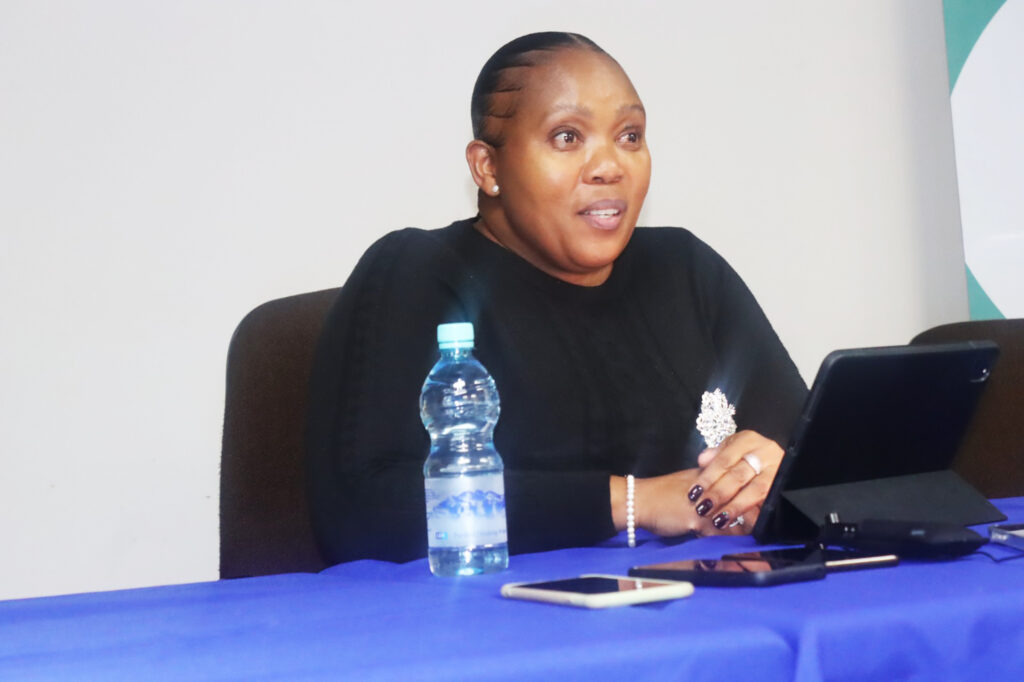
“Although the project brings infrastructure development, it does not have to frustrate their human rights,” Polaki said during a press briefing in Maseru on Tuesday.
“Our investigation notes a lack of constructive engagement from relevant stakeholders with the communities.”
The current crisis in Polihali is not without precedent. The LHWP, a massive bi-national water transfer scheme between Lesotho and South Africa, has a long and troubled history regarding compensation. Under Phase I, which has been operational for years, grievances over land acquisition and resettlement have festered for decades.
According to documents obtained by the Ombudsman’s office, as of 31 December 2025, Phase I compensation arrears stood at a staggering M142.2 million, with future compensation costs projected at M473 million. These outstanding payments relate to arable land, fruit trees, and communal assets lost during the initial construction of the Katse and Mohale Dams.
The Phase II project, which includes the construction of the Polihali Dam and associated tunnels, was supposed to learn from these mistakes. Instead, the Ombudsman found that old habits have resurfaced. As of the same date, Phase II arrears had already reached M6.76 million, with future costs estimated at nearly M25 million.
“Compensation rates are perceived as arbitrary and insufficient,” the report states, noting that they fall below the standards required to maintain pre-project living standards. One of the most bitter points of contention is the 50-year compensation period for lost arable land. While the LHDA’s 2017 Compensation Policy (amended to 2022) provides for annual cash payments over 50 years, residents argue that this should be a lifetime or 99-year entitlement to ensure intergenerational security.
For the villagers of Masakong and Ha Tlhakola, the theoretical debates over policy are secondary to the terrifying reality of their daily lives. The investigation confirmed that blasting and heavy machinery associated with the Polihali construction have caused extensive structural damage to homes.
“Reports indicated indiscriminate blasting negatively impacting resident safety and causing property damage,” the Ombudsman’s report reads. During site inspections, investigators documented several houses with severe structural cracks, and in at least one case, a complete house collapse.
While the LHDA submitted data on March 19 claiming that 48 damaged houses have been repaired (24 under the Dam Project and 20 under the Tunnel Project), the Ombudsman found that the pace of repairs is dangerously slow. Many families continue to live in compromised dwellings, mere metres from active construction zones.
“In respect of the relocation of Masakong, Tlhakola and Tsekong villages, the LHDA should relocate the three villages within six months following the issuance of this report to avoid unnecessary casualties given the current state of houses and proximity to construction activities,” Polaki ordered.
Beyond blasting, residents complain of relentless noise and dust pollution. While the LHDA has attempted to downplay the severity, noting that some villagers said dust was “manageable,” the Ombudsman concluded that mitigation measures are grossly inadequate. Recommendations include installing professional-grade sound barriers along residential borders and enforcing regulated periodic watering to suppress dust.
Perhaps the most damning aspect of the report concerns the issue of consultation. The Ombudsman found that the LHDA treated community engagement as a procedural exercise rather than a meaningful dialogue. Key decisions regarding compensation rates, formulas, and relocation sites were finalised before communities were even consulted.
“Information was not adequately disclosed, preventing informed decision-making by affected persons,” the report states. This was most evident in the relocation process, where residents faced limited choice in resettlement sites and expressed deep dissatisfaction with the quality of replacement housing. Some reported unfinished houses lacking promised social infrastructure such as water, electricity, and access roads.
The Ombudsman has now ordered the LHDA to immediately rectify relocation conditions and complete all unfinished houses, including the provision of all promised services.
The legal centre Seinoli, which has been advocating for the displaced communities, has raised even more alarming allegations. During a separate press briefing on February 26, Programme Lawyer Mosa Letsie revealed that the compensation document was adopted without further engagement or consent from the communities.
“Many community members reported that their voices were not meaningfully incorporated, despite prior assurances,” Letsie said. “Some alleged they were forced to sign compensation agreements under the threat of expropriation without compensation. Such circumstances raise serious concerns regarding the voluntariness and validity of the consent given.”
The compensation formula itself has become a flashpoint. Initially, the rate for expropriated land was set at M23 per square metre. Communities now report that the rate has drastically changed – to as little as M0.98 per square metre in some areas, and M0.68 in others. The LHDA has provided no clear explanation for this dramatic reduction.
The Ombudsman’s investigation operated under a constitutional mandate to investigate maladministration, unfairness, and human rights violations by government agencies. The report concludes unequivocally that the LHDA has failed to meet both national legal requirements and international environmental and social performance standards.
The resulting displacement and disruption have caused profound distress. Families have lost grazing land, arable fields, and access to communal resources. Livelihoods have been suspended, not restored. The Ombudsman has ordered that interim financial support be provided to affected families immediately, “so that living conditions are no lesser than prior to relocation processes.”
The Ombudsman has given the LHDA a clear six-month deadline to act. Within that period, the Authority must:
- Relocate the three villages of Masakong, Tlhakola and Tsekong.
- Provide direct financial redress to all affected households, including those with outstanding claims dating back to 2012.
- Rectify all unfinished houses and provide promised social infrastructure.
- Implement interim livelihood support for families whose incomes have been suspended.
As the clock ticks, the people of Polihali wait. For them, the Ombudsman’s report is a rare validation of their suffering. But they know that reports, no matter how damning, do not rebuild houses or restore dignity.
That, they insist, requires something the LHDA has so far failed to deliver: honest accountability.