Dairy Board suspension deepens
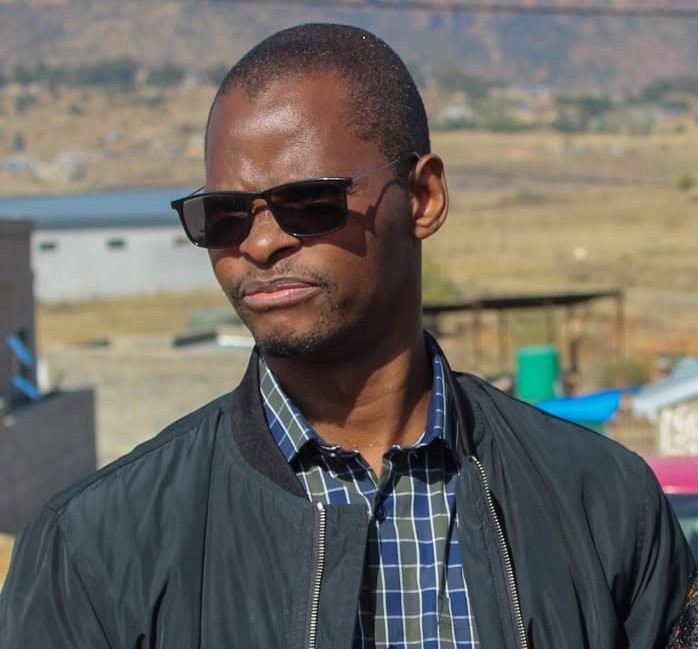
CEO ousted, replacement ‘earning M1.5 million’
MOTSAMAI MOKOTJO
MASERU – When Abiel Mashale was suspended as Chief Executive Officer of the Lesotho National Dairy Board (LNDB) last month, the official reasons appeared straightforward.
He was accused of bypassing Principal Secretary, Khothatso Tšooana, to seek a direct audience with Agriculture Minister Thabo Mofosi. A show-cause letter was issued. A suspension followed. And Mathealea Lerotholi was installed in his place.
But the story that has since emerged around the case is considerably more layered than that administrative account suggests – and it is Mashale’s own lawyer who, for now, is doing much of the talking.
Advocate Letuka Molati confirmed to Public Eye that legal proceedings against the suspension are being prepared. He was candid, however, that nothing has yet been committed to paper.
“I have not yet filed anything,” he said. But in the same breath, the advocate made plain that his client’s situation is not as simple as a straightforward employment dispute.
“You should be asking how much the new person is earning,” Advocate Molati said pointedly. “It is complicated. We have a challenge. It is public knowledge – we are going to court. That is not where the issue is.”
The advocate’s questions cut to the core of a process that remains opaque to the public. When exactly was Lerotholi hired? Was the position advertised? Was a competitive recruitment process followed?
These are not minor procedural questions for a public institution – they go to the heart of whether public resources and regulatory authority were deployed lawfully.
“When was this other person hired? Was there an advertisement?” Advocate Molati asked, his tone deliberate rather than rhetorical. He offered no suggestion that he already knew the answers, only that the questions deserved to be asked – and answered publicly.
Lerotholi did not answer calls from Public Eye.
Perhaps the most striking claim made by Advocate Molati concerns remuneration. According to the lawyer, Lerotholi is reportedly earning in the region of M1.5 million – a figure that would represent a substantial premium over what his client was being paid.
“I heard that she earns around M1.5 million,” Advocate Molati said. “Mashale was earning less than that – maybe below M900 000.”
Public Eye was unable to independently verify these figures before publication, and the LNDB has not confirmed or denied them. But if accurate, they raise uncomfortable questions.
An organisation that sources describe as having been hampered for years by the absence of an active Board of Directors – and which an audit report found to be in need of governance reform – would be hard pressed to explain a near-doubling of the senior executive salary bill without a transparent process behind it.
The technical trigger for Mashale’s suspension – his direct approach to Minister Mofosi – takes on a different character when the subject matter of that approach is understood. Mashale is said to have raised with the minister his concerns about Lerotholi’s appointment to the position of Board Secretary.
This is not a peripheral matter. Section 7(1) of the Agricultural Marketing (Establishment of National Dairy Board) Regulations, 1991 as amended, provides explicitly that the management of the board’s affairs shall be vested in the CEO, who shall also serve as the Secretary of the Board. In other words, the Board Secretary role was not vacant – it was, by law, Mashale’s own.
Whether that legal architecture survived the board’s recent reconstitution, or whether the newly appointed Board of Directors has authority to create a separate secretarial post, is likely to be among the contested questions if and when Advocate Molati’s papers are eventually filed.
To understand the full weight of the current crisis, one must look back at the LNDB’s troubled history. The board was established under the National Dairy Board Regulations of 1991, itself an offspring of the Agricultural Marketing Act. Its mandate was clear – to promote, coordinate, and develop the dairy industry in Lesotho, a sector critical to rural livelihoods, food security, and smallholder farmers.
For years, the dairy board operated as a key node in Lesotho’s agricultural economy, overseeing everything from milk quality standards to market access for local producers. But sources familiar with its internal workings describe an institution that has been hamstrung for years by the absence of an active Board of Directors – the very governance structure meant to provide oversight and strategic direction.
That vacuum, according to sources who spoke to Public Eye on condition of anonymity, created conditions in which administrative irregularities could take hold. A previous audit report had already flagged these problems and recommended they be addressed – in part through the very establishment of a functioning board.
The Board of Directors, which is constitutionally central to the governance of the dairy board, had been absent for an extended period before its recent reconstitution. In that time, decisions were made, appointments were effected, and public money was spent – all without the statutory checks and balances that a board is meant to provide.
It is against this backdrop that Mashale’s conduct must be judged. His supporters allege he had been attempting to surface these irregularities through legitimate channels, and that his approach to the minister – whatever its procedural merits – was an act of institutional conscience rather than insubordination.
His detractors, presumably, see it differently. Neither camp, beyond the lawyer, is speaking publicly.
Minister Mofosi did not answer questions put to him by Public Eye. His phone went unanswered on multiple occasions, and he had not responded to a written questionnaire sent by this publication at the time of going to print. Given that it is the minister’s office – and the question of what is permissible contact with that office – that sits at the very centre of the suspension, his silence is conspicuous. Principal Secretary Tšooana was likewise unreachable.
Mashale himself confirmed his suspension when first approached but declined to go further.
“I cannot divulge any further details regarding my suspension as the matter is being dealt with by my lawyer, but talk to him.”
The LNDB is not a private entity. It was established under law to serve Lesotho’s dairy farmers and consumers, and it draws on public resources to do so. Questions about how its executive appointments are made, what salaries are attached to those appointments, and whether due process is followed when a sitting CEO is removed are not merely legal technicalities – they are questions that Basotho who depend on a functioning dairy sector have a right to have answered.
For now, the court papers are unwritten, the minister is not talking, and the new acting CEO is not commenting.
What exists, in the space between all of that official silence, is a lawyer’s set of pointed, unanswered questions – and the growing suggestion that the most important part of this story has not yet been told.