Locked in, checked out
SARS ends free passage for Lesotho vehicles, demands full declarations from June
TEBOHO KHATEBE MOLEFI
MASERU – A new electronic system is set to remove decades-old SACU exemption, forcing thousands of Basotho commuters, workers and permanent residents to declare their cars as “temporary imports” every time they cross into South Africa.
For decades, the border between Lesotho and South Africa has been a river of movement – daily, hourly, sometimes indistinguishable from a single, sprawling urban corridor. A teacher in Ladybrand, a nurse in Bloemfontein – tens of thousands of Basotho have crossed without a second thought about their car’s registration.
That seamless flow is about to hit a legal wall.
On June 1, the South African Revenue Service (SARS) will begin enforcing a strict temporary importation declaration for all foreign-registered motor vehicles entering South Africa. The new rule ends a long-standing operational exemption for vehicles from fellow Southern African Customs Union (SACU) member states – Botswana, eSwatini, Lesotho and Namibia (the BELN countries).
For Lesotho, a nation completely surrounded by South Africa, the change is not merely administrative. It is existential. Every single Lesotho-registered vehicle – whether owned by a daily commuter, a critical skills worker living in Johannesburg, or a permanent resident of South Africa – will now be treated as a foreign good requiring electronic pre-declaration, inspection, and proof of re-export.
SARS has answered detailed questions about how the system will work. The answers, obtained by this newspaper, reveal a hard-line legal position with only narrow concessions. The message is clear: South African customs law now trumps regional trade comfort.
No more free movement
The legal basis for the enforcement is Section 15 of South Africa’s Customs and Excise Act of 1964 (as amended). It requires all persons entering or leaving South Africa to declare goods in their possession, including road vehicles temporarily imported or exported.
Previously, SARS did not enforce this strictly on SACU-registered vehicles due to operational challenges – long queues, manual systems, and the sheer volume of traffic. But SARS now states that those challenges have been resolved through the Travel Management System (TMS) and the Moabi mobile application, which allow electronic pre-declaration before arrival.
“The SACU Agreement does not exempt member states from compliance with South African national legislation regarding import controls,” SARS said in its stakeholder communication.
This interpretation has raised immediate legal and practical questions in Maseru. If Lesotho is a SACU member – the world’s oldest customs union, established precisely to facilitate free movement of goods within a common customs area – how can a Lesotho-registered car be an “import”?
SARS’s answer, provided to this newspaper by an executive-level professional in data governance and master data management, is blunt: “A vehicle registered outside South Africa is treated as a foreign good for customs purposes, regardless of the owner’s residency or visa status.”
In other words, the geographical reality of Lesotho – a country with no alternative route that bypasses South Africa – confers no legal privilege. A Maseru registration plate is, for SARS, equivalent to a German or Japanese plate.
The six-month trap for workers and residents
One of the most alarming revelations for Lesotho nationals working in South Africa concerns the maximum duration a Lesotho-registered vehicle may remain in the country.
Under the new rules, the temporary admission period for a foreign-registered vehicle is linked to the traveller’s lawful stay in South Africa, as authorised by their immigration permit. However, SARS allows only one extension, for a maximum of six months total. After that, the vehicle must be physically exported back to Lesotho.
“Once this period lapses, the vehicle must be removed from South Africa, and a new temporary import declaration must be completed upon re-entry, in line with customs control requirements,” SARS confirmed.
This creates a profound problem for Lesotho nationals who hold general work visas or critical skills permits, often valid for years. They may reside in Gauteng or the Free State for eleven months of the year, using their Lesotho-registered car for daily commuting, school runs, and work travel.
Under the new regime, that vehicle cannot remain in South Africa for more than six continuous months without being driven back to Lesotho to “reset” its temporary status.
Asked whether a permanent resident of South Africa – a legal resident for most other purposes – would receive any simplified process, SARS refused any concession.
“Permanent residence or the holding of a valid visa does not exempt a foreign‑registered vehicle from customs declaration requirements,” the revenue service stated. “Each entry of a foreign‑registered vehicle requires compliance with the applicable temporary importation provisions, irrespective of the owner’s residency status.”
That means a Mosotho who has lived in South Africa for twenty years, holds a permanent residence permit, owns a home in Soweto, but retains a car registered in Lesotho (perhaps for family reasons or lower insurance costs) will still have to declare that vehicle as a temporary import every single time they cross the border – even if they are simply returning from a weekend visit to their rural village.
Frequent crossings: The TRD1 as a partial lifeline
There is one narrow but important concession for frequent cross-border travellers – the TRD1 permit.
SARS confirmed that business persons, traders, and frequent commuters may apply for a TRD1, which is valid for up to six months and serves as proof of temporary admission. It allows repeated crossings during its validity period, provided the vehicle is exported before expiry and the permit is produced on request at border posts.
This is significant. A daily commuter from Maseru to Ladybrand would not need to complete a new declaration every single morning. A single TRD1, valid for up to six months, would cover multiple entries and exits.
However, the TRD1 does not solve the deeper problem of continuous presence. If a Lesotho national resides in South Africa for eleven months without exporting their vehicle, the six-month limit on temporary admission still applies. The TRD1 does not override the requirement to remove the vehicle and re-import it afresh.
SARS also clarified that the Moabi app and other digital channels allow travellers to store vehicle details, but a new declaration is not required for every single crossing if a valid TRD1 or multi-entry permit is in place. “Once issued, the permit remains valid for up to six months, subject to compliance with its conditions,” SARS stated.
Transit and the third-country problem
Another complex scenario involves Lesotho nationals travelling from Lesotho through South Africa to a third country, such as Botswana or eSwatini, and then back. Under customs law, such movements are considered “goods in transit” and should not be penalised if the vehicle does not remain in South Africa for local use.
SARS confirmed this principle but with a critical operational requirement: “Vehicles transiting South Africa by road remain subject to customs control and must be declared as required. The declaration must be acquitted on exit to confirm that the vehicle has left South Africa within the permitted timeframe and has not been diverted for local use.”
In practice, this means a traveller driving from Maseru to Gaborone via the N1 would need to declare the vehicle upon entry at the Lesotho–South Africa border and then “acquit” (close) the declaration upon exit into Botswana. Failure to do so could result in the vehicle being recorded as unlawfully remaining in South Africa.
No impact on immigration status—But delays inevitable
One of the greatest fears among Basotho commuters is that a customs infraction could affect their legal right to enter South Africa or their visa status. SARS has moved to allay this specific fear, but only partially.
“Failure to declare a foreign‑registered vehicle constitutes a contravention of the Customs and Excise Act and may result in customs enforcement action,” SARS said.
“However, customs non‑compliance does not affect a traveller’s immigration status or their legal right to enter South Africa. SARS and the Department of Home Affairs operate within their respective legislative mandates.”
That separation is legally important. A Mosotho with a valid work visa will not be turned away at the border solely for failing to complete a TMS declaration. However, they could face fines, seizure of the vehicle, or being flagged for future enforcement. Customs and immigration are parallel systems, not fused.
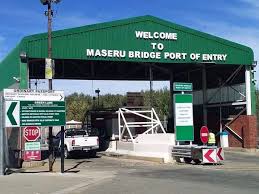
Nevertheless, the practical reality at busy land borders – Maseru Bridge, Ficksburg Bridge, Caledonspoort, Van Rooyens Gate – is likely to be different. Even with pre-declaration, customs officers retain the authority to question travellers, inspect goods, and levy duties. During the initial implementation phase starting June 1, delays are almost certain.
SARS has urged early compliance, stating that travellers do not need to wait until June to submit declarations.
“Early adoption supports smoother border operations, reduces congestion at ports of entry, and assists travellers who cross the border regularly to comply without disruption,” the revenue service said.
But critics argue that urging early adoption is not the same as providing infrastructure. The border posts between Lesotho and South Africa are already notorious for queues, particularly on Monday mornings and Friday afternoons. Adding a mandatory customs declaration – even an electronic one – for every single Lesotho-registered vehicle risks turning a slow crossing into a standstill.
The SACU contradiction remains unresolved
Legally, the most contested ground is the relationship between SARS’s enforcement and the SACU Agreement. Article 18 of the SACU Agreement explicitly provides for the “Free movement of domestic products” within the Common Customs Area. Article 23 commits member states to customs cooperation.
SARS’s position is that free movement does not mean free from declaration.
“While SACU facilitates trade within the common customs area, it does not exempt goods, including vehicles, from the requirement to declare them at national borders,” SARS stated.
But for many legal analysts in Lesotho, this is a distinction without a difference. If a product originates within the common customs area and no duties are owing, the declaration requirement is a pure administrative burden – one that disproportionately affects Lesotho due to its geographical encirclement.
A vehicle registered in Mpumalanga faces no such declaration when driving to Cape Town. A vehicle registered in Maseru faces a declaration every time it crosses an invisible line that, geographically, is impossible to avoid. That is not reciprocity. That is a border wall in digital form.
SARS has not addressed this asymmetry in its responses, other than to reassert the supremacy of the Customs and Excise Act.
What Lesotho nationals must do now
With the June 1 deadline approaching, SARS has outlined clear steps for all foreign vehicle owners:
1. Register on the TMS platform before travel (accessible via the SARS website, SARS Mobi App, or SATMS Mobi App on Android/iOS).
2. Submit an electronic declaration specifying the temporary import nature of the vehicle.
3. Present the completed declaration at the border post (digital or printed).
4. Comply with inspection if flagged by customs officials.
5. For frequent travellers, apply for a TRD1 permit, valid for up to six months, to avoid repeated single declarations.
6. For permanent residents or long-stay visa holders, be aware that the vehicle must be exported after six continuous months in South Africa, with a new declaration required upon re-entry.
SARS has also confirmed that the Traveller Card (TC-01) paper form may be used where electronic systems are inaccessible, but the digital platform is strongly preferred.
A three-month window
The period between now and June 1, is a three-month window for Lesotho vehicle owners to familiarise themselves with the TMS system, register their details, and, where possible, apply for TRD1 permits.
For the thousands of Basotho who cross the border daily – not as tourists, but as workers, students, and family members – the new regime represents a fundamental shift in how South Africa sees them. For decades, movement was relatively free. From June, every Lesotho number plate will be a foreign object, tracked, timed, and subject to export.
SARS says the system is designed to “significantly enhance operational efficiency, minimizing congestion, and expedites border movements.” Lesotho commuters will believe that when they see it.
Detailed submission guidelines and registration support are available at https://www.sars.gov.za/travellerdeclaration/