Sanitation, dignity drive transforms Lithabaneng schools
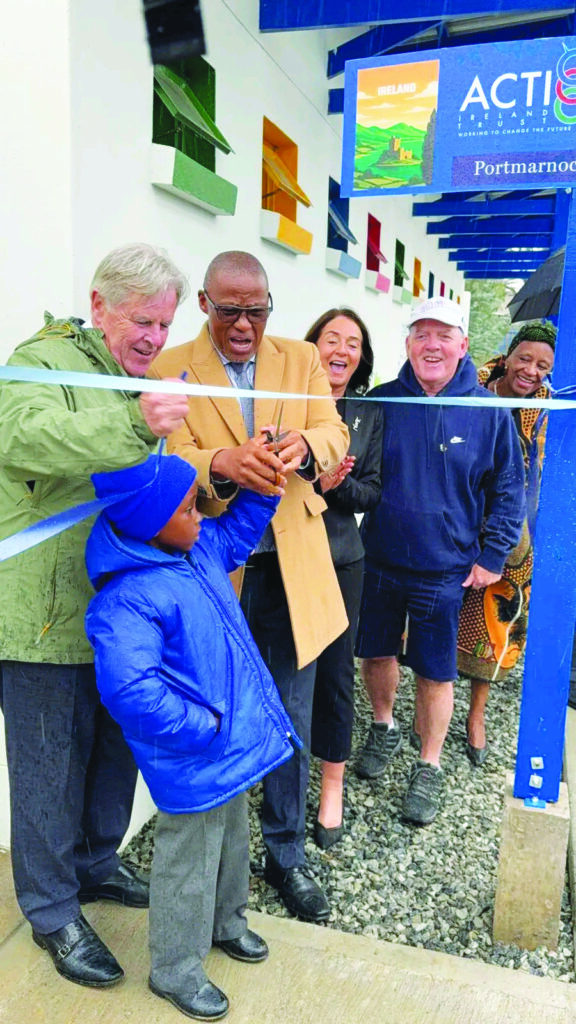
As Irish charity partners education ministry
TEBOHO KHATEBE MOLEFI
MASERU – In a boost to the nation’s educational infrastructure, a transformative construction project has brought flushing toilets, school kitchens, rainwater harvesting systems, and food gardens to five schools in the Lithabaneng area.
The initiative, led by Action Ireland Trust in collaboration with the Ministry of Education and Training, marks a major step toward creating healthier, more dignified learning environments for thousands of learners.
The beneficiary schools – Seboka Primary, Makoanyane Primary, Leqele Primary, Lithabaneng Primary and Lithabaneng High School – have long struggled with inadequate sanitation and nutrition facilities. The new developments directly address these gaps, aligning with global standards for child-friendly schools and water, sanitation, and hygiene (WASH) protocols.
The latest completed projects at Leqele and Makoanyane Primary Schools were officially opened on April 24 in separate ceremonies attended by government officials, traditional leaders and international partners.
At Leqele Primary School, the Minister for Education and Training, Professor Ntoi Rapapa, inaugurated a new block comprising separate toilets for boys, girls, and staff, alongside new reception classrooms. The construction was carried out by Pro Construction Ltd.
Meanwhile, at Makoanyane Primary School, His Grace Gerard Lerotholi, Archbishop of Maseru, officially opened new sanitation facilities. This project was notably supported by the Lesotho Defence Force and constructed by XYZ Ltd, a rising name in purpose-driven infrastructure development.
Both projects were supervised by Rise International, acting on behalf of Action Ireland Trust, ensuring quality control and adherence to international standards.
Founded as a registered charity in Ireland, Action Ireland Trust operates on a unique model of skills exchange programmes rather than aid distribution. The organisation deploys volunteers and professionals across Education, Healthcare, Information Technology, Planning and Development, Architecture, Construction, Agriculture, and Sport and Recreation.
Since establishing a presence in Lesotho, the Trust has focused on long-term, community-anchored projects that empower local populations. Its philosophy emphasises that infrastructure alone is insufficient; it must be paired with training, maintenance skills and behavioural change.
This is evident in their latest Lithabaneng initiative, where each school receives not just buildings but also training on hygiene promotion and garden management.
Rise International, the supervisory partner, is a development consultancy with a footprint across sub-Saharan Africa and Southeast Asia. Their global portfolio includes monitoring large-scale WASH programmes in Mozambique and refugee camp infrastructure in Bangladesh.
Within Lesotho, Rise International has overseen rural electrification projects and early childhood development centre builds. Their role in Lithabaneng involved technical audits, contractor liaison, and ensuring that every tap, toilet, and kitchen meets government and WHO specifications.
The Lithabaneng construction drive is firmly rooted in two key policy frameworks: Child Friendly Schools (CFS) and AWASH (Accelerated WASH in Schools.)
Under CFS policies, adopted by the Ministry of Education, every school must provide safe, inclusive, and healthy learning spaces. This means separate gender-sensitive toilets – crucial for keeping girls in school beyond puberty – access to clean drinking water, handwashing facilities with soap and nutritious meal provision.
Action Ireland Trust’s kitchens and food gardens directly support the CFS pillar of “health and nutrition,” while the rainwater harvesting tanks address the “safe water and sanitation” pillar.
The AWASH project – a multi-partner initiative led by the ministry in coordination with UNICEF and local NGOs – provides the operational guidelines. AWASH emphasises not just infrastructure but also hygiene education, monthly sanitation inspections, and the establishment of school WASH clubs.
At Lithabaneng High School, for instance, students will now lead peer-to-peer hygiene campaigns using the new facilities as demonstration sites. The food gardens will also serve as outdoor classrooms for agricultural science.
The relevance of these interventions cannot be fully understood without referencing global benchmarks. The WHO estimates that nearly 40 percent of schools worldwide still lack basic handwashing facilities with soap and water. In Lesotho, where water scarcity is seasonal and sanitation infrastructure remains fragile – the gap has historically been wider.
WHO guidelines for schools recommend a maximum of 50 pupils per toilet; prior to this project, some Lithabaneng schools had ratios exceeding 150:1.
Crucially, the project advances multiple Sustainable Development Goals (SDGs):
- SDG 3 (Good Health and Well-being): Reduced transmission of diarrhoeal diseases and soil-transmitted helminths through proper waste management and handwashing.
- SDG 4 (Quality Education): Improved attendance and concentration, especially for menstruating girls who previously would stay home due to lack of private, safe toilets.
- SDG 5 (Gender Equality): Separate facilities reduce risk of harassment and support dignity.
- SDG 6 (Clean Water and Sanitation): Rainwater harvesting and flushing toilets (connected to soak pits where sewers are absent) provide sustainable, climate-resilient water use.
- SDG 2 (Zero Hunger): School food gardens contribute to supplementary feeding programmes, directly tackling malnutrition.
Lesotho has made steady progress in recent years. According to the Joint Monitoring Programme (WHO/UNICEF), the percentage of schools in Lesotho with basic sanitation services rose from 45 percent in 2015 to approximately 62 percent by 2023. Projects like Action Ireland Trust’s Lithabaneng cluster are essential to pushing that figure toward the national target of 80 percent by 2027.
Fran Whelan, CEO of Action Ireland Trust, commented: “The projects undertaken by the charity ensure the Child Friendly School policies are implemented and WASH programmes are introduced into the school to ensure the learners have clean water, sanitation and hygienic facilities. But we go further – every kitchen comes with a cook trained in nutrition, every garden with a mentor in agroecology. That’s the skills exchange model in action.”
At Makoanyane Primary, a Grade 6 learner could not hide her relief: “Before, we were afraid to use the old toilets. Now we have flushing toilets and soap. And we are learning how to grow spinach and carrots. I want to be a nurse, and now I can stay clean all day at school.”
With the official opening now complete, Action Ireland Trust and the Ministry of Education are planning a maintenance training workshop for school management committees in Lithabaneng. The next phase – subject to funding – aims to replicate the model in four rural schools in Thaba-Tseka district.
For now, in Lithabaneng, a quiet revolution of dignity, health, and hope has taken root.
And it flushes.