US-led initiative expands access to breakthrough HIV drug
- For one million more people, targets mother-to-child transmission
- Landmark twice-yearly injection with 99.9% efficacy recently arrived in Lesotho as part of global push to end paediatric Aids
TEBOHO KHATEBE MOLEFI
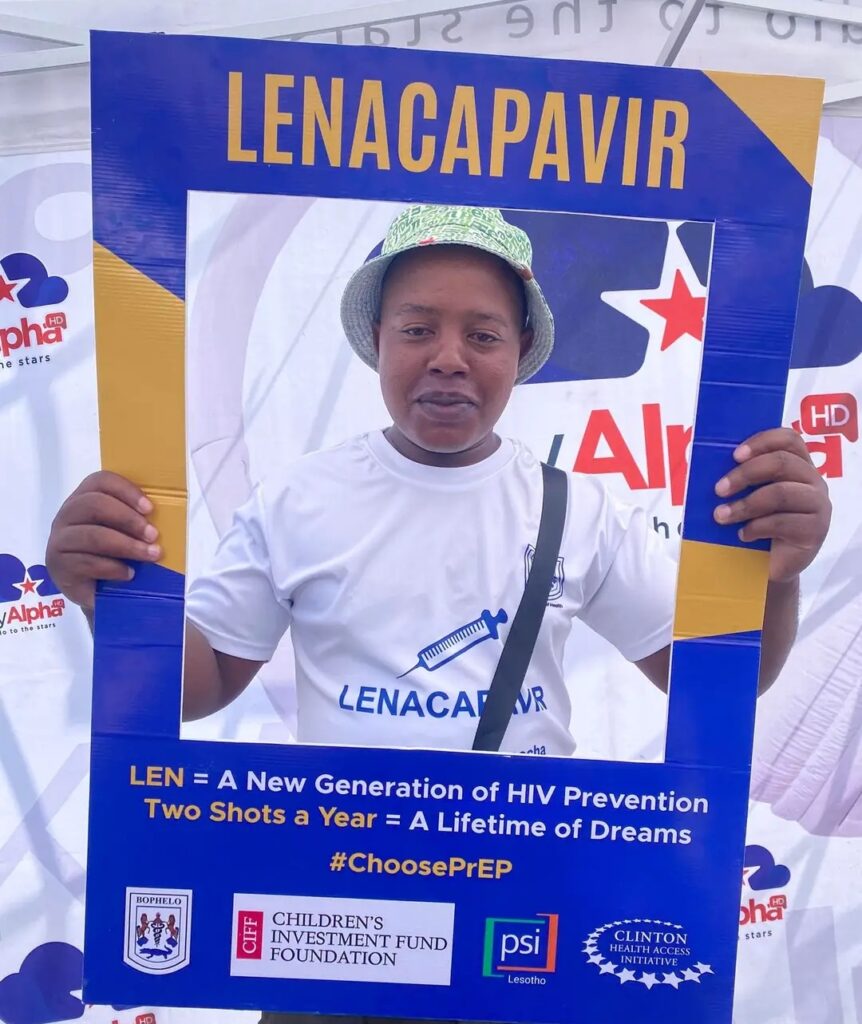
MASERU — In a sweeping expansion of American scientific leadership and global health diplomacy, the United States government has announced it will provide an additional one million people in high-burden countries with lenacapavir, a revolutionary twice-yearly injectable HIV prevention medication that clinical trials have shown to be 99.9 percent effective at stopping HIV transmission.
The initiative, unveiled April 14 by the US Department of State, builds on an existing partnership with Gilead Sciences and The Global Fund. With this latest commitment, the United States and The Global Fund are now jointly pledged to reach three million people in high-burden nations with lenacapavir by 2028 – up from a previous target of two million.
For pregnant and breastfeeding mothers, the drug represents a potential turning point in the decades-long fight against mother-to-child HIV transmission, a key goal of the Trump administration’s America First Global Health Strategy.
Unlike daily oral pre-exposure prophylaxis (PrEP), which requires consistent adherence that can be challenging during pregnancy and the postpartum period, lenacapavir’s six-month dosing schedule offers sustained, discreet protection without the burden of daily pills.
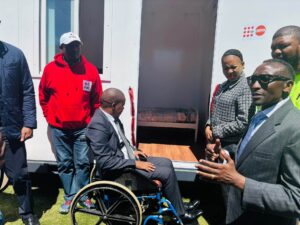
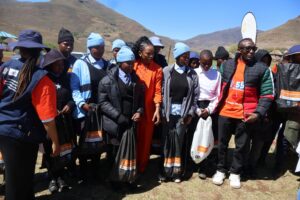
The announcement arrives just weeks after Lesotho – with one of the world’s highest adult HIV prevalence rates – received its first 6 000 doses of lenacapavir in a handover ceremony in Botha-Bothe. That delivery, procured with support from the Global Fund and the US government, marked the first time the drug became available in a low-income African nation following the World Health Organization’s July 2025 recommendation of lenacapavir as the first twice-yearly injectable PrEP option.
At the Botha-Bothe ceremony, US Chargé d’Affaires, Thomas Hines, described the moment as a “historic milestone” and a breakthrough representing “the best of American innovation and the strong partnership between the US and Lesotho.”
He confirmed that the delivery resulted from a landmark collaboration between the United States, Gilead Sciences, and the Global Fund, with a goal of providing at least two million doses to high-burden countries – a target now superseded by the latest expansion.
“These 6 000 doses represent hope for mothers, high-risk individuals, and everyone working to end new infections,” Hines told assembled health officials, community leaders, and representatives from the Ministry of Health.
World Health Organization Representative Innocent Nuwagira called lenacapavir a “game-changing biomedical intervention” in Lesotho’s national HIV response.
“The country continues to face a high burden of HIV, with adult prevalence remaining very high and disproportionately affecting women and young people,” Nuwagira said.
While various treatments have achieved significant success, he noted that prevention remains an area requiring greater attention because infections persist among vulnerable populations.
Daily oral pills present adherence challenges – which is why long-acting innovation is so necessary.
Then Principal Secretary for the Ministry of Health, ‘Maneo Ntene, emphasized that the shipment is a vital step in strengthening the country’s prevention services.
Minister of Finance and Development Planning, Dr Retšelisitsoe Matlanyane, who officially handed the consignment to the Ministry of Health, confirmed that the partnership between the Global Fund and the US government would support procurement of over 20 000 doses of lenacapavir for Lesotho within the year.
Yet Matlanyane also offered a measured warning.
“This injection is not a panacea for all problems but is a preventive tool,” she stressed.
“We urge the citizens of Lesotho to remain familiar with the norms and practices that help keep infection levels low.”
The Ministry of Health subsequently clarified that lenacapavir is an additional HIV prevention option, not a replacement for existing methods including condoms, daily oral PrEP, or the two-month injectable cabotegravir (CAB-LA). Individuals remain free to choose what works best for them.
The expanded US commitment to lenacapavir arrives at a critical moment for Lesotho’s health system – and dovetails precisely with the recently launched data-driven Lesotho Investment Case for Maternal, New-born and Child Health, Family Planning, Gender-Based Violence and Child Marriage.
Launched just seven days ago with technical support from global health financing partners, the Investment Case represents the first comprehensive, evidence-based costing and prioritization framework for Lesotho’s most vulnerable populations. For the first time, policymakers at Qhobosheaneng have granular district-level data showing exactly where investments in maternal health, family planning services, GBV response mechanisms and child marriage prevention yield the highest returns in lives saved and disabilities averted.
The Investment Case identified several hard truths – the country’s maternal mortality ratio remains persistently elevated, teenage pregnancy rates are among the highest in southern Africa, and nearly one in three Basotho women report experiencing physical or sexual violence in their lifetime. Child marriage, while declining, continues to rob young girls of education and health autonomy.
Critically, the analysis showed that HIV prevention and maternal-child health services are deeply intertwined – pregnant women living with HIV face higher risks of maternal death, and HIV-negative pregnant women who acquire the virus during pregnancy or breastfeeding account for a significant share of new paediatric infections.
The lenacapavir initiative directly addresses three of the Investment Case’s highest-priority intervention gaps:
First, elimination of mother-to-child transmission (eMTCT). The Investment Case calculated that closing the adherence gap for pregnant and postpartum women could prevent up to 40 percent of remaining vertical transmissions. Lenacapavir’s twice-yearly dosing removes the adherence barrier entirely.
A woman receiving her first injection during an antenatal visit and a second injection six months later remains protected through pregnancy, delivery, and the early breastfeeding period – the highest-risk window for transmission.
Second, integration of HIV prevention with family planning services. The Investment Case strongly advocated for bundling HIV prevention with contraceptive services at the same facility visit, reducing the number of clinic trips required for women juggling work, childcare and household responsibilities. Lenacapavir fits seamlessly into this model.
A woman visiting a clinic for contraceptive renewal or postpartum check-up can receive her HIV prevention injection simultaneously, improving both health outcomes and cost efficiency.
Third, adolescent and young women’s health. The Investment Case identified adolescent girls and young women (ages 15–24) as a priority population for both HIV prevention and GBV mitigation. Young women in Lesotho face HIV incidence rates up to five times higher than their male peers.
Many avoid daily oral PrEP due to stigma, fear of disclosure, or difficulty hiding pill bottles from family members.
Lenacapavir’s discreet, twice-yearly injection schedule offers a private alternative that aligns with the Investment Case’s call for adolescent-friendly, rights-based health services.
The US partnership with Gilead and The Global Fund does more than simply supply medication. Under the terms of the agreement, Gilead is providing lenacapavir at cost without profit and has agreed to license its intellectual property to generic manufacturers, enabling future price reductions that can be sustained by local governments.
The US Department of State is prioritizing recipient countries based on both HIV burden and the strength of existing health infrastructure – criteria that align closely with the Investment Case’s own readiness assessments.
For Lesotho, which has received over M16.3 ($1 billion) in US assistance over the past 19 years – contributing to a 15-year increase in average life expectancy for Basotho – the lenacapavir initiative will be channelled through PEPFAR’s existing platforms. This means the drug will not arrive as a standalone intervention but as part of a comprehensive package including HIV testing, family planning counselling, GBV screening and linkages to child marriage prevention programmes.
Jeremy Lewin, Senior Official for Foreign Assistance, Humanitarian Affairs, and Religious Freedom, explained the Trump administration’s approach when the initial market-shaping commitment was announced in September 2025: “This US commitment exemplifies Secretary Rubio’s America First life-saving assistance agenda: it champions American innovation, advances the Administration’s goal of ending mother-to-child transmission of HIV during President Trump’s second term, and will serve as an important catalyst for greater global and private sector investment.”
The Global Fund’s Executive Director Peter Sands added: “Accelerating access to innovations like lenacapavir is imperative if we are to turn the tide against HIV. By targeting where lenacapavir can have the greatest effect, and working with the US and Gilead, we can help countries integrate it efficiently into their HIV prevention programmes – reducing new infections and enabling them to move more quickly along the pathway toward transition and self-reliance.”
Despite the promise, the Ministry of Health has been careful to manage expectations. Dr Nthuseng Marake from the HIV and Aids Programme explained during a media engagement earlier this year that lenacapavir is a highly effective long-acting PrEP option but not a standalone solution.
Dr ‘Mabene Tsotako of the PrEP Task Team noted that daily oral PrEP remains appropriate for many individuals and that lenacapavir requires clinic visits every six months – a logistical challenge for women in remote mountain districts where roads become impassable during winter.
There are also concerns about the drug’s half-life. Unlike daily oral PrEP, which clears the body within days after discontinuation, lenacapavir remains present for months. If a woman becomes infected with HIV during a period when she believes she is protected – due to missed doses or other factors – there is a theoretical risk of developing drug resistance before the infection is detected.
The Ministry of Health has committed to strengthening HIV testing protocols before each injection to mitigate this risk.
Community health workers in Botha-Bothe have reported initial hesitancy among some pregnant women, who expressed fear of injections during pregnancy or concern about unknown long-term effects on unborn children. The ministry has responded with targeted counselling materials developed in collaboration with the WHO and PEPFAR, emphasizing that clinical trials showed no increased risk of adverse pregnancy outcomes.
The lenacapavir expansion represents a distinctively American approach to global health – leveraging US scientific innovation, private-sector partnership, and market-shaping commitments to drive down prices and scale up access. Unlike traditional aid models that focus solely on donations, this initiative creates a pathway toward country ownership.
Generic manufacturers will eventually produce lenacapavir at prices low enough for government to sustain procurement independently.
For the thousands of Basotho women who will give birth in the coming year, many of whom face the daily fear of passing HIV to their children, the arrival of lenacapavir – combined with the strategic roadmap laid out in the Investment Case – offers something that has remained elusive for decades, a realistic chance to end mother-to-child transmission within a generation.
As Chargé d’Affaires Hines said in Botha-Bothe: “The United States has stood with Lesotho through the darkest days of the HIV epidemic. With this breakthrough, we see the beginning of the end.”
That end is not yet here.
But for the first time, it is visible on the horizon – one injection, twice a year, at a time.