First WASH celebrated
‘MATHATO SEBOKA
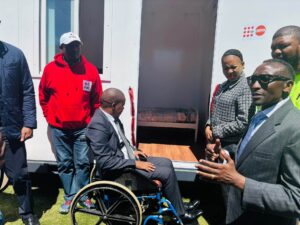
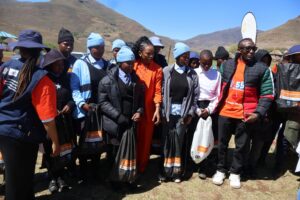
MOHALE’S HOEK – A government partnership with the European Union, UNICEF Lesotho and other partners, celebrated a step forward in the Metsi a Lesotho programme at St Sebastian High School in Mohale’s Hoek on Wednesday.
The celebration was part of the 2025 Europe Month commemorations and marked the official launch of the first and complete Water, Sanitation, and Hygiene (WASH) facilities built under the programme.
Minister of Education and Training, Professor Ntoi Rapapa, present at the event said that as government, they are excited to have the event coincide with a global commemoration of Menstrual Hygiene Day.
“This is a reminder to all of us that water, sanitation and hygiene services are fundamental not only to health but also to dignity, equality and opportunity.
As we know access to clean and safe water, adequate sanitation and proper hygiene practices remain a major challenge in many parts of Lesotho including this area, particularly in rural areas; these challenges impact every aspect of our citizens’ life but none more than our children, the future of this nation, who deserve safe environment, where they can learn, grow and thrive without unnecessary barriers,” Rapapa stated.
He further said that together with their partners, they are addressing one of the most basic human rights, a right to clean water and sanitation.
“Many students miss classes due to waterborne illnesses or because there are no proper toilets, especially girls who are disproportionately affected. Lack of menstrual hygiene management facilities is significant cause of dropout among girls, robbing them of their right to education and hindering our national development,” the minister said.
Rapapa further added that “on this menstrual hygiene day, we acknowledge the critical need to break the silence and stigma around menstruation and to provide women and girls with the support and facilities they need to manage their menstrual health with confidence and dignity.”
He continued that the rural schools must become safe space, where girls do not have to miss lessons or feel embarrassed but fully participate and excel.
“In celebration to Menstrual Hygiene day, there are 92 girls in this school and the principal gave out M1 900 to buy each girl a pack of sanitary pads,” he said.
According to the minister, more than 800 schools in the country need water and toilets.
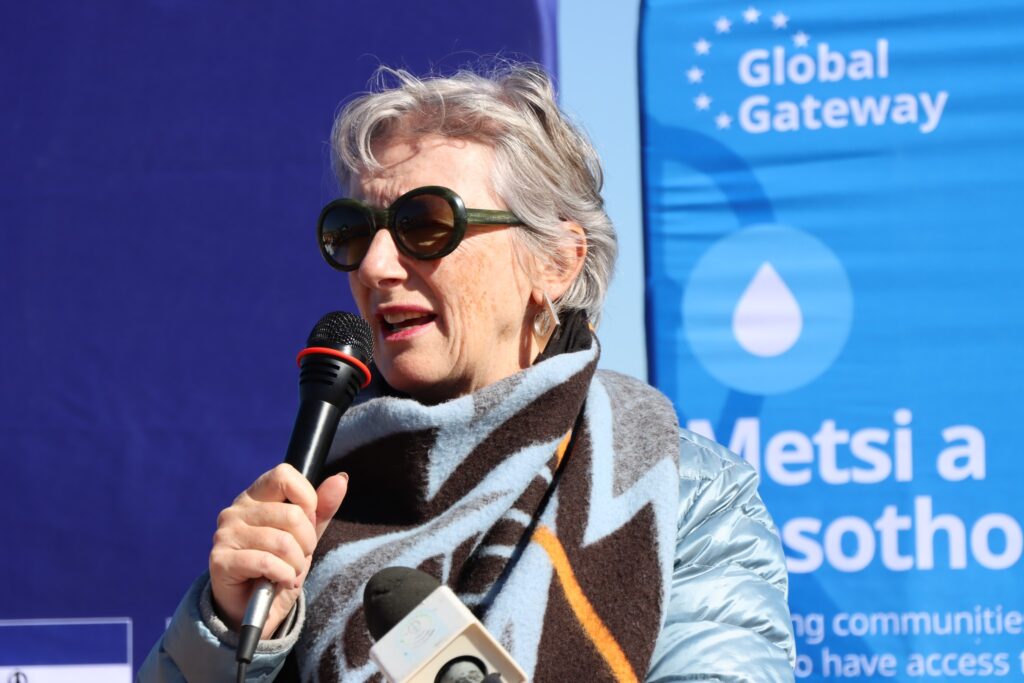
Speaking at the same occasion, EU Ambassador, Paola Amadei, said that a year ago government and the EU launched this joint initiative with the objective of rehabilitating or constructing water, sanitation and hygiene facilities for 250 communities, 125 schools and 15 clinics in rural arears across the country’s 10 districts over five years.
Amadei said the project, which is a component of Metsi a Lesotho, remains significant, noting that the work in 50 sites in rural Maseru, Thaba-Tseka, Mohale’s Hoek have translated into 96 full time job and 606 part-time jobs.
“The majority benefit of which are women and youth,” Amadei said.
She went on to show that they have also partnered with ReNoka in order to make the programme a success.
“The programme, Metsi a Lesotho, funded to the tune of €15 million by the EU for ReNoka will serve to expand the outreach of the ReNoka programme, focused on its programme of conservation of water and soil in Lesotho in order to guarantee that the landscape is preserved and that the production of agriculture is maintained and expanded without affecting the environment,” she stated.
Member of Parliament for Hloahloeng Constituency, Katleho Mabeleng, said that he was truly thankful on behalf of the communities that benefited from the programme.
“We have wetlands in this area, we need proper training on how to well protect and preserve them. We are also surrounded by the Senqu and Senqunyane Rivers, which means we are a surrounded by so much water, we just need proper training on how to preserve the water around us,” Mabeleng stated.
The chairperson of the school board, Mpheng Masikane, noted that the project has brought about a huge difference – highlighting that development has arrived in the constituency.
“We really appreciative what the EU and UNICEF have done to our communities, these will open doors for more developments,” Masikane said.
He said that seeing the Minister of Education in their midst brought him happiness.
“The school has a challenge of few teachers; we have a total of 170 students and only 5 teachers. We have subjects that we wish the school can teach but due to a few number of teachers, we are unable to do that,” he added.
UNICEF Representative, Deepak Bhaskaran, said that they were extremely happy and honoured to be part of the development at St Sebastian High School.
“We are rehabilitating and expanding water and sanitation processions in the 10 districts of Lesotho and four community water systems have been rehabilitated in Mohale’s Hoek and Maseru, as of today,” Bhaskaran said.
Bhaskaran indicated that they are taking action in making sure that every school is equipped with girls’ friendly toilets.
Launched in May 2024, Metsi a Lesotho aims to ensure communities in Lesotho have access to clean water and sanitation services, while preserving water and land resources for present and future generations.
Investing in a healthier, more sustainable future for everyone in Lesotho, it is designed to provide safe, sustainable, and WASH services to rural communities, schools, and healthcare centres across Lesotho.
Metsi a Lesotho is constructing and rehabilitating WASH infrastructure in 250 rural communities, 125 schools and 15 clinics. These efforts include the development of systems for water collection, treatment, storage, and distribution, as well as sanitation facilities and handwashing stations essential for disease prevention and safe learning environments.
Supported by the European Union, UNICEF, and partners, Metsi a Lesotho extends beyond the construction of infrastructure. The programme is dedicated to empowering local communities, strengthening institutional systems, and fostering investments in a sustainable and resilient future for Lesotho.
The initiative will cover the 10 districts of Lesotho over five years, starting with Mohale’s Hoek, Thaba-Tseka and Maseru. Work is ongoing or already completed in the first 50 sites.
The programme is also setting up a new system to manage water, sanitation, and hygiene services in rural areas, making sure that communities have a greater say. A core objective of the programme is to develop and decentralise the framework for rural WASH management.
This includes capacity-building at national, district and community levels, targeting key stakeholders such as the Department of Rural Water Supply, local Councils, Water and Sanitation Programmes and Water and Sanitation Associations. These efforts aim to enhance the planning, implementation, and management of WASH services across the country.
Metsi a Lesothois putting monitoring and evaluation systems in place to ensure effective oversight. This includes using the latest mapping technology and better ways to report progress to ensure that decisions are based on evidence. These systems will incorporate Geographic Information System (GIS)-based planning tools and enhanced reporting frameworks to support transparency and accountability.
In parallel, Metsi a Lesotho contributes to land and water conservation through support to ReNOKA, Lesotho’s national movement to restore land and water resources, using sustainable catchment management approaches across 50 percent of the country’s watershed areas.
This work not only helps to reverse land degradation and enhance climate resilience but also lays the groundwork for a sustainable national financing mechanism to safeguard long-term water and environmental security.
In rural areas of Lesotho, the lack of reliable WASH services undermines development gains and exposes communities to preventable disease, lost learning time, and compromised livelihoods.
Metsi a Lesotho addresses these challenges through a holistic, multi-sectoral approach, improving access to basic services while fostering community ownership and strengthening local systems.
The roll-out event also marked the culmination of months of community engagement and a series of school-based activations that have brought the message of sustainable water and land management to classrooms across the country.
From the vibrant voices of learners at St Bernard Primary in Nyakosoba, to the energy witnessed at Topa and Thaba-Ntšo Primary Schools nestled in the Semonkong range, and the inspiring performances at Seea-le-metse Primary in Thaba-Tseka, schools have become powerful platforms for change.
These activations mobilised children and young people as champions for water security, raising awareness through poetry, songs, drama, and interactive learning about the importance of conserving water, practicing hygiene, and protecting natural resources.
Their message is clear: Ensuring water access for today’s communities and future generations starts when we lead by example, by protecting and preserving the water of Lesotho.
The official roll-out of Metsi a Lesotho stands as a testament to the power of inclusive partnerships, across government, civil society, development partners, and communities, to deliver tangible results.
It is also a call to continue strengthening collaboration at every level to ensure that access to safe water, improved sanitation, and a healthy environment is not a privilege, but a right enjoyed by every child, every family, and every community in Lesotho.
Metsi a Lesotho is part of Global Gateway – the European Union’s strategy to boost smart, clean, and secure connections in digital, energy, transport, and climate sectors, while strengthening health, education, and research systems across the world.
The programme is aligned with the Government of Lesotho’s National Strategic Development Plan II (NSDP II) and contributes to the achievement of the Sustainable Development Goals, particularly SDG 6 on Clean Water and Sanitation.