Africa CDC engages local media
LINEO MALATALIANA
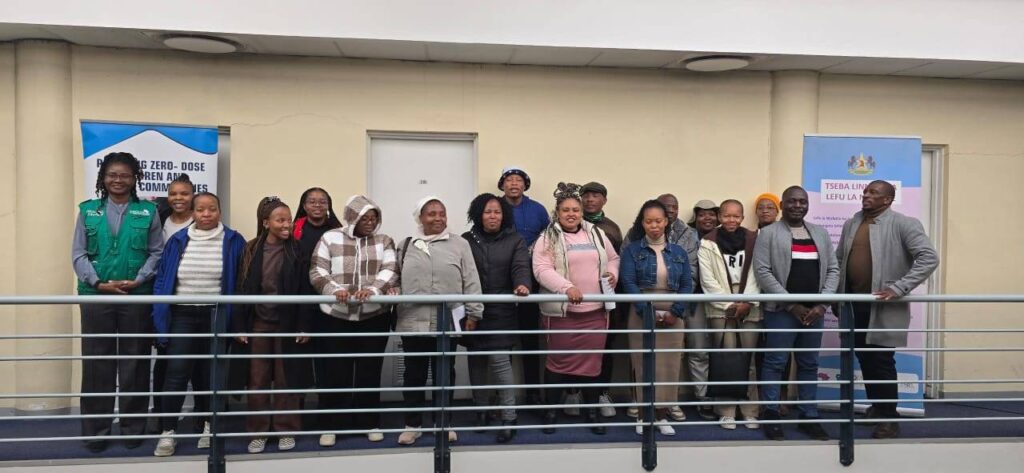
MASERU – Africa Centres for Disease Control (CDC) in collaboration with the Ministry of Health engaged Lesotho media personnel for a focal group discussion on risk communication and community engagement this week.
In the wake of the global health goal of ‘Leaving no one behind’, Africa CDC is putting a step forward in the role media plays in the dissemination of health related information to the public.
The Southern Africa Regional Risk Communication and Community Engagement (RCCE) Technical Officer, Africa CDC, Lio Kariko cited that the engagement forms part of informing Africa CDC on how Lesotho handles RCCE.
“Engaging the media as part of our stakeholders, you are the link between the work that we do and the people that we are serving. It is very important that we tag you along as we establish our interventions,” Kariko said.
She emphasized that it is important to keep the media informed. Karika also pointed out that it is also critical to hear from the local media on how it handles RCCE, establish gaps and also enhance the relationship between the media and the Ministry of Health.
Risk Communication is fundamental in health reporting to ensure that the public is properly educated on health risks and personal health.
True to its vision Africa CDC is ensuring that its member states are timely prepared to prevent, detect and respond efficiently to public health threats and outbreaks.
Currently on the Africa CDC radar is Monkeypox which has been declared an emergency predominantly in Central and West Africa.
The collaboration between the ministry and Africa CDC comes just in time ahead of the ministry’s Measles and Rubella vaccination campaign in October this year. In years past, these vaccines were met with a negative response from the public due to misinformation and disinformation – partly propagated and disseminated by media.
Capacitating the media with standard RCCE will ensure that campaigns, such as the one in the near future, are received by a public that is fully informed on the importance of vaccinations.
Local government official Baroane Phenithi said that the ministry appreciates the assistance they are getting from Africa CDC.
“This intervention will allow the ministry to introspect – find its weaknesses and allow for Africa CDC to assist in a suited way,” Pheniti said.
The report that results from the excise will inform a blueprint that will be evaluated by Gavi and partners of Africa CDC for approval.
Kariko said that it is imperative to launch standard RCCE local guidelines.