Lesotho slams brakes on SA meat imports
- Suspends all imports of live cloven-hoofed animals, fresh meat from its largest trading partner
- Amid FMD outbreak, threatening cross-border trade
TEBOHO KHATEBE MOLEFI
MASERU – In a significant blow to cross-border trade, Lesotho has announced an immediate and total suspension on the importation of all live cloven-hoofed animals and unprocessed meat products from the neighbouring Republic of South Africa.
The decisive action, communicated in an official letter from Dr Relebohile Lepheana, Director General of Veterinary Services, to his South African counterpart on August 4, was a direct response to the ongoing outbreaks of Foot and Mouth Disease (FMD) within South Africa.
This precautionary measure underscores the persistent threat FMD poses to animal health and economic stability in Southern Africa, and risks disrupting a critical meat supply chain between the two nations.
FMD is a highly contagious and severe viral disease that affects cloven-hoofed animals, including cattle, sheep, goats, pigs and various wildlife species. While not typically fatal to adult animals, its impact is crippling.
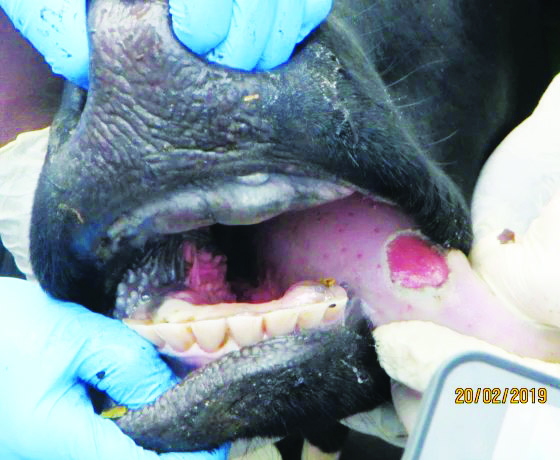
The disease causes high fever, blister-like sores on the tongue and feet, lameness and a dramatic drop in milk and meat production. Its extreme contagiousness means it can spread rapidly through direct contact, contaminated feed and even via the wind.
For a country like Lesotho, which boasts a World Organisation for Animal Health (WOAH)-recognized FMD-free status, an outbreak would be catastrophic. It would immediately shut down its international wool and mohair exports, devastating a sector crucial to the country’s rural economy.
The primary goal of the suspension is, therefore, not punitive but defensive – a necessary firewall to protect the national herd and Lesotho’s economic standing.
An FMD outbreak would come with severe and immediate impact on wool and mohair exports, but not because the disease itself contaminates the fibre. The massive disruption comes from the immediate imposition of international trade bans by importing countries to protect their own livestock industries.
When a country reports an FMD outbreak, other countries’ import regulations automatically trigger bans on all live animals and animal products, including raw wool and mohair. This is a precautionary measure.
The import policies of the buyer’s country – e.g. China, the EU, the USA – dictate the rules. These countries are extremely cautious about introducing the virus through any contaminated product, including raw materials.
The raw fleece can be contaminated with soil, manure, saliva, or tissue from an infected animal, which could potentially harbour the live virus, therefore, exports of raw wool/mohair are almost always halted immediately during an outbreak.
Lesotho is a major mohair producer. It is landlocked and surrounded by South Africa. When South Africa has an FMD outbreak in its cattle populations – which it has in recent years – major importers immediately ban all raw wool and mohair from the entire region. Lesotho’s exports, which transit through South African ports, are halted.
This cripples Lesotho’s economy, as wool and mohair are significant export earners, and trade can only resume once the outbreak is contained, zones are re-established, and stringent new protocols are agreed upon.
While FMD does not affect the quality or safety of the wool and mohair fibres themselves, it devastatingly affects exports by triggering international trade bans on raw animal products. The impact is primarily economic and logistical, halting the trade of raw fibre, crashing prices and disrupting market access until the outbreak is controlled and the country’s disease-free status is restored.
However, the Wool and Mohair Growers Association chairperson, Mokoenihi Thinyane, told Public Eye in an interview that the wool and mohair industry has not been impacted by the ban as “the ban affects only meat products coming into the country, wool and mohair has not been affected and we are still at liberty to take our produce into South Africa…we have no reported cases of FMD here at home and, therefore, our products are safe.”
The suspension, effective immediately halted two core pillars of the animal product trade between the two countries, live cloven-hoofed animals that include cattle, sheep, goats, pigs and antelope; and red fresh or frozen meat and unprocessed meat products – this covers the bulk of the meat trade, affecting everything from fresh beef carcasses to frozen offal.
According to Dr Lepheana’s letter the Director Animal Health in South Africa, Dr Mpho Maja, government, has, however, delineated a list of products deemed safe for continued importation, subject to strict veterinary approval and certification.
These include Ultra-High Temperature (UHT) treated milk and dairy products, heat-treated, canned meats in sealed containers, dry pet food produced under approved standards, certain processed brined sausages that meet specific virus inactivation requirements and formaldehyde-treated forages and hay.
Every shipment of these approved commodities is now be subject to intense scrutiny on a case-by-case basis, inevitably slowing down what was once a fluid trade corridor.
This is not the first time FMD has strained the crucial agricultural relationship between Lesotho and South Africa. The two economies are deeply intertwined, with South Africa being Lesotho’s largest trading partner. Lesotho relies heavily on imports from its neighbour, including for food security, while also exporting its own products, notably wool and mohair.
Past FMD incidences in South Africa have repeatedly forced Lesotho’s hand, leading to similar, though often shorter, suspensions.
Each event sends ripples through the market, for South African exporters it immediately closes a key export market, leading to a surplus of meat and live animals and a subsequent drop in prices within South Africa – while for Lesotho’s consumers and businesses it creates sudden shortages and price hikes for popular meats, disrupting supply to butcheries, supermarkets and restaurants that depend on a steady flow of affordable South African product.
For Lesotho farmers, while it protects them from disease, it also potentially limits opportunities for selling livestock into the larger South African market if reciprocal bans are feared.
A significant outbreak in South Africa in 2022, which led to widespread control measures and temporary bans by multiple trading partners, serves as a recent stark reminder of the economic havoc FMD can wreak. The current suspension by Lesotho indicates a lack of confidence that the risk has been sufficiently contained, pushing it to act unilaterally to protect its interests.
Dr Lepheane’s letter makes it clear that the suspension is temporary but will not be lifted easily. The key condition for resuming normal trade is for the South African Veterinary Authority to develop and present a WOAH-endorsed FMD Control Programme. This programme would form the basis for a comprehensive import risk analysis by Lesotho’s officials to scientifically assess the safety of reopening the border to South African animals and meat.
The ball is now in South Africa’s court. Its cooperation in providing transparent and thorough technical data is essential to rebuilding trading confidence.
As Dr Lepheana stated, the decision is rooted in animal health protection and not a reflection on the countries’ longstanding cooperation. Both nations now face a familiar challenge, navigating the delicate balance between economic necessity and biosecurity in a region where the hooves of commerce and the spectre of disease are forever linked.