M49m to combat El Niño-induced drought, food insecurity
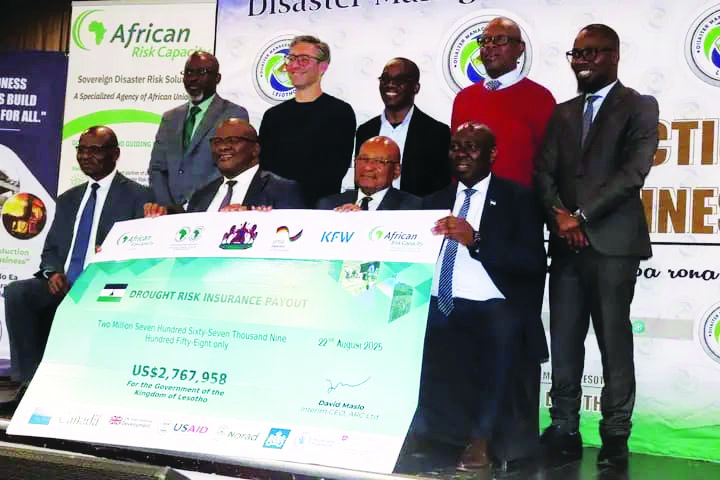
Strategic partnership with WFP bolsters national resilience and supports vulnerable communities
SEBONGILE MATHE
MASERU – In a significant move to address a worsening food security crisis, the Government of Lesotho has received a timely financial injection of M49 million (US\$2 767 958) from the African Risk Capacity (ARC) Group.
The payout is designed to support national response efforts against a severe drought exacerbated by El Niño conditions, which has degraded crop yields and threatened the livelihoods of thousands.
The funding will be directed towards implementing Lesotho’s Final Implementation Plan, a structured strategy focused on providing vital food assistance and cash transfers to the most vulnerable households during the ongoing lean season.
This initiative aims not only to offer immediate relief but also to strengthen the nation’s long-term resilience against climate-induced adversities.
Lesotho faces increasingly unpredictable and severe weather patterns. Limpho Tau, Minister in the Prime Minister’s Office, highlighted the ongoing challenges, noting the devastating cycle of unpredictable droughts and floods that have adversely affected the welfare of the Basotho people, disrupted the agricultural sector – a cornerstone of the economy – and placed immense strain on the national treasury.
“The payout goes beyond financial aid; it is about resilience,” Minister Tau stated.
“It empowers countries to recover more quickly, rebuild more effectively, and prevent the long-term consequences of disasters. This collaboration with ARC is crucial for implementing effective climate preparedness strategies that mitigate poverty and foster resilience in our communities.”
The ARC is a specialized agency of the African Union, established in 2012 as a ground-breaking sovereign insurance pool. Its mandate is to help African governments better plan, prepare, and respond to extreme weather events and natural disasters.
ARC’s model is innovative, it uses advanced satellite weather surveillance and software to trigger rapid payouts to member states when pre-defined drought, flood, or cyclone parameters are met.
This parametric insurance model ensures that funds are disbursed quickly and objectively, often within weeks of a confirmed event, allowing governments to enact pre-approved emergency plans without delay. By focusing on early intervention, ARC aims to break the cycle of disaster dependence and reduce the long-term cost of humanitarian responses.
Lesotho became a member of the ARC Agency in 2018 and has since been an active participant in this risk-sharing mechanism.
Minister of Agriculture, Thabo Mofosi, speaking on behalf of the Minister of Finance, underscored the ARC initiative as a reflection of a shared vision for promoting sustainable development across multiple sectors in Lesotho.
He pointed out that effective disaster risk management cannot rely solely on government efforts but requires strong, multifaceted partnerships.
“It requires collaboration with ARC, the private sector, development partners, and the communities we serve,” Mofosi noted, emphasizing that a collective approach is the only way to tackle these pressing challenges.
Dr Mothae Anthony Maruping, Chairperson of the ARC Group Board, reaffirmed the organisation’s commitment to supporting Lesotho.
“This payout is a testament to the ARC system working as intended,” he said. “It is about translating premiums into tangible support for communities facing the harsh reality of climate change.”
The implementation of the relief efforts will be bolstered by the expertise of the World Food Programme (WFP), a key partner on the ground. The WFP is the leading humanitarian organization saving lives and changing lives by delivering food assistance in emergencies and working with communities to improve nutrition and build resilience.
Elliot Vhurumuku, the WFP Country Director in Lesotho, praised the ARC payout, highlighting its proven impact across various African nations.
“This is a powerful example of how innovative finance can be leveraged to protect the most vulnerable before a crisis pushes them into hunger,” Vhurumuku said.
The partnership between ARC and WFP in Lesotho is well-established. In recent years, the two organizations have worked closely to implement smart subsidy initiatives. This includes designing and promoting weather-indexed agricultural insurance schemes to support the production of staple crops like maize and beans.
These schemes ensure that smallholder farmers, who are most exposed to climatic uncertainties, receive a payout if rainfall levels are insufficient, enabling them to recover and replant without selling off vital assets.
The collaboration between the Lesotho government, the ARC, and the WFP mark a crucial evolution in how the country prepares for and responds to climate-related challenges. It represents a shift from reactive disaster relief to proactive risk management.
By combining ARC’s financial innovation and rapid payout mechanism with WFP’s operational delivery capacity and the government’s national strategy, this partnership is creating a more resilient safety net for Basotho.
Through these concerted efforts, Lesotho aims to safeguard its communities against the immediate threat of hunger while building a foundation for sustainable development in the face of future adversities.
This M49 million is more than just aid, it is an investment in a more secure and self-reliant future for Lesotho.