Tech initiative graduates first cohort

Community lauds E-learning drills as digital inclusion takes root
LINEO MALATALIANA
MASERU – A delegation from the Ministries of Education and Communications, Science, and Technology, alongside the United Nations Development Programme (UNDP), toured three thriving Community Digital Learning Centres (CDLCs) in the Mafeteng district last week.
The tour highlighted a major push to strengthen digital inclusion and bridge the technology gap for underserved communities.
The initiative, sponsored by UNDP, Econet, and the Lesotho Communications Authority, transforms school computer labs into community hubs under the Community Digital Inclusion Model (CDIM). This provides vital access to digital tools and skills training for students and community members alike.
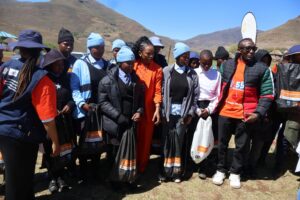
The tour began at Kolo High School, which recently celebrated the graduation of 77 participants from its surrounding communities. ‘Matsebo Shale, Secretary of the School Board, expressed deep appreciation: “This is a celebration of gratitude. This digital literacy programme will prove beneficial to both the students and the community.”
The programme’s intergenerational impact was immediately evident. Community elder and graduate Thato Mejaele stated the initiative had empowered them against being taken advantage of by the youth.
“This programme has also given a sense of hope to our young people, who will no longer sit idle but use this technology to apply for work and learning opportunities,” Mejaele said.
UNDP Representative in Lesotho, Jacqueline Olweya, commended the progress, noting the initiative helps the elderly evade theft and provides youth with tools to better their lives.
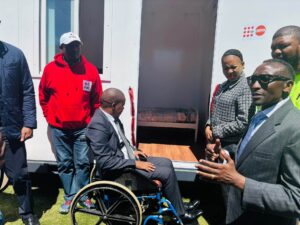
“I wish I were born at this particular time,” Olweya remarked, inspired by Lesotho’s drive to ensure no one is left behind in the digital era. She emphasized that the project is breaking myths that technology is male-centred and age-restrictive, while actively including people living with disabilities.
At Makaota High School, UNDP and its stakeholders built a computer lab from scratch, providing a significant boost to a school that previously struggled with low admission rates. The centre attracted 44 participants, including an English teacher from the school, ‘Mateboho Metsing.
“I have perfected my skills in Microsoft Excel, which will help in record-keeping and ease my job,” Metsing said.
The programme’s flexible learning management system also allowed participants with scheduling conflicts to learn from home, demonstrating the model’s adaptability.
The Minister of Communications, Science, and Technology, Nthati Moorosi, hailed this as a key success.
“This is a true testament that when resources are brought closer to people, they make good use of them. I hope this initiative will help the school attract more students,” he said.
Minister Moorosi also issued a firm warning, encouraging the community to use technology for enrichment and education, not for “sinister practices that end up abusing others in cyberspace.”
The sentiment was echoed at Tšakholo High School, where a diverse group of 43 participants, young and old, have benefited.
‘Mabokang Pule, a school cleaner and programme participant, shared her newfound skills: “I can edit a document, write a CV, and save my work.”
She joked that she now plans to practice during her breaks to strengthen her skills further, symbolizing the enthusiastic community embrace of this digital revolution.