Police Chief vows to ‘strengthen force’ as rape crisis engulfs Lesotho
MOSA MAOENG
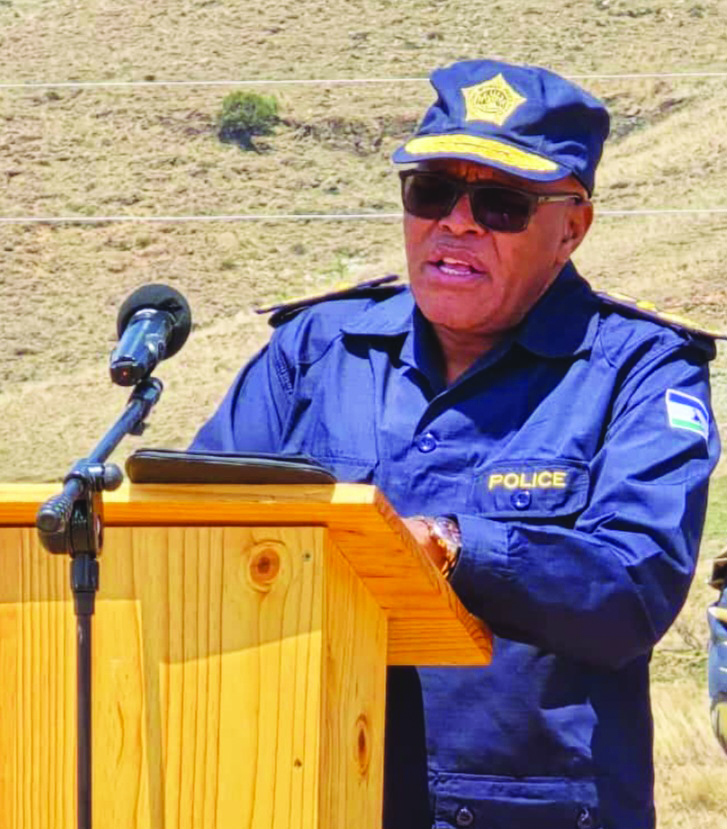
MASERU – In a stark condemnation of the escalating crisis of gender-based violence (GBV), Commissioner of Police, Advocate Borotho Matsoso, has announced a major strategic shift for the Lesotho Mounted Police Service (LMPS), declaring that the institution must significantly bolster its operational capacity to combat the scourge.
His remarks, delivered in a statement on Wednesday, come as the nation grapples with what human rights organizations describe as a critical human rights emergency, marked by brutal sexual assaults and femicides.
Commissioner Matsoso’s statement was particularly pointed, focusing on the “high rate” of GBV, specifically rape, which he identified as the most pervasive form of violence against women, girls, and children. He did not mince words in describing the grim nature of recent crimes, citing specific incidents in Ha Motlere, Mafeteng, and Ha Mohlakaso in Maseru, where victims were allegedly murdered by intimate partners after being sexually assaulted.
“These brutal acts have been discovered specifically in Ha Motlere Mafeteng and Ha Mohlakaso in Maseru and other areas in the country,” Matsoso stated.
“In these and similar incidents, victims were brutally murdered by people they had romantic relationships with. Both the perpetrators sexually abused the victims, murdered and buried them.”
He confirmed that police investigations led to the arrest of the alleged perpetrators and the exhumation of the victims’ remains. The Commissioner expressed deep concern that a significant number of these crimes, including the sexual abuse of children and elderly women, are perpetrated by men – a demographic he noted is traditionally tasked with protection within society.
“This is a serious concern as men are supposed to protect women and girls,” he added, urging offenders to cease their actions and warning of the “bitter” consequences that await them.
The Commissioner’s address serves as a stark acknowledgment of the immense challenge facing the nation. According to the International Commission of Jurists, Lesotho is in the grip of a profound GBV crisis, with an estimated 86 percent of women experiencing violence in their lifetime. This violence is deeply embedded in a context of entrenched patriarchal norms, pervasive poverty, and stark inequality.
The crisis is also lethal; data shows that 47 percent of female homicides are committed by intimate partners.
The forms of violence are multifaceted, encompassing physical, emotional, sexual, and economic abuse. This crisis is further compounded by its intersection with public health; as a country with the third-highest HIV prevalence rate globally, GBV acts as a major driver of new infections.
While Lesotho has established legal frameworks such as the Sexual Offences Act of 2003 and the Legal Capacity of Married Persons Act of 2006, significant implementation gaps persist.
A critical barrier to justice is the profound reluctance among survivors to report crimes. Fear of reprisal, pervasive social stigma, and a deep-seated lack of confidence in the justice system frequently silence victims, allowing perpetrators to act with impunity.
It is against this grim backdrop that Commissioner Matsoso’s pledge to transform the police response takes on urgent significance.
The Commissioner outlined that the LMPS has “no choice but to strengthen our police force to respond to these acts of violence.” While he did not detail the specific operational changes, his language signals a move toward a more proactive, specialized, and victim-centered approach.
The expected role of the police in this renewed strategy extends far beyond mere arrest. It involves a fundamental shift towards prevention, rapid response, and building community trust.
To be effective, the police are expected to act as the first line of defense and a reliable point of support. This includes the creation of specialized units trained in trauma-informed investigation techniques to ensure evidence is handled sensitively and professionally, increasing the likelihood of successful prosecution. It also necessitates a more visible and accessible community policing model, particularly in high-risk areas like those mentioned by the Commissioner, to deter potential offenders and provide immediate assistance to victims.
Crucially, the police must also work to dismantle the culture of impunity by ensuring swift and transparent investigations, thereby rebuilding the public trust that is essential for survivors to come forward.
“I urge Basotho to work together to put an end to these unlawful acts,” Matsoso concluded.
“As the police we stand against every person committing any form of criminal activity or trying to commit one.”
He reaffirmed the LMPS’s commitment to ensuring public safety and fighting crime, urging all Basotho to live peacefully and report any criminal activity.
The Commissioner’s call for action aligns with broader governmental efforts to address the crisis, including the 2018 Gender Policy and the pending Counter Domestic Violence Bill. Initiatives such as the Reform for Inclusion, Support and Empowerment (RISE) project also aim to improve legal protection for survivors.
However, as the Commissioner’s own statement underscores, for these efforts to succeed, the police force must evolve from a reactive entity to a formidable, proactive force dedicated to protecting the nation’s most vulnerable.