SLB drives impact to green Lesotho
- King, PM lead call for environmental restoration, community development
- Forestry Department joins forces for National Tree Planting Day
NKAMOHELENG MOLOISANE
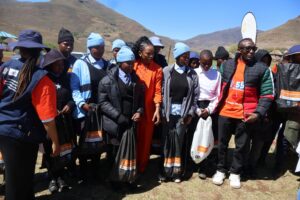
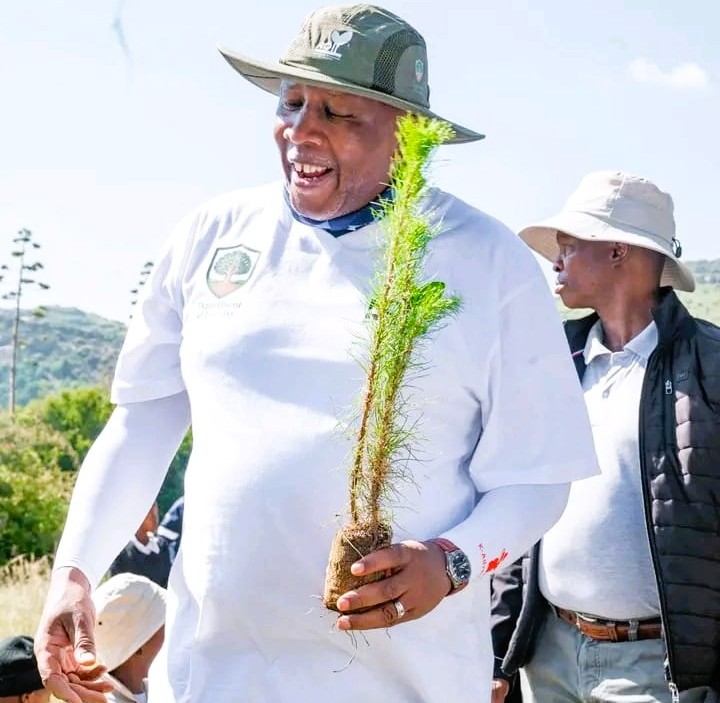
MOHALE’S HOEK – In a display of commitment to environmental sustainability and community upliftment, Standard Lesotho Bank partnered with the Department of Forestry to lead a landmark tree planting initiative at Moeling Primary School in Taung constituency, Mohale’s Hoek.
The event, held to mark National Tree Planting Day under the global theme “Forests and Economies,” drew national attention and brought together King Letsie III, Prime Minister Ntsokoane Sam Matekane, government officials, community leaders and local residents in a unified effort to restore Lesotho’s natural landscape.
The gathering formed part of a broader national campaign designed not only to replenish the country’s diminishing tree cover but also to unlock economic opportunities for communities across the country. Against the backdrop of growing environmental concerns, the initiative underscored the urgent need for collective action to address land degradation, soil erosion, and the long-term sustainability of Lesotho’s natural resources.
Providing the historical context for the day’s activities, Director Mokete Bereng of the Department of Forestry explained that National Tree Planting Day traces its origins to 2012, when nations around the world united to establish a coordinated global effort to combat deforestation and promote reforestation. The objective, he noted, was twofold – to ensure that the world does not remain bare but becomes blanketed with trees, and to educate communities about the indispensable role that forests play in sustaining human life and economic activity.
“As a government, Lesotho established the Department of Forestry to ensure that this international plan succeeds locally,” Bereng said.
“Our responsibility is to make sure the country is covered with trees and that Basotho benefit from them, particularly in reducing poverty.”
Bereng revealed that the department had intensified its efforts through the Green Recovery Initiative in Lesotho, launched last year in Botha-Bothe in collaboration with the Ministry of Forestry and Environment. The programme was introduced after officials recognised that the country was becoming increasingly bare and environmentally vulnerable, with deforestation and overgrazing taking a visible toll on the landscape.
The initiative aims to plant trees across all ten districts, ensuring that every corner of the country contributes to environmental restoration. Bereng noted that the celebration in Mohale’s Hoek coincided with a similar event in Mokhotlong district, where Queen ‘Masenate Mohato Seeiso also participated, lending royal endorsement to the cause.
“This day is not only about celebration, but it is also about action,” Bereng emphasised.
“That is why we came to Moeling Primary School to complete the planting of the remaining trees as part of our ongoing programme.”
The Department of Forestry has made significant strides in its reforestation efforts. Bereng reported that approximately 54 000 trees have already been planted across Lesotho this year alone. In Mohale’s Hoek, about 10 000 trees were planted earlier in March, following a community-driven suggestion to extend tree planting efforts throughout the entire month rather than concentrating activities on a single day.
While the department typically plants around 100 000 trees annually, this year’s target was adjusted to allow greater focus on maintenance and nurturing of already planted trees.
“We are now shifting from only planting to ensuring growth,” Bereng explained. “It is important that we water and care for these trees so they can reach maturity and provide long-term benefits.”
Since the programme began, Bereng estimated that approximately 1.5 million trees have been planted across the country, marking a significant step toward environmental recovery. At Moeling Primary School alone, about 200 fruit trees were planted during the event, a decision that Bereng said would yield multiple benefits within the school environment.
“These fruit trees will help in teaching learners, provide them with food, and even create opportunities for income generation,” he said.
“Schools can sell some of the produce to support their needs.”
Beyond fruit trees, a variety of other species were planted to enhance the natural environment, creating a park-like setting where learners can study in healthier, more inspiring surroundings. Pine trees were also included to provide a sustainable source of firewood for school kitchens, helping to reduce reliance on expensive and potentially hazardous alternatives such as gas and paraffin.
Bereng expressed heartfelt gratitude to Standard Lesotho Bank, local businesses, and other partners whose contributions were instrumental to the success of the initiative. He also thanked the King and the prime minister for their active involvement and unwavering support.
Prime Minister Matekane commended the collaboration between the Department of Forestry and Standard Lesotho Bank, describing it as a meaningful step toward sustainable development. He emphasised that the initiative extends far beyond environmental conservation, as it directly improves the lives of communities by delivering both economic and social benefits.
Speaking to the assembled crowd, the prime minister highlighted the importance of partnerships between government and the private sector in addressing Lesotho’s most pressing challenges. He noted that such collaborations not only amplify the impact of development programmes but also ensure their sustainability over the long term.
Matekane’s remarks reflected a growing recognition within government that environmental restoration and economic development are intrinsically linked. By investing in trees that produce fruit, timber, and other marketable products, communities can generate income while simultaneously improving their local environment – a dual benefit that lies at the heart of the National Tree Planting Day theme, “Forests and Economies.”
King Letsie III echoed the prime minister’s sentiments, expressing profound appreciation on behalf of the people of Moeling. The King particularly welcomed the inclusion of fruit trees, noting their importance in promoting healthy living and supporting education – two pillars of his longstanding advocacy for the well-being of Basotho children.
“These trees will provide healthy food for our children,” the King said.
“Learners will benefit not only physically but also mentally, as proper nutrition supports better learning and concentration.”
The King’s remarks underscored a crucial but often overlooked connection: that environmental health and educational outcomes are closely intertwined. Children who receive adequate nutrition are better able to focus in class, retain information, and perform well academically.
By planting fruit trees at schools, the initiative addresses both nutritional deficits and environmental degradation simultaneously.
In his closing remarks, the King issued a powerful call to action, urging the community to take full responsibility for the newly planted trees. He cautioned that planting alone is insufficient; without proper care and maintenance, even the most ambitious reforestation efforts can fail.
The King called on local leaders, government officials, and all stakeholders to regularly monitor the trees and ensure they are well maintained. He also pledged to personally return in the future to assess progress, noting that the village is easily reachable.
“These trees can benefit us greatly and bring positive change to our lives,” he said, encouraging the community to protect them so they may grow and serve future generations.
The Member of Parliament for Taung constituency, ‘Matiisetso Matsie, also expressed her appreciation for the collaborative effort. She urged residents to treat the trees with the same care and dedication they would afford their own children.
“These trees should be treated like children; they need daily attention, protection, and care to grow well,” Matsie said.
She issued a stern warning against theft and negligence, noting that some individuals might attempt to steal trees under cover of darkness. She encouraged the community to implement proper security measures until the trees are fully established.
Matsie further highlighted the environmental benefits of the initiative, explaining that trees will help prevent soil erosion during heavy rains and storms – a critical consideration in a country where mountainous terrain and seasonal downpours make erosion a persistent threat. The fruit trees, she added, will provide long-term nutritional benefits for learners, contributing to healthier, more resilient communities.
Local councilor, Motlatsi Moletsane, confirmed that the community had actively participated in planting the trees and had taken full responsibility for their care. He acknowledged that some areas are not fenced, making the trees vulnerable, but urged residents not to remove them for personal use.
“It is possible for people to take these trees and plant them at their homes, especially fruit trees; but we urge the community not to even think about that,” Moletsane said. “These trees are for everyone, and we must protect them so that all can benefit.”
Moletsane assured leaders that the community would work together to ensure the trees are protected and maintained, demonstrating the kind of collective ownership that is essential for long-term success.
Standard Lesotho Bank representative, Keketso Makara, reiterated the bank’s commitment to supporting communities beyond the realm of financial services. He stated that the bank aims to contribute to the overall growth of Lesotho not just financially – as the bank is often perceived – but by investing in initiatives that benefit Basotho socially, economically, and environmentally.
“Planting trees is about more than just today,” Makara said. “It is about building a better future for our people and showing responsibility toward our environment.”
Makara announced that the bank has committed to working with the Department of Forestry for the next three years to ensure the success and sustainability of the initiative. This long-term partnership reflects a growing trend among corporations in Lesotho to engage in meaningful, sustained community development rather than one-off philanthropic gestures.
The significance of tree planting in Lesotho cannot be overstated. As a country characterised by high-altitude terrain, sparse vegetation, and a heavy reliance on agriculture and natural resources, Lesotho faces unique environmental challenges. Deforestation, overgrazing, and climate change have contributed to widespread soil erosion, reduced water retention, and declining agricultural productivity.
Trees play a vital role in mitigating these challenges. Their root systems bind the soil, preventing erosion and reducing the risk of landslides during heavy rains. They enhance water infiltration, replenishing groundwater supplies that are essential for both human consumption and agriculture.
They provide shade, reduce temperatures, and create microclimates that support biodiversity.
Moreover, trees offer tangible economic benefits. Fruit trees produce food that can be consumed or sold. Timber trees provide building materials and fuel. In a country where many households rely on firewood for cooking and heating, sustainably managed woodlots can reduce pressure on natural forests while providing a reliable source of energy.
The partnership between Standard Lesotho Bank and the Department of Forestry represents a model for how public-private collaboration can drive meaningful change. By combining government expertise and resources with corporate investment and community engagement, the initiative addresses environmental, economic, and social challenges in an integrated manner.
The focus on schools is particularly strategic. By planting trees on school grounds, the initiative ensures that young people are directly involved in environmental stewardship from an early age.
The fruit trees provide nutrition that supports learning, while the park-like setting creates a more conducive environment for education. Schools become living laboratories where learners can observe the growth and development of trees, gaining firsthand experience in environmental care.
As the trees planted at Moeling Primary School take root and grow, they will serve as a lasting testament to what can be achieved when government, business, and communities unite behind a common purpose. The 200 fruit trees, alongside the pine trees and other species, will transform the school environment, providing food, fuel, shade, and beauty for generations to come.
The commitment by Standard Lesotho Bank to continue its partnership with the Department of Forestry for the next three years ensures that this momentum will be sustained. With plans to expand the initiative to other districts and schools, the impact will be felt across the country.
In a separate but equally impactful initiative, Standard Lesotho Bank, in partnership with the Rotary Club of Maloti, launched the 700 Pairs School Shoes Drive in Berea district. The campaign aims to restore dignity and remove barriers to education for vulnerable learners across Lesotho.
The launch took place on March 19 at Sefikaneng Primary School and ‘Mamathe High School in Teyateyaneng, where each school received 100 pairs of shoes and socks, benefiting a total of 200 students on the day.
The initiative forms part of a nationwide effort to distribute 700 pairs of shoes to learners in different districts, ensuring that more children can attend school comfortably and confidently.
Through these combined initiatives, Standard Lesotho Bank continues to demonstrate its strong commitment to uplifting communities, supporting education, and promoting environmental sustainability.
By investing in both people and the environment, the bank is helping to build a future where Basotho can thrive socially, economically, and environmentally – one tree, one pair of shoes, and one child at a time.