Touch Roots Africa leads fight against TB in schools
SEABONGA CHABALALA
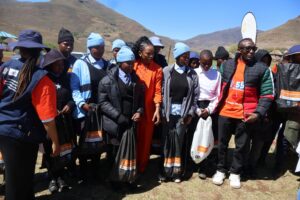
BEREA — Touch Roots Africa (TRA) launched an ambitious tuberculosis awareness campaign at Makola High School in Berea last Friday, aligning with global efforts marking World Tuberculosis Day2026.
The campaign brought together government officials, health workers, educators, and students in a united front against one of the world’s deadliest infectious diseases, which continues to claim thousands of lives annually in Lesotho.
This year’s World Tuberculosis Day, observed annually on March 24, carried the theme “Yes! We can end TB: Led by countries, powered by people.” The theme emphasizes that strong national leadership combined with active community participation can finally eliminate a disease that has plagued humanity for millennia.
The date holds profound historical significance. On March 24, 1882, German physician Dr Robert Koch announced his discovery of Mycobacterium tuberculosis, the bacterium responsible for tuberculosis. This breakthrough opened the door to diagnosis, treatment, and the eventual possibility of eradication.
The World Health Organization and the International Union Against Tuberculosis and Lung Disease established World TB Day in 1982 – the centenary of Koch’s discovery – with the first official observance taking place in 1983.
Despite significant progress, Lesotho remains among the 30 high-burden tuberculosis countries globally. Recent data indicates that TB incidence stands at 661 cases per 100 000 people – one of the highest rates worldwide – though this represents a 13 percent reduction over the past decade.
The country faces what public health experts describe as a “triple burden”: drug-susceptible TB, drug-resistant TB, and HIV-associated TB, making its TB response among the most complex in the region. Approximately 77 percent of people diagnosed with TB receive treatment coverage, bringing the country within reach of the 90 percent target.
Touch Roots Africa, the organization behind the campaign, works extensively with Community-Based Organizations, NGOs, schools, government development partners, and the private sector on projects that protect and empower children and youth, including those with disabilities.
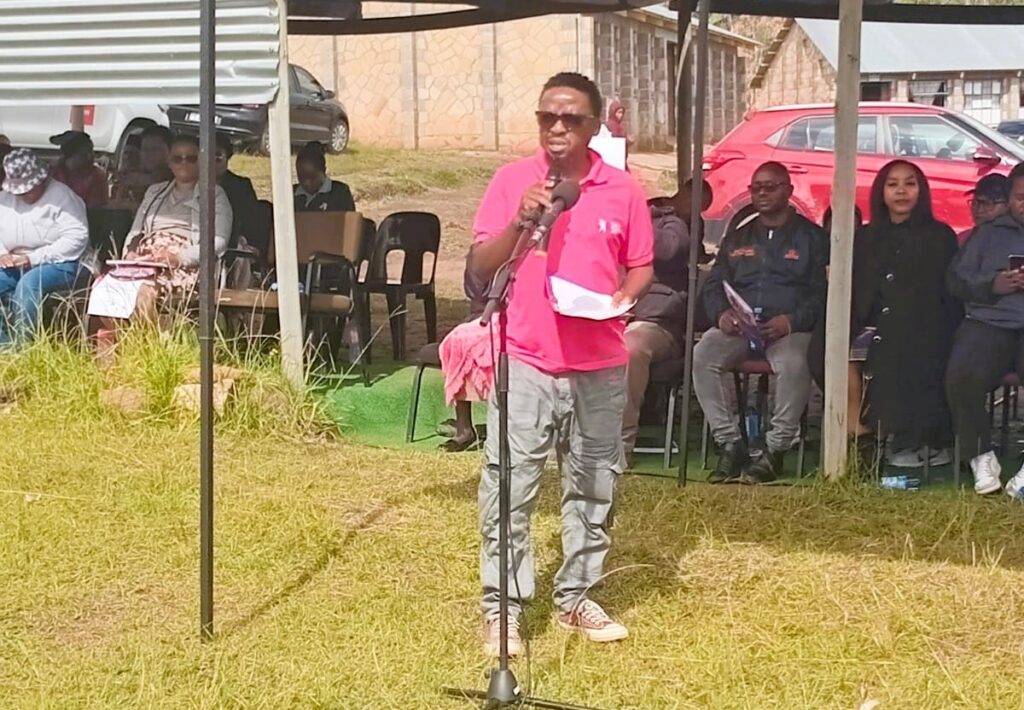
“Touch Roots Africa also supports women and girls to overcome challenges in their lives,” said Motloheloa Molupe, the organization’s Executive Director, during his welcoming remarks. Molupe provided guests with an overview of the day’s gathering and the organization’s mandate, emphasizing the importance of community-based approaches to public health challenges.
Moleboheng Matlosa from the Ministry of Education underscored the critical importance of reaching young people with TB awareness messages.
“Schools are places where children gather together, and we all know that TB spreads easily where pupils are overcrowded. Children can be affected by TB from school and take it home to guardians or parents,” Matlosa explained.
“It’s important for this day to be celebrated to raise awareness and also to accelerate participation to take action on how to prevent TB.”
Matlosa’s message carried particular weight as she revealed her personal connection to the disease. “I myself am a survivor of TB. I was diagnosed with TB in 2011, and I took medication properly. After six months of treatment, I took the test again, and the results came back negative. So, whoever among you pupils has TB, just know it is treatable and curable.”
She explained that TB primarily affects the lungs and spreads through the air when infected individuals cough, sneeze, or spread saliva. This airborne nature makes crowded environments like schools’ potential transmission hotspots.
Lilatolo Molisang, who works with the Office of Environmental Health at Holy Family Clinic, highlighted that protection against TB begins in infancy.
“The child is given an injection on the left hand arm – the injection is called BCG (bacillus Calmette-Guérin) vaccine – to prevent TB,” Molisang said, referring to the vaccine administered to new-borns that offers substantial protection against severe childhood TB, including TB meningitis and miliary TB.
Another health worker from Holy Family Clinic further explained that while TB can be life-threatening, it is entirely preventable and treatable with proper intervention.
“TB prevention therapy consists of pills given to children under 14 living with people affected by active TB. These pills are also given to everybody who is HIV positive, no matter the age,” the health worker explained. “This is because TB is an airborne disease that can take advantage of HIV patients with weakened immune systems.”
The health worker distinguished between the two types of TB infection. Latent TB infection occurs when bacteria remain inactive in the body without showing symptoms or spreading to others. Active TB infection, by contrast, manifests with chest pain, persistent cough, and increased body temperature, requiring immediate medical attention.
As a signatory to international TB conventions, Lesotho has committed to global targets aimed at ending the TB epidemic. The country has adopted the WHO’s End TB Strategy, approved in 2014, which aims to reduce TB cases and deaths by substantial margins while lowering the financial burden on affected families.
Lesotho has also embraced the Multi-sectoral Accountability Framework for TB, a tool developed by WHO to foster collaborations across different sectors and ensure accountability for implementing political commitments to end TB. The framework, launched in the country on World TB Day 2024, represents a significant step in coordinating government, civil society, and international partners.
Touch Roots Africa’s approach aligns with the recognition that ending TB requires action beyond the health sector. The organization has run numerous programs, including youth empowerment initiatives, support for families of children with disabilities, community empowerment projects, and consultancy services.
Their consultancy program provides psychosocial support and training, child protection services, disability inclusion and mainstreaming, organizational development, internship and volunteer training, sexual and reproductive health and rights education, and programs for preventing and dealing with gender-based violence.
As Lesotho continues its battle against TB, initiatives like the one launched by Touch Roots Africa represent critical community-level interventions. The WHO has called on member states to fast-track the rollout of near point-of-care diagnostic tests designed for deployment at health centres and community-level facilities, dramatically reducing diagnostic delays that fuel transmission and preventable deaths.
“We are at a critical time to now act with the available tools that we have to meet the targets of ending TB by 2030,” said Dr Francis Mupeta, WHO Lesotho’s Technical Officer for the TB/HIV programme.
For the students of Makola High School and the broader Berea community, the message was clear: TB is preventable, treatable, and curable. With sustained commitment from government, civil society, and individuals, Lesotho can indeed end TB – powered by its people, led by its leaders.