Standard Bank hosts farmers El Nino preparedness Indaba
BOKANG MOSHOESHOE MAPHIKA
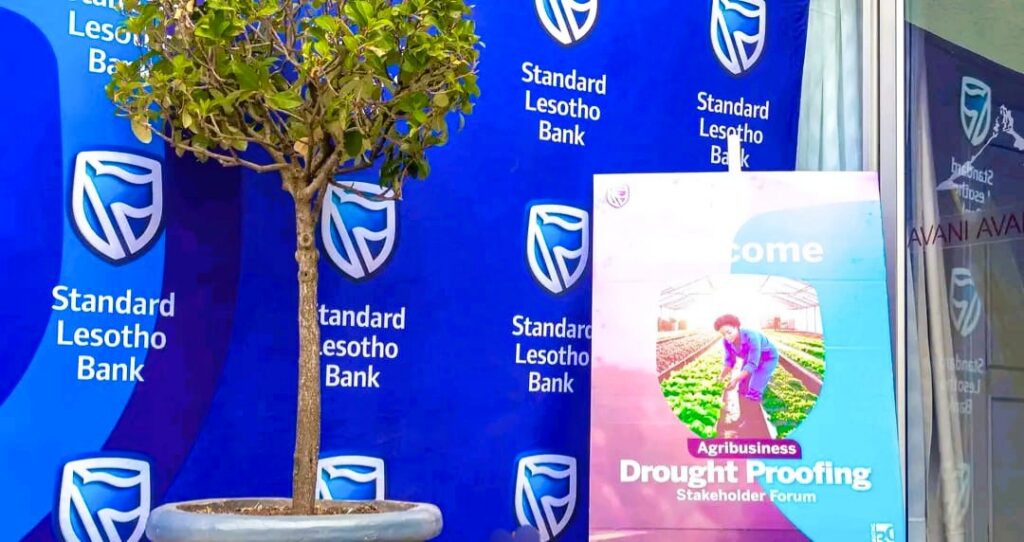
MASERU – Standard Lesotho Bank hosted an Agribusiness Drought Proofing Stakeholder Forum aimed at equipping farmers with practical strategies to prepare for the anticipated 100 percent chance of strong El Niño conditions, which threaten to negatively impact the upcoming agricultural season.
Mokitinyane Nthimo, Head of Programmes at the Food and Agriculture Organization (FAO), spoke at the event and warned that the expected reduction in rainfall could affect both crop production and livestock if farmers do not prepare in advance.
Nthimo urged farmers to “act now,” emphasizing that the timing of farming activities would be crucial in determining their ability to cope with the expected weather conditions.
He reminded them, “Time is everything when it comes to farming.”
Nthimo stated that drought cannot be effectively managed without proper water management, calling on farmers to invest in irrigation systems and soil management.
“We cannot manage drought if we do not manage water. We must engage and invest in irrigation processes, and we also must manage the soil to retain water,” he emphasized.
He explained that farmers should utilize available climate information to identify the most suitable planting periods and encouraged them to select seed varieties that are better suited for the expected weather conditions.
Nthimo stressed the importance of recognizing the close connection between drought and water management. Farmers should not wait until water sources begin to dry up before taking action.
Instead, they should plan to harvest and store water while it remains available. He expressed concern over the existing pressure on grazing land and water resources, especially since livestock farmers rely heavily on these resources. Maintaining healthy soil is also crucial, as good soil management can help farmers retain water and improve agricultural productivity during periods of limited rainfall. Nthimo added that water, energy, and food security are interconnected and should all be considered when developing strategies to protect farmers from the effects of drought.
Echoing Nthimo’s sentiments, Standard Lesotho Bank Chief Executive Officer Samuel Seboka emphasized the need for cooperation among farmers, government, development partners, and financial institutions to protect the agricultural sector from climate-related challenges. Seboka stated that farmers require access to reliable information to make informed decisions during a critical time when weather patterns are increasingly changing.
“Let us come together and help each other tackle this issue. Information must be disseminated to farmers to assist them in making the right decisions for their businesses,” he said. He highlighted the important role of financial institutions in helping farmers prepare for climate-related risks, mentioning crop insurance as a measure that could assist farmers in managing losses caused by adverse weather conditions.
Additionally, he noted that insurance could provide farmers with some financial protection when their crops are affected by drought or other weather challenges.
Rammolenyane Lethaha, a weather forecaster and spokesperson for the Lesotho Meteorological Services (LMS), explained that many farmers still lack access to clear climate information.
He noted that farmers often receive technical weather data that is difficult to understand and apply to their farming activities. To address this challenge, LMS is developing a weather application that will simplify technical weather information for farmers and local communities.
Lethaha explained that El Niño is associated with temperature changes in the Pacific Ocean, which can result in shifts in rainfall patterns and higher temperatures.
The period between November and April is particularly significant for Lesotho, as it marks the country’s main agricultural season.
“We have observed the growth of El Niño over the years and its potential impacts. This year, we expect to experience the 2023/2024 El Niño repeat, and current conditions are being closely monitored. It is anticipated to be strong but potentially shorter in duration,” Lethaha said.
He also indicated that there could be a shift back toward La Niña by February, while August will be an important month for improving rainfall projections for the upcoming agricultural season. Lethaha further explained that El Niño is generally classified according to its strength as weak, moderate, strong, or very strong.
The information presented at the forum underscored the importance of farmers preparing before the effects of drought become severe.
Farmers were encouraged to utilize climate forecasts and early-warning information when deciding when to plant, which seeds to use, and how to manage their water resources.
They were also encouraged to invest in irrigation where feasible, conserve water, and improve soil management.