AHF demands binding pandemic treaty to end health inequality
NKAMOHELENG MOLOISANE
MASERU – The Aids Healthcare Foundation (AHF) Lesotho has escalated its global rallying cry for health equity, urging world leaders to commit to a binding pandemic agreement that guarantees fair access to life-saving medicines, vaccines, and diagnostics.
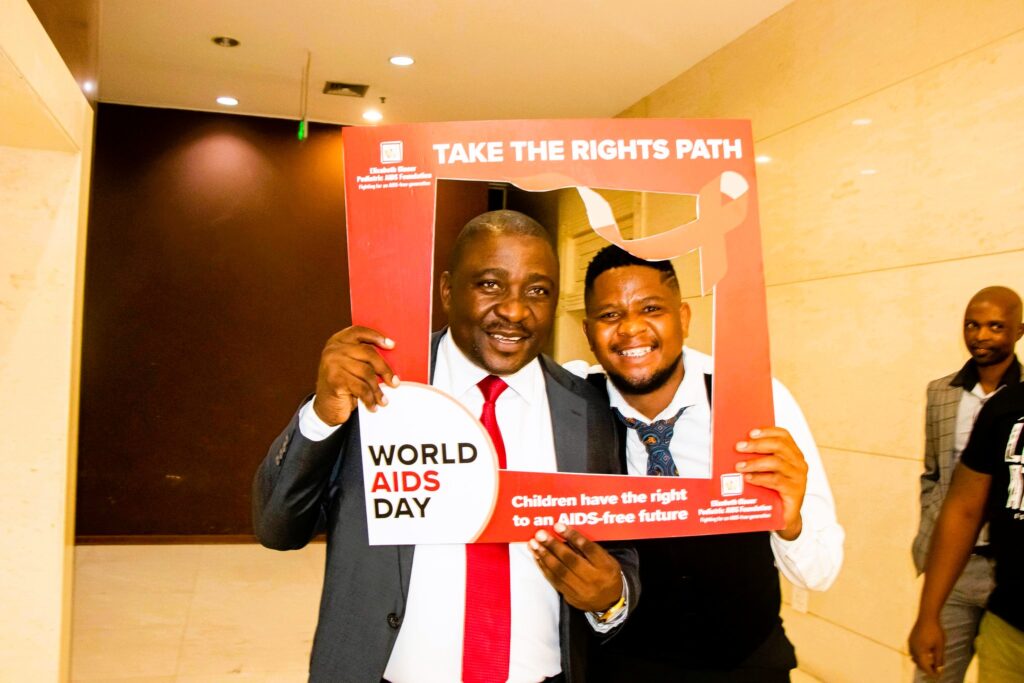
The demand was the central theme of a press conference held in Maseru on April 24, where health advocates warned that without legally enforceable commitments, the world is doomed to repeat the devastating inequalities of the COVID-19 era. As World Health Organization (WHO) member states prepare for intense negotiations, AHF is leading the charge to ensure that the proposed Pathogen Access and Benefit-Sharing (PABS) Annex – a key component of the WHO pandemic agreement – is not weakened by political or commercial interests.
“Every time there is a pandemic or infectious outbreak, AHF stands ready to help,” said Sebabatso Lentsoenyane, AHF Advocacy and Marketing Officer.
“However, past experiences have exposed deep inequalities. During Covid-19, many countries were left behind due to unequal access to vaccines and treatment. This agreement must correct that. We are advocating for countries to sign an agreement that ensures support is available when needed so that lives are saved.”
Founded in 1987 in the United States at the height of the Aids crisis, AHF began as a grassroots response to care for those dying from HIV/Aids when stigma and fear paralyzed governments. The organization arrived in Africa in 2001 and has been operational in Lesotho since 2014.
What started as a hospice movement has since evolved into the largest global provider of HIV/Aids care, operating in dozens of countries and serving millions of clients. In Lesotho, AHF’s presence goes beyond traditional aid. The organization has become a structural pillar of the health system, partnering directly with the Ministry of Health and local entities like the Lesotho Council of NGOs (LCN) to strengthen community health resilience.
From donating office equipment and food parcels to St James Hospital in the mountainous Thaba-Tseka district to supporting human resource capacitation, AHF ensures that even the most remote clinics do not fail.
Nthoesele Letoao, AHF Country Programme Manager, recently reaffirmed this commitment, stating, “We have been working since the start of the HIV pandemic in the early 1980s until now, and we promise that we will always be there.”
The urgency of AHF’s mission is underscored by the stark reality of Lesotho’s health landscape. Despite its small geographic size, Lesotho continues to bear one of the heaviest HIV burdens in the world. Current data indicates an adult HIV prevalence rate of 17.1 percent. This ranks Lesotho among the highest globally for infection rates, a statistic that drives the need for aggressive prevention and treatment strategies.
However, the country has proven that progress is possible. Through initiatives supported by partners like AHF and The Global Fund, Lesotho has shattered the global 95-95-95 targets (95 percent of people knowing their status, 95 percent of those on treatment, 95 percent of those virally suppressed).
According to the United Nations, Lesotho has achieved an impressive 97 percent-97 percent-99 percent rate. This indicates that while the virus remains prevalent, treatment coverage is strong, and viral suppression is high, turning HIV from a death sentence into a manageable chronic condition.
Yet, as the numbers show, prevention remains the weak link. While treatment succeeds, new infections – particularly among adolescent girls and young women – persist. To address this, AHF has been instrumental in pushing for innovative solutions, including the recent rollout of Lenacapavir.
This ground-breaking injectable pre-exposure prophylaxis (PrEP), approved by the WHO and administered twice a year, is a game-changer for Lesotho. By removing the daily adherence challenge of oral pills, Lenacapavir offers near-complete protection against HIV acquisition.
AHF Lesotho argues that access to these medical breakthroughs is useless without public understanding. During the press conference, LCN, Sebabatso Ntlamelle, highlighted the introduction of Lenacapavir but stressed that innovation must be paired with education.
“People should not receive prevention methods they do not understand,” Ntlamelle said. “It is important that communities are educated first, so they know what they are being given and why.”
This dual approach of supply and education is the cornerstone of AHF’s advocacy. The organization has been vocal in its “No Equity, No Agreement” stance regarding the pandemic treaty.
AHF Nigeria and global partners have specifically warned that the PABS system must be binding, arguing that without mandatory benefit-sharing (including technology transfer and set-aside percentages of vaccines), the world will simply revert to “vaccine apartheid” during the next global health emergency.
“The outcome of these negotiations will determine whether future responses are driven by cooperation and fairness, or by inequality,” Lentsoenyane noted.
As the WHO’s Intergovernmental Working Group meets in Geneva, AHF’s message from Maseru is a powerful counterpoint to the realpolitik of global negotiations. For Lesotho, a country that has shown the world how to fight HIV against the odds, standing still is not an option.
By bridging the gap between international policy and local impact, AHF Lesotho continues to position itself as an essential partner.
Whether by donating desks to a rural hospital or advocating for the genetic sequencing rights of developing nations, the Foundation is clear: health equity is not optional – it is the only thing that will save the next generation.