Devastating HIV crisis grips Lesotho’s girls
As Senate report exposes shameful neglect
RETHABILE MOHONO
MASERU — A damning new Senate report has laid bare a terrifying reality at the heart of Lesotho’s adolescent health crisis: young girls are being devastated by HIV at rates far higher than boys, trapped between persistent stigma, broken services and a culture of silence that leaves them defenceless.
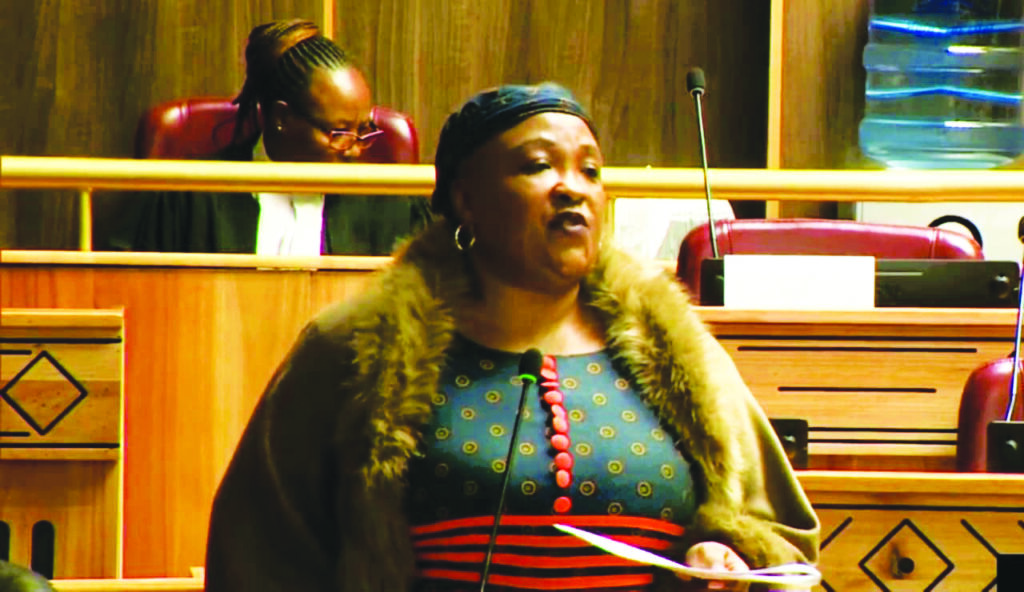
The findings, presented this week before the Senate by Chief ’Makholu ’Mualle Moshoeshoe — Chairperson of the Health, Nutrition and Gender Committee — paint a deeply troubling picture of a nation failing its children. Despite years of intervention programmes and policy promises, the data shows that infections, deaths, and teenage pregnancies are rising, with girls bearing the overwhelming brunt of the catastrophe.
“The report shows how HIV has impacted Lesotho’s youth and what is being done,” Moshoeshoe told the Senate.
But her testimony made clear that what is being done remains tragically insufficient.
The revelations emerged from a series of nationwide engagements conducted in 2025 under the Southern African Development Community Parliamentary Forum (SADCPF). That initiative brought together the Senate committee, the National Assembly, the Ministry of Education, and the Ministry of Health in an unprecedented cross-sector effort to assess the true state of adolescent sexual and reproductive health across Lesotho’s ten districts.
What they found has sent shockwaves through the legislative chamber.
Rising deaths and infections among the young
According to the report, Lesotho’s 2014 HIV/Aids census recorded at least 270 000 adolescents living with HIV — a sharp increase from 250 000 in the years before 2014. Even more alarmingly, the number of newly infected adolescents rose to an estimated 7 200, up from 6 000.
Deaths have climbed in parallel. At least 4 300 young people — either on treatment or newly infected — have died from HIV/Aids-related illnesses, compared to 3 500 deaths recorded before 2014.
These are not mere statistics, Moshoeshoe stressed. They represent real children, real futures destroyed, and a health system struggling to keep pace with a crisis that shows no signs of slowing.
“The figures underscore the scale of the challenge facing the country,” she said, “particularly as it relates to protecting its youth from infection and ensuring access to treatment and care.”
Yet, even as the numbers rise, the report identifies glaring gaps in the national response — gaps that disproportionately harm girls.
Girls at the epicentre of the epidemic
One of the most startling findings is the dramatic disparity in HIV infection rates between adolescent girls and boys.
“Statistics show that HIV/Aids infections are very high among the youth, and among them, girls are more affected than boys,” Moshoeshoe told the Senate, questioning aloud what lies behind this imbalance.
The answer, according to the report, is as disturbing as it is predictable: a toxic combination of poverty, exploitation, and deeply entrenched gender inequality.
Central to the crisis is the phenomenon of “blessers” — older men who offer money, gifts, or material support in exchange for sex with young girls. These relationships, the report found, are often covert, coercive, and profoundly dangerous.
“These ‘blessers’ take advantage of our children and end up infecting them,” Moshoeshoe said bluntly.
The report also highlights the prevalence of transactional sex, where girls engage in sexual relationships for money or goods, often out of sheer economic desperation. “We also found that there is transactional sex, where these men pay for sex and later abandon the girls,” she added.
Once abandoned, many of these girls are left not only infected but also isolated, unable to access treatment for fear of stigma or rejection by their families and communities.
Silence that kills
Perhaps the most heart-breaking finding of the report is the wall of silence that surrounds sexual and reproductive health in Lesotho’s homes and communities.
Moshoeshoe revealed that many adolescents rely almost entirely on schools for information about sex and reproductive health because such conversations rarely — if ever — take place at home.
“It is still a taboo for parents and most parts of society to talk about sex education,” she said.
This silence extends even to community leaders, including village chiefs, who according to the report are often uncomfortable discussing sexual health issues or providing guidance on how such conversations should happen.
The result is a generation of young people left without accurate information, without adult guidance, and without any realistic understanding of the risks they face. They are easy prey for misinformation, peer pressure, and the calculated advances of older men who know exactly how to exploit their ignorance and vulnerability.
Policy on paper, failure in practice
On paper, Lesotho has made some progress. The Ministry of Education has introduced Sexual and Reproductive Health and Rights (SRHR) initiatives in schools, supported by an HIV/Aids Unit tasked with addressing the impact of HIV on adolescents and young people.
In 2024, the government adopted the Prevention and Management of Learners’ Pregnancy Policy, which guarantees the right of pregnant learners and those living with HIV to remain in school.
“They should stay in school whether pregnant or HIV positive — it is their right to do so,” Moshoeshoe affirmed.
Under the policy, parents are encouraged to inform schools when a learner becomes pregnant, and schools are obligated to allow the learner to continue her studies. The policy also provides for maternity leave, access to medical appointments, and crucially, prohibits schools from forcing pregnant girls to repeat grades — a common and cruel practice in the past.
Yet, Moshoeshoe acknowledged that implementation remains deeply uneven. Some schools, particularly those run by churches, continue to resist fully applying the policy, leaving vulnerable girls at risk of expulsion and shame.
Teenage pregnancy epidemic
The report also shines a harsh light on the parallel epidemic of teenage pregnancy and forced marriage, particularly among girls aged 12 to 19.
The highest prevalence is among those aged 15 to 19, with Thaba-Tseka recording a staggering 22 percent rate, followed by Qacha’s Nek at 17.3 percent.
These pregnancies are not merely a health risk — they are a death sentence for many girls’ futures. Pregnant adolescents are far less likely to complete their education, far more likely to live in poverty, and far more vulnerable to contracting HIV and other sexually transmitted infections.
Fear of the clinic
Even when health services are available, the report found that many adolescents, especially in rural areas, are too afraid to use them.
“Adolescents are afraid to go to clinics to access contraceptives because people working in clinics are their family members or people they know,” Moshoeshoe said.
This fear of exposure and judgment is a formidable barrier. A teenage girl seeking contraceptives or HIV testing risks being seen by a neighbour, an aunt, or her own mother. In small communities where gossip travels faster than any health message, the shame can be devastating.
Gender-based violence further compounds the crisis, with many girls facing sexual coercion or abuse from intimate partners, family members, or community members.
What is being done – And what more is needed
Despite the bleak picture, the report does note some efforts to turn the tide.
The Ministry of Health has strengthened collaboration with the Ministry of Education to improve delivery of sexuality education in schools. Health authorities have also engaged the World Health Organisation to obtain updated guidelines on improving sexual and reproductive health services.
Vaccination programmes against cervical cancer have been introduced in primary schools. Adolescents can now access contraceptives, including morning-after pills, without parental consent — a critical step in removing barriers to access.
Young people can also access HIV testing, counselling, and support through designated “adolescent corners” — youth-friendly spaces within clinics where they are assisted by trained peers rather than unfamiliar or intimidating adults.
UNESCO and UNICEF are providing financial support, medication, and technical assistance in the fight against HIV/Aids.
Yet, Moshoeshoe was clear-eyed about the obstacles that remain.
“There are challenges in allocating resources across all districts due to lack of tools,” she said, noting that limited resources mean many districts, especially remote and rural ones, are left underserved.
A generation at risk
For the young girls of Lesotho, the crisis is not abstract. It is the face of a friend who has disappeared from school. It is the whisper about a pregnancy, a marriage, a death. It is the fear of walking home alone. It is the silence at the dinner table.
The Senate report is a rare and urgent moment of national reckoning. But as Moshoeshoe and her committee know better than most, reports alone do not save lives.
What is needed now is a comprehensive, coordinated, and adequately resourced response that goes far beyond policy documents and press releases. It means confronting poverty head-on. It means prosecuting the “blessers” and those who exploit children. It means training teachers, chiefs, and parents to speak openly about sex and health. It means scaling up adolescent-friendly services in every clinic, in every district.
“Without sustained and targeted action,” the report warns, “Lesotho risks losing a generation of young people — particularly girls — to a crisis that is as much social as it is medical.”
As the Senate debates the findings, one question hangs in the air: Will this time be different? Or will this report, like so many before it, gather dust while another 7 200 adolescents become newly infected?
For Moshoeshoe, the hope is that the evidence laid bare before the nation will serve as a catalyst — a moral shock that finally breaks the silence and compels action from every sector of society.
But hope, as the report itself makes painfully clear, has never been enough to save the girls of Lesotho. Only action will.