Sixty years of sovereignty
Scholars to reckon with Lesotho’s uneasy independence as nation marks milestone anniversary
TEBOHO KHATEBE MOLEFI
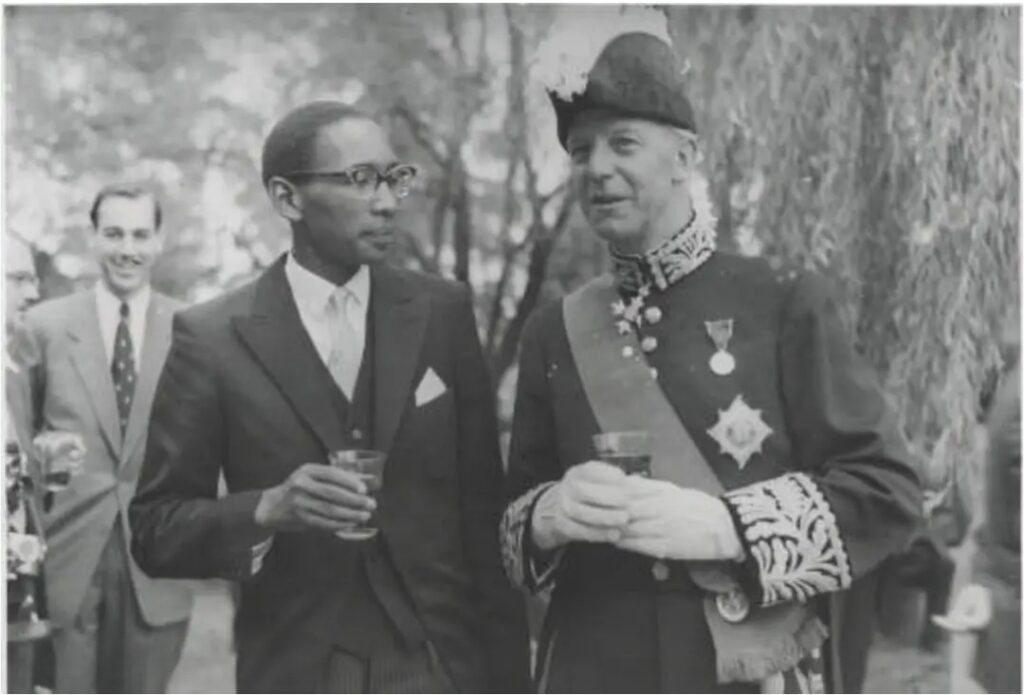
MASERU – On October, 1966, Basotho stood beneath a newly raised flag and watched the British Union Jack descend for the last time over the Protectorate of Basutoland.
The transition was peaceful – remarkably so by the standards of African decolonisation – and the mood was electric with possibility. Sixty years later, as the Kingdom of Lesotho prepares to commemorate its diamond anniversary, a different question hovers over the celebrations.
What has independence actually delivered?
From September 24 to 25, the Department of Political and Administrative Studies at the National University of Lesotho will convene an academic conference designed to answer precisely that question. Scheduled just days before the official October 4 independence anniversary, the gathering at the Roma Campus will bring together scholars, policymakers, civil society actors and development practitioners not merely to celebrate, but to undertake what organisers describe as “rigorous, evidence-based stocktaking” of six decades of sovereign rule.
The unfinished business of independence
When Lesotho gained independence from Great Britain, it inherited a peculiar legacy. Unlike nearly every other African nation that threw off colonial rule in the 1960s, Basutoland had no armed liberation struggle.
There were no guerrilla armies, no massacres, no negotiated ceasefires. The British withdrawal was orderly, almost administrative.
King Moshoeshoe II was enthroned, Prime Minister Leabua Jonathan took office and the new nation slipped into the community of states with minimal disruption.
That absence of revolutionary violence, however, proved a double-edged sword. It meant no catharsis, no wholesale purge of colonial institutions, and no unifying founding myth forged in blood sacrifice. What it also meant, as the conference concept note acknowledges, was that state-building – the grinding, unglamorous work of constructing effective, legitimate, and accountable institutions – became the nation’s enduring preoccupation. And on that front, the record is deeply contradictory.
The achievements
By almost any measure, Lesotho’s investment in education stands as its most unambiguous success story. The country boasts one of Africa’s highest adult literacy rates, estimated at approximately 80 percent – a figure that reflects decades of commitment to primary and secondary schooling, much of it driven by missionary institutions and local churches.
In a continent where literacy remains a persistent development challenge, Lesotho’s performance is exceptional.
On the international stage, the kingdom has carved out an active and respected presence. It holds memberships in the United Nations, the Commonwealth, the African Union, and the Southern African Development Community (SADC). Within the SADC framework, Lesotho played a notable diplomatic and logistical role during the struggle against apartheid in neighbouring South Africa – a contribution that successive governments have invoked to claim moral authority in regional affairs.
Perhaps most strikingly, Lesotho has made significant strides in advancing women’s political participation. Female representation in parliament and public office has increased substantially over the past two decades, a trajectory that distinguishes the kingdom from many of its regional peers.
Whether this numerical representation has translated into substantive policy change for Basotho women remains an open and urgent question – one the conference intends to take up.
The unravelling: Coups, crises and chronic instability
Yet these achievements exist alongside a political record that is, by any honest accounting, deeply troubled. Lesotho has been consistently characterised by chronic political instability that has, on several occasions, resulted in the direct intervention of the military in politics – a phenomenon uncommon in Southern Africa and profoundly corrosive of democratic norms.
The first major rupture came in 1970, barely four years after independence, when Prime Minister Jonathan annulled a general election that his Basotho National Party had reportedly lost. The subsequent state of emergency, suspension of parliament, and exile of King Moshoeshoe II set a pattern that would repeat across the decades – elected governments overthrown, constitutions suspended and military juntas installing civilian proxies.
In 1986, Jonathan himself was deposed in a military coup. The following years saw a revolving door of regimes, including the brief return of King Moshoeshoe II and the contentious rule of Major General Metsing Lekhanya.
The 1990s brought democratic restoration, but not stability. In 1998, disputed elections triggered a South African-led military intervention under SADC auspices – an extraordinary breach of sovereignty undertaken to prevent a complete state collapse.
More recently, Lesotho has experienced a serious internal security crisis. Homicide rates have risen sharply. Illegal firearms proliferate in urban and peri-urban areas. Violent gang networks, particularly in Maseru and its sprawling periphery, have created zones of near-lawlessness that challenge the state’s monopoly on legitimate force.
For ordinary Basotho, the promise of independence – security, order, the rule of law – has become increasingly remote.
The economic bind: Dependency and its discontents
If political instability has been the headline, economic dependency has been the fine print – equally consequential but less visible. Lesotho remains heavily reliant on South Africa for imports, remittances, employment, and trade.
The customs union revenues from the Southern African Customs Union (SACU) still account for a substantial share of government income, while hundreds of thousands of Basotho workers continue to labour in South African mines, farms, and households.
This structural vulnerability constrains sovereign economic policymaking in ways that independence was supposed to overcome. When South Africa sneezes, Lesotho catches a cold.
When the mining sector contracts, remittances dry up. When SACU revenues fluctuate, the Lesotho budget gapes open.
The much-promoted manufacturing sector, particularly textiles under the African Growth and Opportunity Act (AGOA), has provided employment but at the cost of precarious working conditions and environmental degradation.
High youth unemployment, persistent poverty, and growing inequality further challenge the optimism of 1966. For a nation that has produced a remarkable number of educated professionals relative to its population size, the absence of corresponding economic opportunities represents a profound failure of the independence project.
The homogeneity paradox
Lesotho’s near-total ethnic homogeneity – almost entirely Basotho population – was supposed to spare it the nation-building crises that tore apart countries like Nigeria, Sudan and the Democratic Republic of Congo. And indeed, there have been no ethnic civil wars, no secessionist movements, no genocidal campaigns organised along identity lines.
But homogeneity has not guaranteed stability. On the contrary, some analysts argue that the absence of ethnic cleavages has simply displaced political conflict onto other axes – party affiliation, regional loyalties, and personalistic factions within the elite.
The result has been a politics of zero-sum competition, where winning an election means capturing not just office but the entire state apparatus – and where losing can mean exile, imprisonment, or death.
What the conference hopes to accomplish
Against this complex backdrop, the September conference has set ambitious objectives. Organisers aim to produce a corpus of peer-reviewed academic papers suitable for publication in a recognised journal, thereby building the scholarly literature on Lesotho for future researchers and policymakers.
More immediately, they seek to facilitate constructive dialogue between academic researchers, policymakers, civil society organisations, and development practitioners on the priority challenges facing the kingdom.
The thematic areas are comprehensive: politics and governance, economy and development, youth and unemployment, gender and women’s empowerment, civil society and democracy, church and education, national and public security, culture and identity, and Lesotho’s foreign relations. Submissions are due by May 31, with notifications of acceptance by June 12.
The question for the next sixty years
As Lesotho approaches its sixtieth anniversary, the question is no longer whether independence was a good thing – that debate is long settled. The question is what kind of independence Basotho have actually lived and what kind they might yet build.
The conference organisers have framed the event as an opportunity not merely to celebrate but to reimagine. Whether the scholarly community can rise to that challenge – whether rigorous analysis can translate into actionable policy, whether academic critique can inform political reform – remains to be seen.
What is certain is that the sixtieth anniversary offers a moment of clarity, a chance to look back without nostalgia and forward without naivety.
For six decades, the Kingdom of Lesotho has navigated between the aspirations of 1966 and the constraints of geography, history and political choice. The Roma conference will not produce easy answers.
But it may, if successful, produce better questions – and in a nation that has spent sixty years searching for stability, better questions are no small achievement.