M2.3b Investment Case to end maternal deaths, child marriage launched
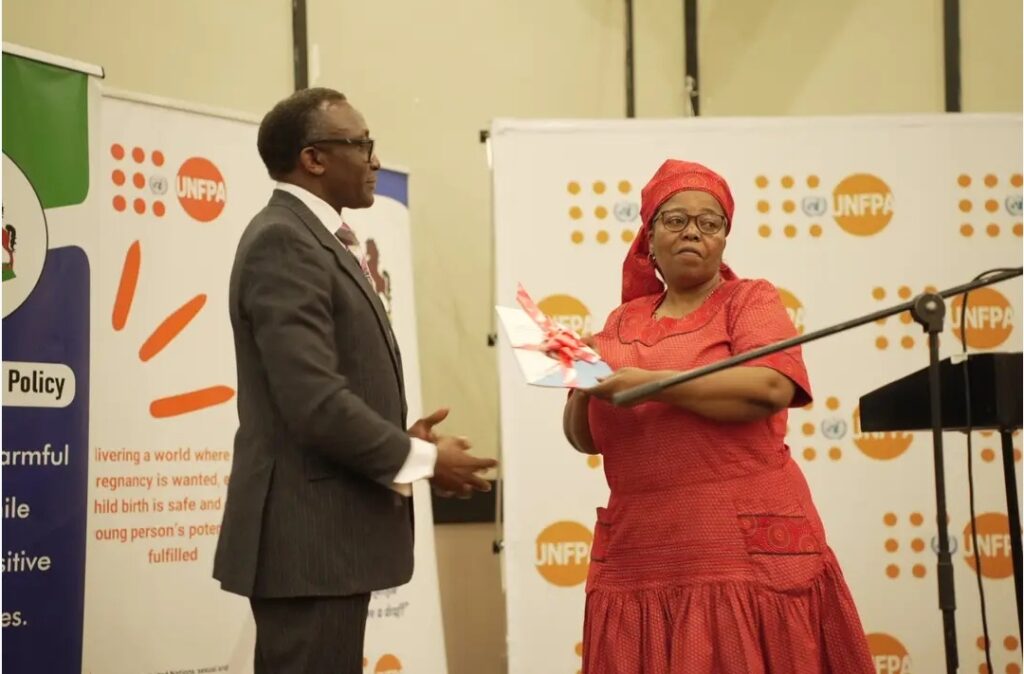
Ministry of Health vows domestic resource mobilisation as UNFPA-backed roadmap promises M129 return for every US Dollar invested
TEBOHO KHATEBE MOLEFI
Maseru – In a powerful address delivered in Maseru on Friday, the Ministry of Health declared that the country’s first-ever data-driven Investment Case for Maternal, New-born and Child Health, Family Planning, Gender-Based Violence and Child Marriage — a comprehensive M2.3 billion ($143 million) blueprint — reframes the fight against preventable deaths not as charity, but as economic strategy.
The landmark document, which targets the ambitious “Three Zeros” by 2030 — zero preventable maternal deaths, zero unmet need for family planning, and zero gender-based violence — comes at a critical juncture for Lesotho.
The “Three Zeros” Framework, adopted by Lesotho as part of its commitment to the International Conference on Population and Development Programme of Action and the Sustainable Development Goals, targets elimination by 2030 of preventable maternal deaths, unmet need for family planning and gender-based violence including child marriage.
Despite significant progress, the country remains the third-most dangerous place in the region to give birth, trailing only South Sudan and Somalia, with a maternal mortality ratio of 530 deaths per 100 live births and a neonatal mortality rate of 26 per 1 000 live births.
“This Investment Case is not merely a document — it is a bold statement of our collective commitment to the health, dignity, and future of the people of Lesotho, especially women, children, and young people,” the Ministry of Health stated.
“It reflects our shared vision of a nation where no woman dies while giving life, no child is denied the opportunity to thrive, and no girl is subjected to violence or harmful practices such as child marriage.”
Government’s pledge
Dr Llang Maama, who delivered the remarks on behalf of Health Minister Selibe Mochoboroane, struck a decisive tone, moving beyond rhetoric to concrete governmental commitment. Emphasising that the Investment Case provides a clear, evidence-based roadmap to address persistent challenges, Maama outlined four priority areas — improving maternal, new-born, and child health services; expanding family planning access; preventing and responding to gender-based violence; and ending child marriage through community engagement and policy enforcement.
“As government, we reaffirm our commitment to providing leadership, mobilising domestic resources, and creating an enabling environment for the implementation of this Investment Case,” Maama told the gathering.
“However, we cannot do this alone.”
The call for partnership underscored a fundamental reality: while Lesotho has reduced maternal mortality by an impressive 54 percent since 2009 — and cut absolute maternal deaths from 44 to 21 in the past year alone — the remaining gaps require coordinated action across government, development agencies, civil society, the private sector, and communities.
The economic case
Behind the moral imperative lies a compelling financial argument that has reshaped how international donors and domestic budget planners view health investments. According to the UNFPA, the Investment Case demonstrates that for every $1 (M16.40) spent on maternal and child health, Lesotho will see an economic return of M129 ($7.90).
Even more striking are the projections for ending child marriage. With 13 to 16 percent of Basotho girls currently in a union or married before age 18, according to the Child Marriage Data Portal (2024-2025), eliminating this harmful practice could inject an additional $570 million (M9.35 billion) into Lesotho’s economy by 2050 — primarily by keeping girls in school and transitioning them into the productive labour force.
The Investment Case also earmarks $21 million (M344.40 million) specifically to combat gender-based violence, which remains Lesotho’s most pervasive social crisis. With 86 percent of women reporting a lifetime experience of violence, the strategy shifts funding decisively from reaction to prevention through the Respect Framework, which aims to stop violence before it starts.
UNFPA’s pivotal role
Central to the development of the Investment Case has been the United Nations Population Fund (UNFPA), whose technical support the Ministry of Health acknowledged with sincere appreciation at the outset of the address.
“Allow me to express my sincere appreciation to the United Nations system, particularly UNFPA, for their technical support for the development of this important document on behalf of the UN family,” the Ministry of Health said.
The partnership between the Ministry of Health and UNFPA in Lesotho runs deep, predating the Investment Case by decades. Since 2015, UNFPA has been at the forefront of responding to humanitarian crises, including the repeated El Niño-induced droughts that have devastated the country.
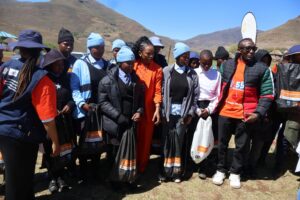
During the most recent drought crisis — which saw nearly one-third of the population facing acute food shortages — UNFPA activated its emergency response, distributing dignity kits to uphold the health and hygiene of displaced women and girls, providing cash voucher assistance to gender-based violence survivors, and rehabilitating safe shelters for women and girls who have experienced violence.
“The true measure of this Investment Case will not be in its pages, but in the lives it transforms,” the Ministry of Health declared.
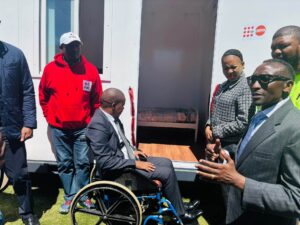
The ministry-UNFPA relationship has produced tangible results beyond the Investment Case. In 2016, UNFPA donated a mobile clinic to the Ministry of Health specifically designed to reach vulnerable women, particularly factory workers in Maputsoe whose access to quality sexual and reproductive health and HIV prevention services was limited.
More recently, UNFPA has supported the government in developing a Menstrual Health Strategy and co-created sustainable models for universal sanitary pad distribution — an initiative that addresses period poverty as a multifaceted human rights issue affecting girls’ education and dignity.
UNFPA has operated in Lesotho for over two decades, focusing on sexual and reproductive health and rights, population data collection (including census support), gender equality, and youth empowerment.
Key initiatives include the demographic dividend strategy, menstrual health management programmes, emergency humanitarian response, and support for the prevention and management of learner pregnancy policy.
A data-driven national priority
The Investment Case now being launched did not emerge in a vacuum. It is the culmination of a rigorous, multi-stakeholder process that began with a sobering assessment of the country’s health and social indicators.
According to UNFPA Lesotho, the country has been grappling with some of the region’s highest maternal and neonatal mortality rates. Beyond the maternal mortality ratio of 530 deaths per 100 000 live births, data reveals a neonatal mortality rate of 26 per 1 000 live births, an unmet need for family planning among adolescent girls aged 15–19 at 21 percent, and a prevalence of intimate partner violence among women at 36 percent.
In September 2025, stakeholders from the government of Lesotho, civil society, UNFPA and other development partners convened a four-day validation workshop — a consensus-driven process designed to ensure the Investment Case reflects national priorities and evidence-based strategies. During that workshop, participants validated baseline data, agreed on high-impact interventions, reviewed coverage levels, and set ambitious yet realistic targets for 2030.
Palesa Ramothello, Policy and Strategic Planner in the Ministry of Health, captured the document’s significance during that validation process: “This Investment Case is a very important advocacy tool because it will be fully costed. It will guide interventions and allow us to mobilise the resources we need to make real change.”
The validation workshop also gave careful consideration to child marriage, which was integrated into the Investment Case as both a driver and consequence of poor health outcomes. By including it, Lesotho made a clear statement that ending child marriage is critical to improving the health and rights of girls while enabling national development.
The document was developed through a consultative process involving the Ministry of Health, UNFPA technical experts, an international consultant, local health economists, civil society organisations and development partners. The final document includes cost projections, expected health and economic outcomes, and benefit-cost ratios for each proposed intervention scenario.
The hard realities
Behind the statistics are grim realities that health officials confront daily. The Ministry of Health has identified post-partum haemorrhage — uncontrolled bleeding after childbirth — as the leading cause of maternal death, responsible for 30 to 50 percent of all fatalities recorded in 2025.
Geographic disparities compound the challenge. Data presented thus far reveals that the Thaba-Tseka district currently records the highest fertility rates and the most severe shortage of emergency obstetric care in the country, making it the district most urgently in need of targeted intervention.
A call for collective action
In October 2025 Uncensored News carried a report from the mist-shrouded highlands of Ha Shoaepane village, deep within the rugged Thaba-Tseka district, detailing the efforts of ‘Manthabeleng Mokone who daily tightens her shawl against the biting dawn cold to go out and save women’s lives.
The 55-year-old village health worker has walked the winding Thaba-Tseka mountain paths for nearly a decade — not for her own health, but for the safety of mothers who might otherwise disappear into silence.
“Some women hide their pregnancies,” she said softly speaking to the media outlet. “You can see the signs — swelling, fatigue — but they deny it. They won’t visit the clinic.”
When gentle persuasion fails, Mokone approaches relatives or trusted friends. Yet hostility follows. “Some call me a witch,” she admits. “I don’t take offense. My duty is to get them to the clinic.”
Her persistence saves lives. Since 2016, she has never lost a mother or baby she personally accompanied.
Thaba-Tseka, home to roughly 135 000 people, ranks lowest in Lesotho on nearly every health indicator. One in five girls becomes pregnant before adulthood — 22 percent, well above the national average of 17 percent. At Linakeng Health Centre, nurse-midwife Karabelo Mpiti reported 20 teenage pregnancies between January and September 2025, including two 13-year-olds.
“Their bodies are not fully developed. Labour becomes difficult,” she said.
The district’s main hospital, run by the Roman Catholic Church, does not provide contraceptives. Women walk hours along treacherous paths — sometimes in active labour. Village health worker ‘Mapelaelo Nchoba, 67, told Uncensored News that she once delivered a baby roadside with bare hands, no gloves, no water.
Her reward — a M500 fine for unauthorised assistance.
Still, these workers persist. Mokone presses forward — one of hundreds forming an invisible lifeline across a nation of 2.4 million people, where maternal deaths remain heartbreakingly high.
Such stories underscore that progress is being made possible through skilled birth attendance — now at 89 percent — and trained health workers. But they also highlight how far Lesotho must still travel.
The Investment Case’s success will ultimately depend on whether the political will exists to fund a future where no woman dies giving life and no girl is forced into marriage before her time. For the Ministry of Health, the path forward is clear.
“I call upon all our partners — development agencies, civil society, the private sector and communities — to join us in translating this Investment Case into tangible results. Let us align our efforts, pool our resources, and work collaboratively to ensure that no one is left behind.”