$10 million WFP funds to benefit locals
MPHO RAMOLULA
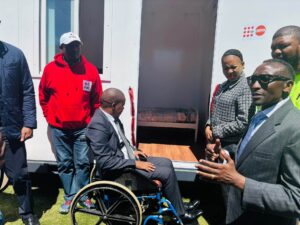
QUTHING – The World Food Programme (WFP) donated $10 million dollars (19 million maloti) to the Improving Adaptive Capacity of Vulnerable and Food Insecure Populations in Lesotho (IACoV) project in Ha Mohlakoana, in the Quthing district.
This significant contribution aims to improve food security and economic opportunities within the community through the IACoV project’s initiatives.
Improving Adaptive Capacity of Vulnerable and Food Insecure Populations in Lesotho (IACOV) project, launched in October 2020, aimed to enhance the adaptive capacity of vulnerable and food-insecure populations in Lesotho.
The project focuses on building resilience within these communities by strengthening agricultural practices, supporting local value chains, and creating economic opportunities.
This involves a multifaceted approach including training programmes in sustainable farming techniques, access to improved seeds and tools, and initiatives to connect farmers with markets.
The project’s goal was to empower local communities to better manage risks associated with climate change and other challenges, ultimately improving their long-term food security.
Initially it was anticipated to conclude in October 2024, but the COVID-19 pandemic significantly impacted project timelines.
The project’s activities were extended to April 2025, to ensure the successful completion of planned interventions and to accommodate the disruptions caused by the pandemic.
This extension allowed for crucial adjustments in project implementation to address the emerging needs of the affected communities and maintain the positive impact on food security and livelihoods.
Project Coordinator Nkopo Matsepe highlighted significant achievements during the IACOV project.
“The weather is now better understood, and people are equipped to work effectively regardless of climate change,” he stated, emphasizing the project’s success in building community resilience thus far.
This involved collaborating with media to disseminate crucial climate information and improve farming practices, even during droughts.
The project distributed seeds across various districts and facilitated the construction of boreholes, resulting in support for 10,500 families and job creation within Quthing alone.
Partnerships were key to the project’s success.
IACOV collaborated closely with the Lesotho Disaster Management Authority and Meteorological Services. An anticipatory action plan was implemented, coupled with a national climate communication strategy and social behavioral change initiatives.
Ongoing obstacles related to food nutrition and climate change impacts on farming were also noted. Matsepe urged the agriculture ministry to continue supporting similar initiatives, emphasizing the need for further investment in climate resilient approaches.
Looking ahead, Matsepe announced plans for a Phase 2 expansion into new areas, including Thaba Tseka, and potential expansion within existing project locations.
Future collaborations will involve the Ministries of Social Development, Agriculture, and Communications, ensuring a comprehensive approach to addressing food insecurity and climate change vulnerability in Lesotho, he said.
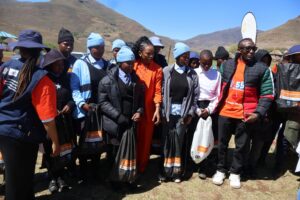
Malebohang, the Ha Mohlakoana team leader, described the initial phases of the project: “We began by clearing shrubs from the mountains and filling dongas, followed by planting trees,” she explained.
This environmental restoration work, initially compensated with a “lunch box” stipend of 1200 maloti over three months, focused on building community capacity for self-sufficiency.
“We were taught to prepare for damages ourselves, to benefit our village without relying solely on external funding,” she added.
The team established a thriving farm producing vegetables and a chicken coop providing a steady supply of eggs.
“We sell our eggs to the Mount Maluti Hotel and supply both eggs and vegetables to a local school,” Malebohang said, highlighting the project’s positive economic impact.
Malebohang also highlighted the crucial infrastructure support provided by IACOV.
“IACOV built our chicken house and provided nets to protect our plants from the harsh effects of climate change,” she stated, adding, “they also provided us with boreholes and a reliable water supply.”
The infrastructure, she emphasized, was essential for the success of their farming and income-generating activities.
However, she also noted a significant challenge: “People are leaving the farm because they are no longer paid,” she said, explaining that their numbers have dropped from 103 to a drastic 43 participants.
The lack of transport to deliver their products to market further hinders their progress, underscoring the need for continued support as the IACOV project concludes.
Despite this, Malebohang proudly stated, “There is no longer hunger in our community; we sell our produce at lower prices because we are the producers.”
Maphosele Phambamiso, a representative of a local cottage industry group, echoed these sentiments.
“We each contributed 100 Maloti and hired someone to teach us to make vaseline, soap, cloth softners, and vinegar, among other things,” she explained, demonstrating the project’s ability to foster diverse income-generating activities.
Expressing deep gratitude, she added, “We thank IACOV and WFP for guiding us on this journey. We are now busy, able to pay our children’s school fees, and feed our families. My advice to others is to seek guidance from those who have already succeeded.”
Her words serve as a testament to the project’s lasting impact on individual lives and the community’s overall well-being.
The success of the IACOV project highlights the power of collaborative partnerships.
The combined efforts of the WFP, the Lesotho government, and local communities have yielded tangible results in improving food security and livelihoods.
As the project enters its next phase, continued collaboration and support will be crucial to sustaining the progress made and ensuring long-term positive change in vulnerable communities