Costly ignorance: Low IP awareness holds back Basotho businesses, economy
‘MAKERESEMESE LETUKA
MASERU – Lesotho’s Intellectual Property Office (Registrar General) is intensifying efforts to educate small, micro, and medium-sized enterprise (SMME) owners on the critical need to register their trademarks.
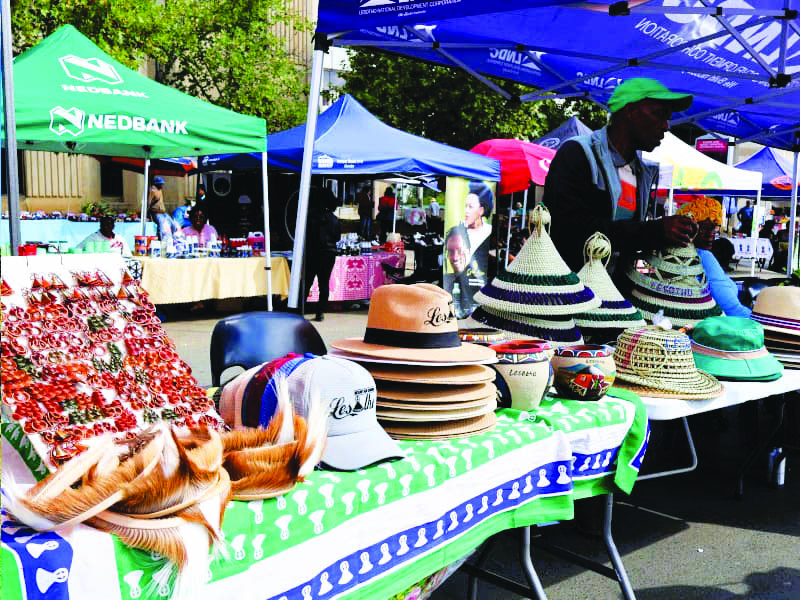
Registrar General, ‘Mamoretlo Mohapi, speaking at a monthly flea market initiative organized by the Basotho Development Corporation (BEDCO), the Prime Minister’s Office, SADP II, the Entrepreneurs Network, the Private Sector and other ministries, directly addressed traders. She dispelled the myth that Intellectual Property (IP) rights are exclusive to large corporations.
“Registering your trademark doesn’t just protect your business identity,” Mohapi emphasized. “It builds customer trust, enhances market recognition, and gives you a vital competitive edge. I see many unique brands here today, but most remain unprotected. Please safeguard your intellectual property.”
Her call underscores a significant challenge: a pervasive lack of IP awareness in Lesotho. This knowledge gap is the primary reason the Registrar General’s office attends every flea market session and conducts extensive outreach programmes.
The consequences of this lack of awareness are stark, as confirmed by Industrial Property Counsel, Advocate Poloko Majola, in an exclusive interview with Public Eye.
“Businesses and the public largely fail to grasp IP’s value,” Majola stated. “From copyrights and trademarks to patents, trade secrets, and geographical indications, people don’t understand how IP permeates their daily lives and business operations.”
He noted that even those seeking the office’s help often struggle to identify the correct category of IP protection for their creations.
The most common form of industrial property, trademarks (symbols, designs, or phrases distinguishing goods/services), frequently go unprotected locally.
Lawyer and IP expert, Advocate Lineo Makhakhe, warned of the risks: “Registration grants legal standing. Without it, businesses are vulnerable to exploitation. Someone else could imitate or even legally register your unregistered design first, claiming the rights.”
Advocate Majola confirmed the “first-come, first-served” principle governs IP registration in Lesotho. She also highlighted a branding issue: many local products lack unique identifiers beyond the national flag. “Investing in distinct branding creates value – for the business and the nation,” he stressed.
Majola identified key barriers: the misconception that IP protection is prohibitively expensive and a “foreign concept,” hindering recognition of opportunities like geographical indications. These myths contribute significantly to missed economic potential.
Business owner, Chaka Mapeshoane, exemplifies the challenge. While aware of IP’s importance, he lacks practical knowledge.
“My business is legally registered and has unique logos and branding,” he said, “but I haven’t registered anything specifically for IP protection. I know what IP is, but not how to make it work for my benefit.”
He also suggested that the ease of generating logos via artificial intelligence may inadvertently devalue their perceived worth as IP.
The scale of the issue is revealed in stark statistics, as of August 15 only 867 of Lesotho’s 34 757 registered trademarks are Basotho-owned.
Beyond awareness, outdated legislation compounds the problem. The governing law – the Industrial Property Order of 1989 – is ill-equipped for modern technological advancements. Majola confirmed the ministry has initiated a review process.
The anticipated amendments are expected to align the law with international IP conventions Lesotho has signed.
Registrar General Mohapi’s intensified drive to educate Basotho SMME owners on trademark registration has, therefore, become a vital investment in Lesotho’s economic future. For too long, many talented entrepreneurs have operated without securing their most valuable intangible assets – their brand identities.
Unregistered trademarks leave businesses dangerously exposed to copycats, reputational damage, and loss of hard-earned goodwill. Mohapi’s proactive campaign directly addresses this critical gap.
By demystifying the registration process and clearly articulating the benefits – exclusive national rights, legal protection against infringement, enhanced brand value for attracting investment or franchising, and building customer trust – the Lesotho Intellectual Property Office empowers SMMEs.
This knowledge transforms trademarks from a bureaucratic concept into a recognized business shield and growth tool. Protecting unique Basotho products and services, from handcrafts to agribusiness, safeguards cultural heritage while fostering innovation and formalization.
Mohapi’s leadership in taking this education directly to SMMEs is commendable. It signals the government’s commitment to nurturing a resilient, competitive private sector built on secure intellectual property foundations.
Equipping entrepreneurs with this understanding is fundamental to building sustainable enterprises, stimulating job creation, and ensuring Basotho businesses thrive locally and gain recognition in regional and global markets.
This initiative is not just about registration, it’s about securing the future of Lesotho’s entrepreneurial spirit.