Matekane’s redactions cast shadow over prison reform
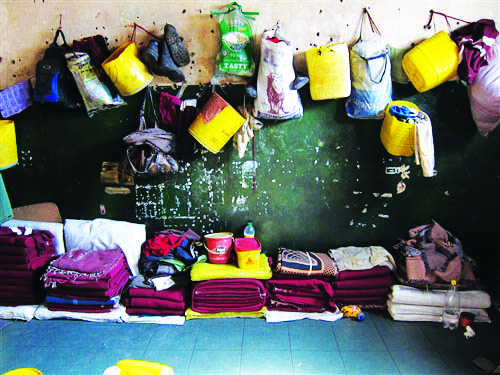
Maseru, institut correctionnel central. 17 détenus partagent cette cellule. Ils dorment côte à côte à même le sol et pendent leur effets personnels aux murs. Les couvertures sont la seule protection entre les détenus et le sol froid. Maseru, Central Correctional Institute. Blankets are the only protection from the cold floors for detainees. 17 inmates share this room, sleeping side-by-side on the floor and hanging their belongings on the walls. The ICRC has been working with the Lesotho Correctional Services (LCS) since 1994. Currently, delegates from the Pretoria Regional Delegation visit security detainees to ensure that they are detained in conditions which show due respect for human dignity. Over two visits in 2012, ICRC staff captured photos illustrating life in prison and efforts by ICRC to assist LCS in making improvements for the well-being of the security detainees as well as select projects for the benefit of the entire prison population. Completion of renovated cell blocks will ease some of the overcrowding.
- Expunged report sections threaten path to jail overhaul
- Landmark inquiry prescribes path to dignity and rehabilitation
TEBOHO KHATEBE MOLEFI
MASERU – Prime Minister Ntsokoane Matekane’s controversial decision to expunge specific sections of the landmark Commission of Inquiry report into the Lesotho Correctional Service (LCS) has ignited debate and cast a long shadow over the nation’s critical journey towards prison reform.
While the publicly released findings still paint a damning picture of systemic failure – chronic overcrowding, appalling conditions, human rights abuses and entrenched corruption – the deliberate removal of key details threatens to undermine the very foundation needed to find real, lasting solutions.
This act of selective disclosure risks protecting perpetrators, obscuring accountability, and jeopardizing the comprehensive overhaul demanded by the Commission and desperately needed by Basotho.
Despite the redactions, the published sections of the Commission’s report offer a harrowing indictment of the LCS.
The findings, corroborated by years of advocacy from NGOs and international bodies, confirm the worst fears – deplorable living conditions, systematic human rights abuses, endemic corruption, inadequate staff and training, failed rehabilitation as well as weak oversight.
Prime Minister Matekane justified the expungements, citing “national security,” “ongoing investigations,” and “protection of individuals’ rights.”
However, the lack of transparency about which specific sections were removed and precisely why fuels deep suspicion and undermines the reform process in critical ways.
The most concerning implication is that redactions protect individuals implicated in serious human rights abuses – torture and ill-treatment – named in the full report. Without identifying perpetrators or detailing specific incidents, enforcing the Commission’s core recommendation of a “zero-tolerance policy” and establishing “independent investigations with prosecutorial powers” becomes impossible.
Expungements likely conceal the identities of high-level officials, protecting these figures ensures the corrupt ecosystem survives.
Aggressively investigating and prosecuting corruption, as recommended, is crippled if the map of corruption is partially erased.
For decades, the state of national prisons has been a source of whispered concern, occasionally erupting into public scandal. Allegations of overcrowding, brutality, corruption, and systemic failure have persistently shadowed the LCS.
Seeking to confront these demons head-on, a Commission of Inquiry was established. Its findings, now laid bare, present a damning indictment of the current system but, importantly, also offer a comprehensive blueprint for radical transformation.
This is not merely a report, it is a mandate for urgent, fundamental change.
The Commission’s investigation, involving extensive testimonies from inmates, staff, NGOs, and experts, alongside physical inspections of facilities, revealed a correctional system operating far below acceptable national and international human rights standards.
The core findings paint a bleak picture, facilities are operating at catastrophic levels, often exceeding 200 percent capacity. Inmates are crammed into cells designed for far fewer, sleeping in shifts on concrete floors, lacking basic privacy, and enduring stifling, unsanitary conditions.
This creates a flashpoint environment ripe for disease, violence and psychological breakdown, according to the report.
Sanitation is often non-existent or grossly inadequate. Broken plumbing, overflowing sewage, lack of clean water, and infestations of vermin are commonplace. Access to basic hygiene products is inconsistent. Kitchens are frequently unsanitary and nutritional standards are woefully inadequate, compromising inmate health.
The Commission documented disturbing patterns of abuse, torture and ill-treatment. Evidence points to the use of excessive force, beatings, prolonged solitary confinement under inhumane conditions and other forms of cruel, inhuman, or degrading treatment by some staff.
Reports of sexual assault and harassment, both by staff and between inmates, were received, highlighting a profound failure in protection mechanisms. Access to essential healthcare is severely limited. Mental health support is virtually non-existent.
Sick inmates face neglect, and chronic conditions go untreated. The spread of infectious diseases like TB is a major concern exacerbated by overcrowding. The Commission found evidence of endemic corruption, including payments demanded for basic necessities, family visits, or favourable treatment.
Diversion of funds and resources meant for inmate welfare and facility maintenance has been discovered, while a thriving black market inside prisons, facilitated by corrupt staff, bringing in drugs, weapons, and phones, further destabilizing security.
The LCS is critically understaffed, the report continues. Existing staff are often poorly trained, demoralized, underpaid and lack the skills necessary for modern correctional practices, particularly in areas like conflict resolution, mental health first aid, rehabilitation programming, and human rights compliance.
This contributes directly to the reliance on excessive force and the failure to manage facilities effectively.
The concept of rehabilitation is largely theoretical, it has been found; and educational, vocational training, and psychological support programs are minimal, under-resourced, or non-existent. Inmates are warehoused with little opportunity to prepare for reintegration, virtually guaranteeing high recidivism rates.
Internal and external oversight mechanisms are ineffective. Complaints procedures are opaque, intimidating, and rarely lead to meaningful action. Impunity for abuses is widespread. The independence and capacity of bodies like the Ombudsman or Parliamentary committees to oversee prisons need strengthening.
Confronted with this systemic failure, the Commission did not shy away from proposing bold, transformative measures. Its recommendations are wide-ranging and interdependent.
Expedite reviews of cases for those on remand; implement robust alternatives to pre-trial detention. Promote wider use of non-custodial sentences – community service, fines, probation – for minor offenses.
Review and streamline parole processes for eligible inmates., and consider carefully targeted amnesty or clemency for specific categories of non-violent offenders nearing the end of sentences, particularly vulnerable groups.
Immediate allocation of funds to fix critical sanitation, water supply, and structural issues in existing facilities. Plan and construct modern, humane prisons designed for rehabilitation, incorporating international best practices on space, light, ventilation, and programme areas.
Guarantee consistent provision of adequate food, clean water, bedding, clothing, and hygiene products. Establish properly equipped and staffed healthcare clinics within prisons, with guaranteed access to external hospitals. Implement comprehensive mental health screening and support programs. Strengthen TB/HIV prevention and treatment.
Zero-Tolerance Policy. Enforce a strict, publicly declared zero-tolerance policy on torture, ill-treatment, and sexual violence.
The Commission’s report is a stark wake-up call. Implementing its recommendations is not optional; it is a constitutional and humanitarian imperative. The path forward demands unwavering political will, significant financial investment, and sustained commitment from all stakeholders – government, LCS leadership, civil society, and the international community.
The government must publicly accept the findings and commit unequivocally to implementation.
The findings of the Commission of Inquiry lay bare the profound suffering and systemic failure within Lesotho’s correctional system. The recommendations provide a clear, if challenging, path to redemption. Implementing them requires courage, significant resources, and a fundamental shift in mindset – viewing inmates not solely as criminals to be punished, but as individuals capable of change, deserving of dignity, and whose successful reintegration is essential for a safer Lesotho.
The cost of inaction is measured in continued human suffering, wasted lives, escalating recidivism, and the erosion of the rule of law and public trust. The cost of action, while substantial, is an investment in justice, human rights, and long-term national security.
The Commission has delivered its diagnosis and prescription.
The question now is whether Lesotho’s leaders possess the resolve to administer the cure. The transformation of the Lesotho Correctional Service from a symbol of despair to one of rehabilitation and hope is not just a possibility outlined in a report; it is an urgent national imperative. The time for decisive action is now.
Prime Minister Matekane’s expungements represent a significant setback, but they must not derail the urgent need for reform.
Prime Minister Matekane’s decision to expunge parts of the Commission report is not merely an editorial choice, it is a political act with profound implications for justice and reform in Lesotho. While the published findings confirm a correctional system in catastrophic failure, the missing pieces risk leaving the root causes – particularly high-level abuse, corruption, and impunity – unaddressed and protected.
Real solutions for the LCS cannot be built on a foundation of partial truth and obscured accountability. The government’s commitment to genuine transformation will be measured not just by its acceptance of the published findings, but by its willingness to confront the full truth contained in the complete report.
The people of Lesotho, the inmates suffering in deplorable conditions, and the dedicated LCS staff yearning for a professional service deserve nothing less than a transparent, accountable, and comprehensive overhaul. The fight for the unredacted truth is now inseparable from the fight for a humane, just, and effective correctional system.
The Matekane administration must choose, will it lead this reform in the full light of day, or perpetuate the shadows that have allowed the rot to fester for so long? The credibility of its reform agenda hangs in the balance.