Maputo medal charge
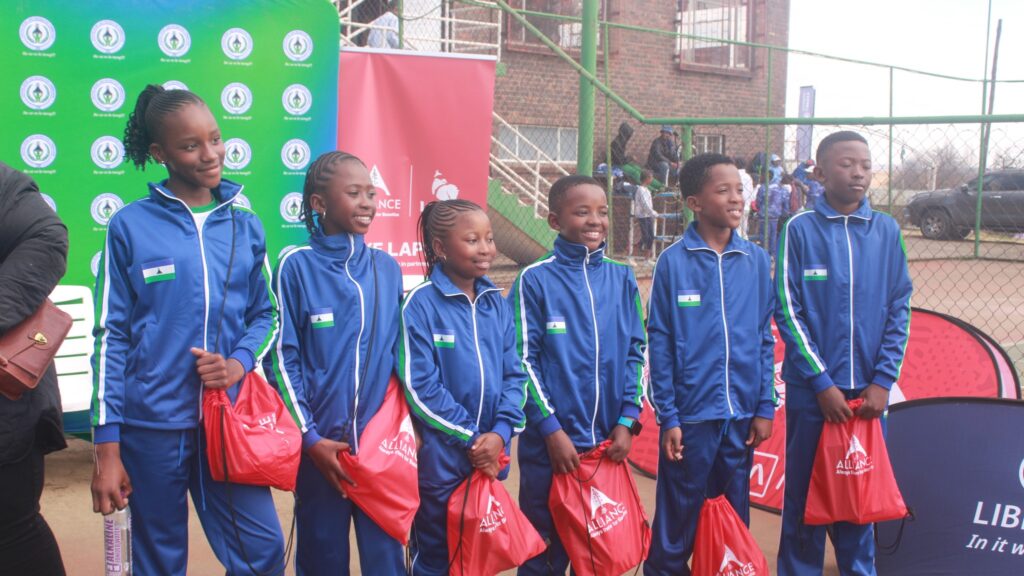
Lesotho’s junior girls set for Bronze clash with Botswana
SEBONGILE MATHE
MASERU – Lesotho’s junior girls’ tennis team stands on the brink of continental glory, set to battle Botswana for the Bronze medal at the prestigious International Tennis Federation (ITF)/Confederation of African Tennis (CAT) African Junior Team Competition in Maputo, Mozambique.
Fuelled by youthful energy and national pride, the team secured their place in the medal match after a resilient campaign.
Their journey began last Saturday with a challenging pool stage. Demonstrating significant skill and determination, the young athletes overcame Namibia and host nation Mozambique. While a loss to South Africa prevented them from topping their group, it didn’t diminish their resolve.
They pressed on to the semi-finals, ultimately falling to a strong Zimbabwean side.
Despite the semi-final defeat, reaching the Bronze medal match marks a significant accomplishment for Lesotho, guaranteeing a medal at the continental championship. This achievement highlights the rapidly increasing talent within the nation’s junior tennis ranks and signals a promising future for the sport.
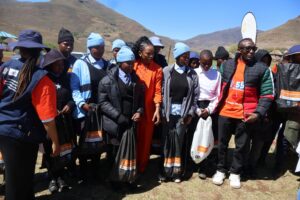
The team’s journey has been buoyed by strong support from home. Prior to departure, the Lesotho Lawn Tennis Association (LLTA) held a send-off ceremony, showering the players with encouragement.
LLTA President, Mahlomola Hlomisi, stressed the vital importance of nurturing young athletes.
“There is no way sports can grow in the country if we don’t start from children at a young age.” He urged the players to embrace the experience and focus on the joy of competition over pressure.
Mark West, representing the Lesotho National Olympic Committee (LNOC), echoed this pride in the team’s national representation and highlighted the abundant talent within Lesotho tennis, predicting a bright future.
Parent Khotso Molumo emphasized the dedication of families, revealing parental involvement in training support: “We had to step in as parents to help our kids and make the work easier for the coaches,” he stated, urging the players to stay focused and give their all.
Meanwhile, the senior national teams recently returned from their own international competitions. The women competed in the Billie Jean King Cup in Rwanda, finishing eighth out of twelve teams. The men participated in the Davis Cup in Botswana, securing fifth place out of fifteen – an improvement on their seventh-place finish last year.
National women’s team coach, ‘Mankopane Nkuatsana, attributed the results partly to a lack of consistent competitive exposure.
“It was a tough competition,” she acknowledged, “but the gap between us and our opponents isn’t undefeatable. The key difference lies in the level of preparation and exposure to high-level international play.”
Nkuatsana stressed the urgent need for more international friendlies to build player confidence and experience: “Players need more opportunities… This consistent exposure is crucial.”
She also highlighted broader systemic challenges: “Sports are not taken seriously enough in our country. If they were, we would have the necessary support and resources to start preparing much earlier. Other countries are well into their preparations, and we are playing catch-up.”
Equipment shortages further compound the difficulties, she added.
In contrast, national men’s team coach, Bishop Mosebi, struck a positive note, focusing on their improved ranking. “We performed significantly better than last year… This is a step in the right direction,” he said.
The higher ranking offers a potentially more favourable draw next time. However, Mosebi also emphasized the necessity of early and consistent preparation: “To build on this success, we need to begin preparing immediately… Only through consistent training and focused preparation can we hope to improve further.”