Afreximbank pledges support to Lesotho
Commits to bolster country’s economy amid trade challenges
A high-powered delegation from the African Export-Import Bank (Afreximbank) recently concluded a strategic mission to Lesotho, aimed at re-engaging stakeholders and unlocking the country’s significant economic potential.
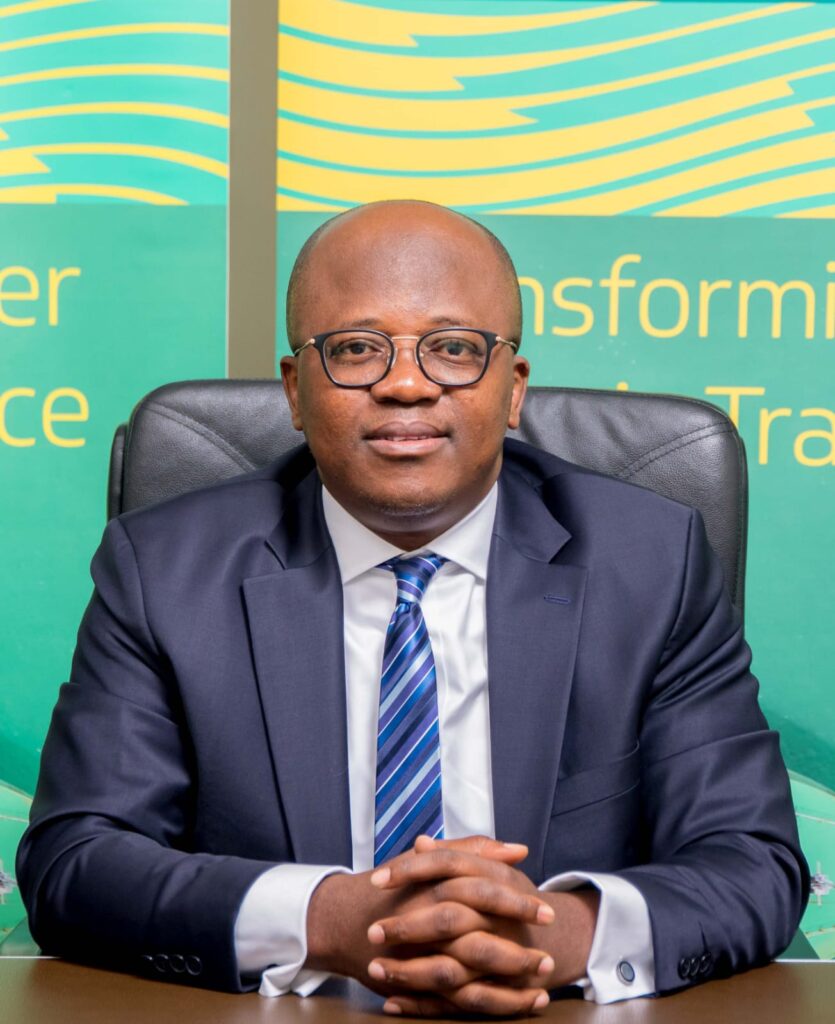
In an exclusive interview with Public Eye reporter, Mosa Maoeng (PE), the Bank’s Regional Director for Southern Africa, Humphrey Nwugo (HN), outlined the institution’s commitment to helping the Mountain Kingdom navigate a complex global trade environment and accelerate its domestic industrialisation.
With Lesotho facing the dual pressures of newly introduced US tariffs and past uncertainties surrounding the African Growth and Opportunity Act (AGOA) trade pact, Nwugo revealed a comprehensive roadmap designed to foster resilience. The discussions focused on moving beyond traditional aid models to identify bankable opportunities in key sectors such as textiles, water, agriculture, and mining.
By leveraging Afreximbank’s suite of tailored financial and non-financial instruments – including support for Special Economic Zones and SME development – the visit underscored a shared vision to transform Lesotho into a competitive hub for intra-African trade.
Nwugo emphasized that while challenges exist, the current climate presents a critical opportunity for Lesotho to diversify its markets and build a self-reliant, sustainable economic future.
PE: What was the primary objective of your high-powered delegation’s recent mission to Lesotho, and who were the key government officials you met?
HN: Afreximbank was established in 1993 by African governments with the primary objective of promoting intra- and extra African trade. Since then, the Bank has grown significantly and today boasts a membership of 54 African countries, supported by a strongly capitalized balance sheet of over USD 42 billion.
Furthermore, the Bank continues to support its member states in their development journeys. Over the past six years alone, Afreximbank has facilitated projects and transactions worth approximately USD14billion within the Southern African region.
Lesotho has been a shareholder of Afreximbank since 2009 and has a strong opportunity to unlock greater value from the Bank’s programs and facilities through expanded collaboration. Moreover, the country possesses several high-value natural resources – water, agricultural and grazing land, and minerals – that could significantly benefit from Afreximbank’s renewed focus on beneficiation under the leadership of Dr George Elombi, President and Chairman of the Board of Directors. We aim to support Lesotho in leveraging these resources, particularly in the textile, mining, and agriculture sectors.
This and more informed our recent mission to re-engage our Basotho stakeholders and reintroduce the Bank’s mandate and socialize its product offerings.
The timing of the mission was particularly opportune, coming against the backdrop of the introduction of a 15 percent tariff by the United States on exports from Lesotho, compounded by the then uncertainties surrounding the renewal of the AGOA. In this context, the Bank held bilateral engagements with government ministries and private-sector stakeholders to identify opportunities that could be supported through Afreximbank’s financing and non-financing solutions.
PE: Could you share the key points of agreement or the Memorandum of Understanding (MoU) discussed with the Lesotho government? How does this align with Lesotho’s own National Strategic Development Plan II?
HN: At present, we are not pursuing a Memorandum of Understanding (MoU) with the Government of Lesotho. Rather, our focus is on identifying opportunities that can strengthen and expand the country’s production base.
Lesotho, like many African economies, is driven by the Micro, Small and Medium Enterprises (MSME) sector and therefore requires a methodical and targeted support approach, which Afreximbank is well positioned to provide through its SME Development Programme. This programme not only supports MSMEs through financing, but also offers capacity building, market access, and twinning opportunities. Ultimately, the objective is to encourage SMEs to scale up and evolve into corporate entities.
In addition, we explored opportunities in the water, mineral resources, energy, logistics, tourism, and agriculture sectors, including agro-processing. The Bank runs a bespoke industrialisation programme, which supports the establishment of Special Economic Zones (SEZs) and/or industrial parks. This programme is specifically designed to address Africa’s developmental needs. Unlike traditional SEZ models – where governments often bear the infrastructure costs while private entities capture most of the returns – Afreximbank promotes an integrated ecosystem in which government policy, private capital, and industrial expertise converge.
To this end, the Bank has earmarked USD 2 billion for the development of industrial zones across the continent. There are already notable success stories in countries such as Gabon, Benin, Togo, Chad and Rwanda, where these zones are operational and delivering tangible impacts on real economies.
In Lesotho, we look forward to collaborating with the Ministry of Trade to support the designing and institutionalisation of a regulatory framework for industrial zones and, subsequently, their establishment.
PE: The textile industry is the backbone of Lesotho’s economy, and any impending issues could send shockwaves throughout the country’s overall wellbeing, affecting both economic growth and the livelihood of its citizens. How can Afreximbank’s interventions help mitigate these potential risks and facilitate a strategic shift toward long-term resilience?
HN: Any uncertainties surrounding AGOA can indeed impede many African economies, but it also presents an opportunity for manufacturing companies in Lesotho to reset and explore alternative markets. It is pleasing to note that the AGOA has been extended but the times call for preparation and readiness via diversification and exploration of potential alternative markets.
Lesotho has the potential to become a major supplier of renewable energy to neighbouring countries, given its significant hydro and solar power resources. Additionally, South Africa – the country’s immediate neighbor – imports textiles from China at a 40 percent duty. The same textiles imported from Lesotho would attract zero percent duty under SACU protocols. Beyond SACU, South Africa’s membership in BRICS provides Lesotho access to a market of 3.3 billion people, complementing the 1.3 billion consumers within the AfCFTA.
As Africa’s trade bank, Afreximbank can support Lesotho’s manufacturers and businesses by helping them find new markets, retool for these markets, and provide the necessary financing, non-financing, and guarantee services to facilitate trade. Some of the Bank’s interventions that could benefit the Lesotho market include:
- Afreximbank Africa Trade Gateway (ATG): A digital trade platform that enables manufacturers and traders to identify counterparties and opportunities across Africa, understand country-specific regulations, and conduct due diligence digitally.
- Pan African Payment and Settlement System (PAPSS): Facilitates cross-border payments in local currencies for intra-African trade.
- Export Trading Company Initiative (ETC): Integrates small-scale manufacturers and farmers into export value chains via aggregators supported by Afreximbank.
- Construction and Tourism Linked Relay Facilities (CONTOUR): Supports development in the tourism sector, a key growth area in Lesotho.
- Project Preparation Facility: De-risks projects and addresses the infrastructure gap. Afreximbank has already collaborated with the Lesotho National Development Corporation (LNDC) to co-finance early-stage requirements and bring projects to bankability.
- Export Development Programme: Supports Special Economic Zones, export manufacturing, agro-processing, and industrial parks.
- Project Finance Facilities: For water, energy, and infrastructure projects.
- SME Development Programme: Provides targeted support for Lesotho’s MSME sector.
Lesotho is well positioned to unlock significant opportunities by repositioning itself as a competitive trading partner within Africa. Through strategic expansion and increased industrial activity, factories can grow their operations and generate sustainable employment.
This would enable Lesotho to play a leading role in intra-African trade while contributing meaningfully to the broader economic transformation of the Southern African region.
PE: How do you intend to work through local commercial banks in Lesotho to ensure your funding and programmes reach a wide range of businesses on the ground?
HN: Afreximbank complements the capability of commercial banks to service their clients and to some extent strengthen the capability to transact internationally.
The Bank does this by providing lines of credit to the respective commercial banks for lending to the local borrowers, through co-financing or risk-sharing arrangements, making available correspondent banking services as well as treasury and markets services. These services are underpinned by a robust compliance framework that ensures the highest standards of financial integrity.
We also lend directly to large corporates whilst the commercial banks assume the role of our Local Administrative Agents or Trade Finance Intermediaries.
PE: Are businesses in Lesotho able to access the US$10 billion AfCFTA Adjustment Fund to manage the short-term costs of integrating into the continental market?
HN: The AfCFTA Adjustment Fund consists of three sub-funds designed to support the AfCFTA implementation. The Base Fund provides grant financing to Member States for public-sector interventions such as capacity building, customs modernization, and trade facilitation. The General Fund, currently under development, will offer concessional financing for trade-enabling infrastructure. The Credit Fund provides commercial financing to private-sector firms seeking to expand capacity or scale regionally. Currently, only the Base Fund and the Credit Fund are operational and Afreximbank has seeded both funds with USD 10 million and USD 100 million, respectively. Applications are submitted via the Adjustment Fund Portal (https://afcftaadjustmentfund.africa/) after which, they undergo screening and approval through established governance processes.
PE: Apart from direct financing, what other capacity-building or technical assistance programmes can Lesotho’s public and private sectors expect from Afreximbank?
HN:The Bank has a range of capacity building activities that are facilitated throughout the year and are open to all Africans. These include but are not limited to our Trade Finance Seminar, SME Development capacity building, the Afreximbank Compliance Seminar, Regional Factoring Seminars, Trade Intelligence Services, and various trainings on how to trade under the AFCFTA among many others.
PE: What is your final message of assurance and opportunity to the business community and people of Lesotho?
HN:My final message is that there’s a clear opportunity for growth. An opportunity to become self-reliant, to explore diversification of the manufacturing base and look at alternative export markets, especially within the continent.