Minister Moorosi opens up: AI, cybersecurity and press freedom in focus
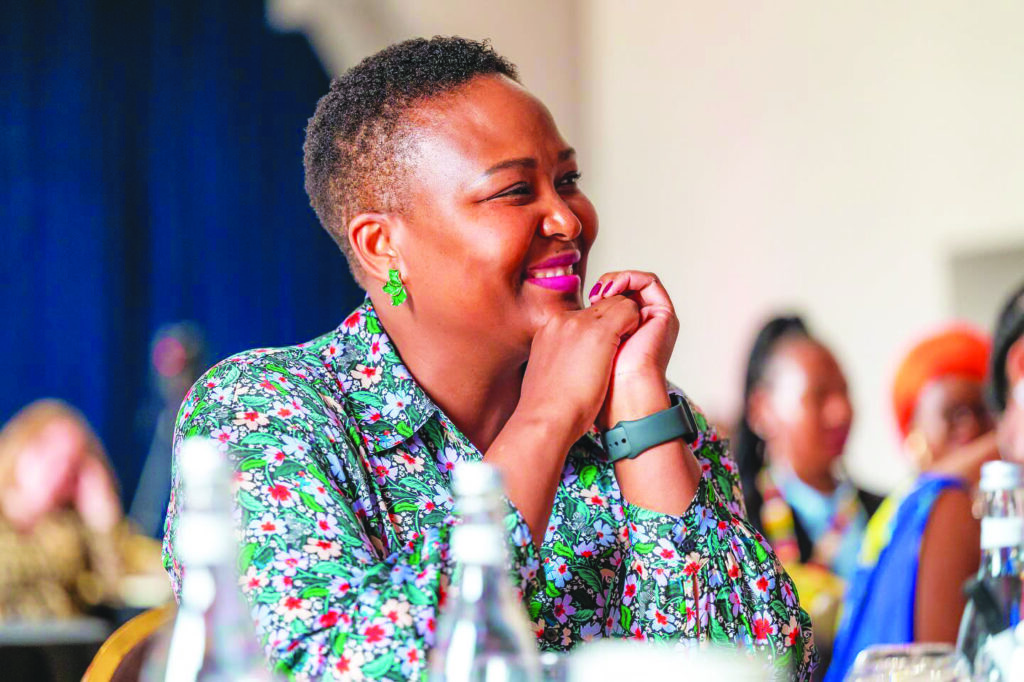
In an exclusive and wide-ranging interview with Public Eye reporter, Motsamai Mokotjo (PE), the Minister of Communications, Science and Technology, Nthati Moorosi (NM), addresses critical issues shaping the country’s media and digital landscape.
Minister Moorosi provides crucial insights into the future of key state media entities, the Lesotho National Broadcasting Service (LNBS) and Lesotho News Agency (LENA), amidst ongoing transformation debates. The discussion delves into the burgeoning role of Artificial Intelligence (AI) in content creation and its implications for local media.
Significantly, the minister tackles the contentious Computer Systems and Cyber Security Bill, outlining its objectives while directly confronting concerns about its potential impact on press freedom and freedom of expression. The conversation also explores the vital role and effectiveness of the Media Ombudsman in upholding journalistic standards and resolving public complaints.
This essential interview offers the minister’s perspective on balancing technological advancement, national security and the fundamental pillars of a free press.
PE: Since you assumed office, have former ministers offered advice or engaged with you?
NM: I have consulted several former ministers, including Selibe Mochoboroane – a key figure who remains accessible. I have also engaged Sam Rapapa, whom I succeeded, and even reached out to Thesele ‘Maseribane. Through these discussions, I recognized that many challenges I face mirror those they encountered.
PE: The contentious Cyber and Computer Security Bill faces strong criticism from journalists and human rights defenders. What is its current status?
NM: The notion that journalism is criminalized is a misunderstanding. Let me clarify, the Bill addresses unauthorized access to computer systems – what we commonly call hacking. Journalism itself is not a crime.
PE: Critics argue that Sections 21.1 and 21.2 could intimidate whistle-blowers by restricting their ability to share information with police or anti-corruption bodies. How do you respond?
NM: The law does not target information disclosure. It specifically criminalizes unauthorized intrusion into private computers or digital devices. When individuals access concealed data on another person’s device without permission, that constitutes a crime – not whistleblowing. I actively encourage people to expose wrongdoing.
PE: After sustained criticism, you recently began publicizing cabinet decisions. Why did it take so long to prioritize public transparency?
NM: The delay stemmed from our deliberate break from previous governments’ practices. We first needed to evaluate which systems worked and which didn’t. Initially, we relied on alternative channels – like the government spokesperson obtaining updates from myself or the government secretary – believing these sufficed.
However, we identified gaps in effectiveness. This became evident when the prime minister addressed youth unemployment, journalists clearly need more direct engagement to accurately convey our actions and intentions.
PE: Looking at the Lesotho National Broadcasting Service (LNBS), particularly its lack of original content, what measures are being implemented to ensure Basotho producers can create programmes for it?
NM: We recognize that while Basotho content producers are talented, they often lack the resources needed to create high-quality programming for our national television. Previously, LNBS would issue a tender – for instance, calling for a specific drama series – and a producer might submit an impressive concept reel to win the bid.
However, actual delivery often fell short because the producer lacked the sustained resources to complete the production. Our current approach involves partnering with these producers. LNBS will collaborate directly with them to develop and produce programmes. Additionally, we are focusing on supporting young producers by helping them access the M400 million fund allocated by the Minister of Finance, Dr Retšelisitsoe Matlanyane, during her budget speech.
Regarding Lesotho Television (LTV), we intend to purchase their content. For some programmes, we will sell advertising time and establish a profit-sharing model.
PE: There is opposition concerning the composition of the Broadcasting Disputes Resolution Panel board. Critics allege ministers appoint party loyalists instead of following a merit-based process, as mandated. When will this board be reformed to align with your stated principle of meritocracy?
NM: The appointments were purely merit-based, not influenced by political affiliation. I don’t even know the political parties of most board members. Out of the six, I am familiar with only one individual’s affiliation. The claim of political appointments is simply untrue.
PE: Various sectors advocate for establishing a media ombudsman, particularly to oversee the print media. How far along are you in creating this entity?
NM: (Referencing a specific incident) That’s similar to when you published the story about Ambassador Ntšiuoa Sekete – you wrote that piece, correct? Why did you use her photo? Why not the minister’s? (NB: The story referenced relates to Tlapana Nthole, who was arrested in Addis Ababa for drug smuggling.) Establishing a media ombudsman isn’t our immediate focus.
Our priority is reviewing the communications law. The current legislation is silent on regulating the print media and online publications. We lack clear guidelines for online media, which includes online radio stations that sometimes broadcast content differing significantly from traditional broadcasting standards.
PE: Some critics have raised strong concerns about conflicts of interest, specifically regarding cabinet members conducting business with the government. How do you plan to address such conduct, especially since your government blocked the Conflict of Interest Bill in parliament?
NM: This is a complex issue. It involves situations where current government officials are perceived to engage in business with the state. Take, for example, an official involved in cement production, if their company, established long before they entered government, supplies cement for a major project like Polihali Dam, is that inherently problematic? Simply demanding immediate resignation – ‘stop and leave’ – isn’t necessarily a sufficient or practical solution.
I, for instance, do not conduct business with the government. The core question is, would resigning resolve the underlying issue? Probably not. It’s far more complicated than it appears. We are actively consulting development partners to help us navigate this.
PE: Speaking of hotels, Prime Minister Matekane has reopened his hotel. There are allegations that government workshops and meetings might be held there. Is there any truth to that?
NM: I don’t know if that will be the case. I am just wondering aloud. What I am saying is this: people’s business entities, from before they entered government, are not that simple. We can all speculate, but there will always be some Basotho who complain regardless.
PE: We are living in the age of AI. In terms of ethics, what steps is the ministry taking to leverage its power responsibly?
NM: We are aligning with global best practices. We view AI as a positive force for development, especially if we maximize its potential. It has valuable applications, like in agriculture for detecting pesticides – though there’s much more we can explore. AI also involves language. For Sesotho, we need to build capacity so Basotho can both understand and effectively use this technology.
PE: Looking at journalists’ engagement with your cabinet colleagues, there seems to be a toxic environment. You took two and a half years before holding post-cabinet briefings. How do you view the current relationship?
NM: Journalism in Lesotho is affected by toxicity. Newspapers sell more when they feature controversial issues. Take your choice to put ‘M’e Ntšiuoa’s photo on the front page – that was deliberate, well thought out, and sensational, purely to sell more papers.
That is very damaging.
The story reported ‘someone was arrested for drug smuggling,’ yet you specifically featured Ntšiuoa.
That makes me question the meaning of ‘councillor’… or was it ‘counsellor’?
The media lacks responsible reporting and disregards humanity. Our media has reached a point where there’s a hunger to make more money at the expense of responsible journalism. I am being brave saying this.
PE: Did you receive any orientation before joining cabinet on how to deal with the media. Some of your colleagues come across as very rude?
NM: Some of them have been victims (of media reporting). That’s why they often state that journalists should direct questions to their respective Public Relations Officers.
PE: But we also know that some of your colleagues seem to enjoy the spotlight?
NM: Our problem is that the media twists information.