Still a long way to go: The gaps in school-based SRHR interventions
Liapeng Raliengoane
Mafeteng – At St. Thomas High School, Acting Principal Sister Adelina Tšehla of the Sisters of the Holy Cross stands before her class, guiding learners through a lesson on body changes and personal boundaries. It is part of the Life Skills-Based Sexuality Education (LBSE) curriculum, Lesotho’s version of Comprehensive Sexuality Education (CSE). For her, it is a calling rooted in care and guidance. Yet when the topic shifts to contraceptives, she quietly steps aside and invites a local nurse to take over.
“I am comfortable teaching about respect, health and many topics. But when it comes to contraceptives, I become uncomfortable, my faith does not allow me to go that far,” she says with a gentle smile.
At St. Thomas, there are six teachers responsible for LBSE, including Sr. Tšehla (SHC) herself. However, only one of them has received formal training, a course she completed as part of her studies at the National University of Lesotho, where LBSE module was taught for a full year. She is the one who helps the other five teachers who have not received formal training.
Despite the limited training, the school’s proximity to a health facility has proven helpful. “Since we have a clinic nearby that also belongs to the school, it is easier for students to get health services,” she says. “They are given permission cards and when they reach the clinic, they do not queue.”
Still, challenges persist especially around menstrual hygiene. “Many of our learners come from poor families and cannot afford sanitary pads,” Sr. Tšehla adds. “We would appreciate interventions to help provide these basic needs.”
She also emphasised the need for refresher courses to keep teachers updated and motivated. “Continuous training would help us improve how we deliver lessons and handle sensitive topics,” she said.
Her account reflects the realities facing many rural schools implementing LBSE, limited resources, uneven training and socioeconomic barriers that affect learning.
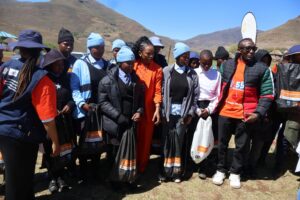
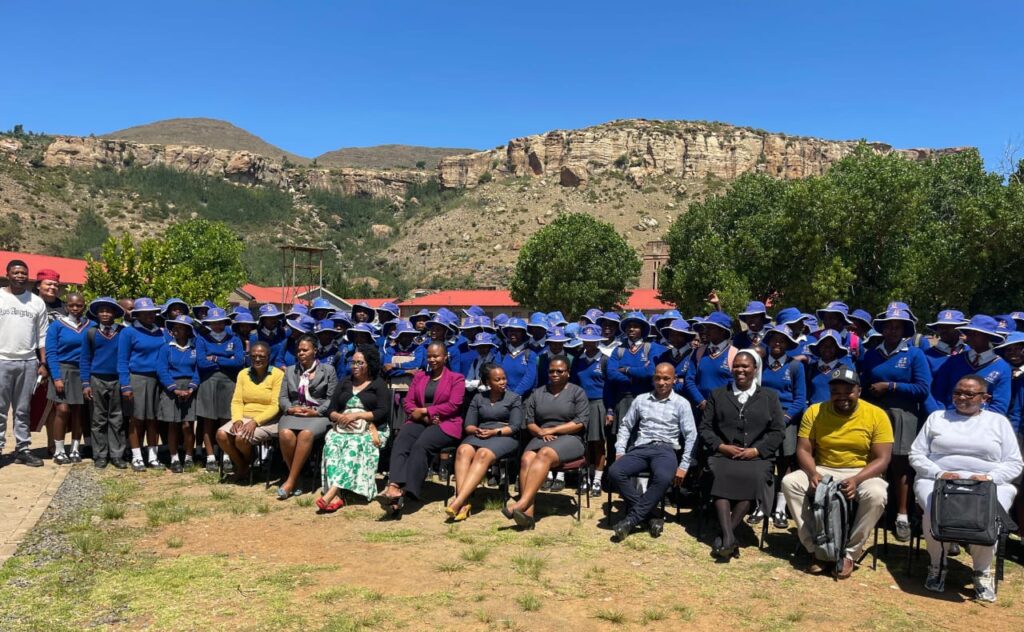
The visit to St. Thomas was part of a monitoring tour supported by the Southern African Development Community Parliamentary Forum (SADC-PF), where Members of Parliament from various committees, including the Sustainable Development Goals (SDG) Committee engaged Mafeteng schools and district officials to track progress in Sexual and Reproductive Health and Rights (SRHR) interventions across the education sector.
Member of Parliament (MP) Katleho Mabeleng, from the SDG Committee who chaired the discussions, said the visit sought to draw lessons from different contexts.
“The main purpose of the visit was to track how schools are performing, those with support from UNESCO which are in Leribe and those without UNESCO support in Mafeteng. We wanted to understand the interventions in place, the challenges schools face and the benefits that have come out of these SRHR programs,” Mabeleng said.
At another school, Kingsgate High School, Principal Sebefola Makhabane reports a more structured approach. The school has four trained LBSE teachers, one male and three females who received training through workshops organised by the Ministry of Education, the National University of Lesotho (NUL) and the Lesotho College of Education (LCE).
“Teachers like the subject because it equips learners with knowledge and life skills,” Makhabane says. “However, students are not so eager about it because it does not determine their passing. It is not included among the subjects that make them progress academically.”
Kingsgate offers two LBSE lessons per week and despite the subject’s low academic weighting, the results are encouraging, the school has recorded only one case of early and unintended pregnancy this year, a notable drop from previous years.
Makhabane reiterated the need for teachers’ refresher courses and called for LBSE to be included among the subjects that contribute to learners’ overall assessment.
“If Life Skills-Based Sexuality Education could be part of passing subjects, learners would take it more seriously. It would also motivate teachers to keep improving how they deliver lessons.”
The school also uses a permission card system to link students to health facilities, allowing them to access care without long waits.
At Makaota High School, Principal Khauhelo Victor Malope says only one male teacher handles LBSE, offering two lessons per week for each class. “When students fall pregnant, we allow them to continue their education.” He adds that there are two suspected cases of early and unintended pregnancies this year.
Malope also stresses that preventing violence remains a priority. “Violence undermines the purpose of education. There are no cases of violence at the school,” he says. “A safe environment is essential for effective learning, including sexuality education.”
The Mafeteng District Education Manager, ‘Mahlompho Shabe, said sexuality education plays a vital role in achieving national and global development goals.
“The SDGs are important in making sustainable decisions for future generations,” Shabe noted. “Comprehensive Sexuality Education helps keep students in school because they are taught to make well-informed decisions about their sexual and reproductive health.”
Her remarks underscore how SRHR education contributes to reducing teenage pregnancy, promoting gender equality and preventing school dropouts.
As MPs concluded their monitoring visits in Mafeteng, they echoed similar sentiments, recognising that progress in SRHR education depends on strong partnerships between schools, government, civil society and development partners.
Non-profit organisations continue to complement government efforts with training, learning materials and community outreach. Yet, as these schools in Mafeteng show, there is still a long way to go, from harmonising referral systems and improving teacher training to integrating LBSE into assessment frameworks that encourage student engagement.
Lesotho has made visible progress, but ensuring that every learner receives accurate, age-appropriate and judgment-free information will require continued collaboration and sustained political will.
SADC-PF which supported these visits was established in 1997, as a regional inter-parliamentary body that brings together parliaments from the 16 SADC member states. It works to promote democratic governance, human rights, gender equality and sustainable development across Southern Africa.
Through its SRHR, HIV and AIDS Governance Project, SADC-PF helps strengthen laws and oversight on health and education, empowering MPs to ensure that young people have access to accurate information and services related to sexuality and reproductive health.