Trafficked, sold, rescued: A Mosotho woman’s journey from betrayal to survival
As Lesotho grapples with unemployment-driven trafficking, one survivor’s escape exposes a brutal trade thriving on trust and desperation
MOSA MAOENG
The church mate seemed heaven-sent.
For Puleng* – a single mother drowning in Lesotho’s 24.6 percent unemployment crisis – the offer was a lifeline, a M4 500 monthly to sell grain in Johannesburg, South Africa.
Her children’s teacher, a woman she’d trusted for years, facilitated the connection.
Only later would Puleng learn the truth, her photo, demanded to “verify age,” had been sent to a South African man shopping for a wife.
“I took the leap,” Puleng recounts, her voice brittle. “I crossed at Maputsoe on April 7, 2024, with no phone, relying on a driver’s borrowed device to coordinate my pickup.”
At the Johannesburg taxi rank, her contact — a woman she knew only through voice notes — waited with a grin and chilling words: “Don’t worry, baby. This is Johannesburg. You and I will make lots of money.”
When Puleng inquired about housing and contracts, the woman deflected, only saying “We will discuss everything at the place.”
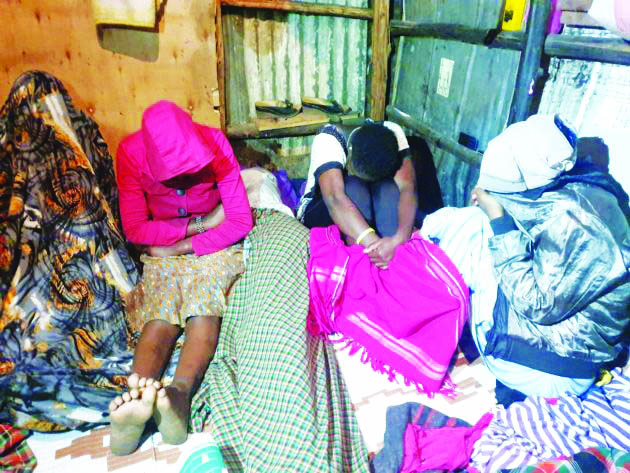
The “place” was a squatter camp in Welkom — a town notorious for trafficking Basotho women. Weapons lined the walls, knives, swords and improvised spears. Only men occupied the rusted shacks.
“Terror seized me,” Puleng says. “Then a Mosotho man walked in. The woman announced: ‘As promised, here she is.’ They haggled over unpaid balance while I stood there — a purchased object.”
The buyer declared he would “share her bed.” Puleng, feigning calm, had already hidden her passport and stolen a lifeline. While borrowing the trafficker’s phone to message her parents “I arrived safely,” she glimpsed texts confirming her sale.
“My intuition screamed. I grabbed the buyer’s phone while he was drunk, texted ‘I have been sold’ to my family, then deleted it. I warned them not to reply — I had stolen the phone.”
Her parents immediately alerted the Lesotho Mounted Police Service. Meanwhile, Puleng watched her captor pass out.
A woman renting nearby noticed Puleng’s distress. In a whispered confession, Puleng revealed her ordeal. “She hid me in her room — a stranger saving my life,” Puleng recalls.
At dawn, her trafficker raged through the camp. When he pounded on their door, the renter intervened: “Let her go. Just give her transport fare home.”
Shockingly, he agreed: “I only wanted a wife. Take her.” He handed Puleng bus money. She fled to police, triggering the arrest of her church mate — though the buyer walked free, having committed “no sexual assault.”
Freedom brought psychological torment. Puleng spiralled into rage and dissociation, and recalls “I wanted to douse that church mate in petrol and burn her house. I would wander streets at night, gambling my hot-dog vending earnings until I returned penniless. That felt like healing.”
Her turning point came in June 2024, when Beautiful Dream Society (BDS), a counter-trafficking NGO, provided counselling. By February 2025, World Vision-Lesotho funded her pig farm start-up.
“Now I am back in school,” Puleng says, tending her six pigs. “When I see them, I feel motivated. I am not a victim — I am a survivor. But others never escape.”
Her warning to young women is that “traffickers are people you trust. It happens domestically too. Unemployment makes us prey — but awareness breaks the cycle.”
Puleng’s story epitomizes Lesotho’s trafficking crisis. The 2024 United States Trafficking in Persons Report notes that “Lesotho does not fully meet minimum elimination standards but shows significant effort… Remains on Tier 2.”
Key findings reveal that 68 percent of trafficked Basotho are women lured by fake job offers in South African mining towns such as Welkom and Klerksdorp, 80 percent of those trafficked involve acquaintances — friends, pastors, or family exploiting trust. Beyond sex trafficking, victims endure forced farm labour with withheld wages.
Government initiatives include launching 11 community anti-trafficking committees and partnering with the International Organisation for Migration (IOM) for specialized training.
In April 2025, IOM trained Lesotho’s Cross-Border Crime Prevention Forum (CBCPF) to prosecute traffickers and protect victims. CBCPF Coordinator Litaba Mohapi explains that “we host community gatherings where families report missing relatives — often unaware they are trafficked. One man hadn’t seen his sister in five years. We traced her to a Free State brothel.”
Mohapi stresses trafficking isn’t purely cross-border, “It happens within Lesotho. Perpetrators aren’t strangers, they are uncles promising city jobs, or lovers selling partners into slavery. We teach communities to question offers that seem too generous.”
He highlights underreported labour trafficking, indicating that “men are trafficked too — promised mining jobs, then enslaved on farms. When payday comes, owners vanish or threaten deportation.”
Puleng’s recovery illustrates survivor-centric solutions. BDS Case Manager, Thato Lebone, observes that trauma manifests uniquely. Puleng needed economic agency alongside therapy. Her pig farm restores dignity — she is not just ‘rescued’; she is building a future.”
World Vision’s Tšepang Mokoena adds: “Economic vulnerability enables trafficking. We combat this with microloans and livestock programs — tools to say ‘no’ to risky opportunities.”
Yet challenges persist. Lesotho’s porous border lacks fencing, enabling illegal crossings. Conviction rates remain under 12 percent, with cases collapsing due to witness intimidation.
Today, Puleng mentors other survivors. Her message is that anger won’t heal you. My pigs? They are my therapy. Every sunrise tending them, I reclaim the life traffickers tried to steal.”
She leaves us with a searing truth: “My buyer walked free. My church mate served three months. But in this pen, with these animals, I decide my worth. That is justice.”
As Lesotho fights trafficking’s tide, Puleng’s defiance lights the way, a survivor rewriting her ending, one dawn at a time.
*not her real name