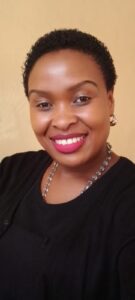
How Lesotho is fighting to secure sexual and reproductive rights for its youth with disabilities

LIAPENG RALIENGOANE
“I was devastated. My life has totally changed. I couldn’t cope.”
Refiloe-Hape Sesinyi’s voice is quiet but unwavering as she recounts the moment her greatest fear materialized. For her, blindness was not just a personal challenge but a generational inheritance.
After a childhood accident stole her sight, she watched in horror as the same pattern unfolded for her young daughter, whose world also darkened after a playtime injury.
But her devastation was twofold: first, for her daughter’s future in a world not built for her, and second, for the shattering of a deeply personal hope.
“I had thought my daughter would grow up to be my support system,” she confesses.
“Disability is scary. It is not something I would wish for even my worst enemy.”
Refiloe-Hape’s story is a poignant miniature of a much larger, systemic crisis in Lesotho and across much of the globe, the profound neglect of sexual and reproductive health and rights (SRHR) for persons with disabilities.
Her journey from isolation to advocacy highlights both the glaring failures and the nascent, hopeful efforts to build a more inclusive future, championed by international bodies like UNFPA and UNESCO.
Refiloe-Hape’s challenges began long before motherhood. As a young, blind university student, navigating the already complex world of adolescence and sexuality was a minefield of judgment and inaccessibility.
“There was no real orientation to the environment for students with disabilities,” she recalls. “I was guided around campus, but I was never empowered to navigate the health system.”
Her attempts to access basic contraception were met with intrusive questioning and humiliation, leading her to often “give up and walk away.” Even obtaining emergency contraception was “a battle.”
This lack of access to confidential, respectful health services is a direct denial of fundamental human rights, creating a population vulnerable to unintended pregnancies, sexually transmitted infections, and a loss of bodily autonomy.
When she did become pregnant, the stigma multiplied. “People assumed I had been sexually abused,” she says.
The judgment was public and cruel, culminating in a lecturer humiliating her in front of her entire class.
“I wasn’t even the only one who was pregnant, but I was the one laughed at.”
This experience underscores a harsh reality, for women and girls with disabilities, pregnancy is often not seen as a result of choice or relationship, but as a consequence of abuse or misfortune. Their sexuality is either denied or stigmatized, robbing them of dignity and agency.
The UNFPA firmly states that access to contraceptives, comprehensive sexuality education (CSE), and reproductive health services is a fundamental human right, “regardless of age, gender or disability status.”
Yet, in practice, this right is routinely denied. Health facilities are often physically inaccessible. Information materials are rarely available in Braille or easy-to-read formats.
Healthcare workers frequently lack training to provide respectful, non-judgmental care to people with disabilities, especially on sensitive SRHR topics. The result is a pervasive information blackout, leaving young people with disabilities in the dark about their own bodies, rights and choices.
This gap has lifelong consequences. Without accurate knowledge, they are ill-equipped to understand puberty, consent, healthy relationships, and prevention of abuse – a risk to which they are disproportionately vulnerable. They cannot make informed decisions about their reproductive lives, perpetuating cycles of dependency and inequality.
For UNFPA, the solution hinges on a multi-pronged approach: building inclusive health systems, capacitating healthcare workers, providing youth-friendly services that guarantee privacy, and driving community engagement to dismantle deep-seated stigma.
Amid this landscape of neglect, a beacon of hope emerged for Refiloe-Hape. In July 2025, she participated in a regional capacity-building workshop to roll out the “Breaking the Silence” approach.
This innovative initiative is a joint effort by UNFPA, UNESCO, and the South African Medical Research Council (SAMRC), specifically designed to ensure that young people with disabilities (YPWD) can access accurate, age-appropriate and empowering information.
The workshop was nothing short of a revelation. “For me, it was a rebirth,” Refiloe-Hape says, a spark of hope cutting through her earlier solemnity.
The training uses creative, tactile methods to demystify the human body – using cardboard and rubbers to represent internal organs – making complex biological concepts accessible to learners with visual and other impairments.
“It took me back to high school. The creativity was amazing… I finally understood my reproductive system. I wish I had had this knowledge earlier. I wouldn’t have felt so lost.”
“Breaking the Silence” is more than a curriculum; it is a philosophy of liberation. It rests on three core pillars, Curriculum Delivery which is focused on training educators of learners with disabilities to deliver disability-inclusive CSE, using adapted tools and methods.
Community Engagement: Working to shift harmful social and cultural norms that perpetuate stigma and silence around disability and sexuality as well as Parental Support, mean for equipping families with the skills and knowledge to support their children’s healthy sexual development, a crucial element often missing.
The approach recognizes that providing information is only the first step. True empowerment comes from creating an ecosystem where that knowledge is respected, and where a young person’s autonomy is upheld.
Refiloe-Hape’s transformation from a recipient of stigma to an agent of change is the ultimate goal of this work. The workshop gave her more than knowledge, it gave her confidence and purpose.
“It gave me comfort. It gave me assurance,” she states. “I now believe that my daughter and others like her can grow up with the information I never had.”
Her dreams, however, are tempered by the lingering fears that define the reality for many persons with disabilities in the country. While she wishes for a large family, she is terrified of having more children who might share her genetic predisposition to blindness.
This fear highlights a critical gap in genetic counselling and support services within SRHR programmes, another layer of care that is often missing for people with disabilities.
Her vision for the future extends beyond her family.
“I want a Lesotho where people with disabilities are empowered. Where we don’t have to depend on others,” she asserts. She imagines a country where technology levels the playing field, “so that employers don’t fear my disability, but instead see my capability.”
Refiloe-Hape’s story is a powerful testament to a simple, urgent truth: disability is not inability, and inclusive sexuality education is not a privilege – it is a right. The “Breaking the Silence” approach represents a critical step toward honouring that right, but its rollout must be accelerated and scaled.
The cost of inaction is measured in shattered dreams, denied opportunities, and perpetuated cycles of vulnerability. It is measured in the humiliation of a young woman walking away from a clinic without the care she needs, or the fear of a mother unsure of her daughter’s future.
As Lesotho and its partners work to build a more inclusive society, the journey of women like Refiloe-Hape proves that when knowledge finally breaks through the silence, it doesn’t just educate – it emancipates. She has found her voice. Now, the challenge for the nation is to ensure it is heard, and that every other young person with a disability is empowered to find theirs.
The right to choose, to know, and to thrive cannot, and must not, wait.